Tuesday, 16 January 2024

A New Year :: 01 - 07 January 2023

Happy New Year to you and yours! It is the start of a new year and New Year's Day found Kev @kev07713 and I meeting up at RSPB Otmoor for a wander round early doors. I had to be back by lunchtime for my daughter finishing her shift at work, while Kev could stay later and so we travelled separately. Once on the reserve we saw many of the usual species and kicked off our year lists with 51 species, Kev adding a couple more along the bridleway and Roman Road. Nothing of particular note and no outstanding photos

The following day Alan Boddington reported seven waxwings at the main entrance gate to Brandon Marsh near Coventry. They were reported at 9.51am and I was on the road about an hour later. On the way the roads were wet but as I turned down Brandon Lane the road was completely under water - a car was at the other end of the ‘puddle’ wondering what to do. In fact it was easily passable for now and so I drove through carefully and turned down for the reserve, stopping to see if I could locate the waxwings in the rain. None.

I checked WhatsApp to find a message "Final Waxwing total before they flew was 12". Damn. I made for the Visitor's Centre to see if there was any news - no one else around. They were closing the Centre before the roads became impassable - on my way out I added jay to my year list as two flew over. My first dip of the year - I'm sure there will be more. On the way home, just outside Marton, two puddles had almost met in the centre of the road but now on the way back they had joined, and the water was now almost 9 or 10 inches deep - fed from water coming down the slope on the right. In many ways going home now might be the best thing that could have happened – it is possible the road could be closed.

Wednesday saw us driving to Scotland to see my mum and brothers - an extra week off work. With reports of white-tailed eagle on Hunterston Sands on Boxing Day I'd asked my mum to keep it there until I arrived - hopefully I'd find something in the area. When we arrived, I looked on Birdguides to see what had been reported and over a late lunch up popped a glaucous gull on the pool by Auchenharvie Golf Course and then on the roof at Dunbia Highland Meats. The light was dropping as we checked into our hotel and so there was no point going now.

The following morning sunrise would be almost 08.50am and so it was after breakfast before we set off, arriving at Stevenston Point. With guillemots, razorbill, a raft of very distant common scoters, a red-throated diver and more on the water there were a few good birds but all very distant. As I scanned on my scope another birder arrived, and I asked if he'd been to Saltcoats - the glaucous gull had been reported not long before. He confirmed that it was he that had posted the sighting and confirmed the bird was back on the roof of the factory. Charlotte and I packed up and made for Saltcoats - a glaucous gull would be a lifer.

We parked at Auchenharvie Golf Course and while Charlotte stayed in the car, I walked down the path to the meat factory and met another birder scanning the pond and then the roof of the factory. I joined in and we worked along the roof but couldn't locate our bird - the other chap said that he was going down to Ardrossan harbour to tick purple sandpipers for his year list but would return and perhaps the bird would be back.

I walked further along the path to find there were more roofs and within a couple of minutes had spotted the glaucous gull. I excitedly dropped my scope on the tarmac of the factory car park and was quickly approached by a security guard that asked me to return to the perimeter of the site - only reasonable. As I repositioned the gull dropped onto the ground and it was then I could see quite how big it was! - a very large (the second biggest gull in the world), pale gull - up to 77 cm in length and can span 170 - 182 cm across the wings.

Adults are mostly white with a very pale grey back; pure white wingtips. Juveniles (as this one) are white or pale tan with light brown markings and again no black on the wingtips. It breeds in the High Arctic, winters farther south in a variety of habitats - rarely far from a large body of water - and often seen mixed with flocks of other large gulls. They eat virtually anything, from small rodents to seabirds to starfish, as well as fruit, insects, carrion, and rubbish - here it was hanging around the abattoir/processing facility looking for scraps - to be fair, there were a significant number of gulls doing the same.

The glaucous gull returned to the roof and occasionally flew a circuit around the facility. It was interesting to see the bird against the other species (often thought to be large themselves).

Glaucous gull
Glaucous gull
Glaucous gull
Glaucous gull
Glaucous gull
Glaucous gull
Glaucous gull
Glaucous gull

Another birder turned up to take photos and we had a nice chat as we watched - he mentioned that there was a reliable spot in Saltcoats for purple sandpipers, one of my target birds along this stretch of the coastline. Once we'd had our fill I headed back to the car and announced to Charlotte that I wanted to make one more stop - we made our way along to the area suggested but in the short time I had I didn't locate any sandpipers. I did have great views of a seal basking on the water's edge. Ringing records show that purple sandpipers are remarkably faithful to wintering sites, with individuals returning to the exact same stretch of coast year after year; they'd likely be here somewhere.

Seal

Back at my mum's house rather a lovely mistle thrush rested in top of one of the fence posts, with song thrushes keeping it company.

Mistle thrush

The next morning we had breakfast and I asked we return to Saltcoats - I'd had some conversations with some locals on social media and they'd clarified where I should be for the sandpipers. On arrival a turnstone fed on the grass between the beach and the children’s play area, but I wasn't stopping here - my quarry lay elsewhere. I walked to the pools I'd been directed to and immediately saw the sandpipers I was looking for, feeding with redshank and turnstones. The common name refers to a seldom-seen purple sheen on some of the wing feathers. I started taking some photos as they worked up and down the channels and water's edge getting what I hoped were nice shots. The six birds nimbly explored seaweed-covered rocks as they search for mussels, crustaceans, and flies, flashing bright orange on the legs and bill.

Suddenly one of the birds hopped onto a wall, ran directly at me, and jumped down in the closest pool almost as if it was posing - what a great experience. As quickly as it had chosen to entertain, it turned and flew away to the remaining flock.

Purple sandpiper
Purple sandpiper
Purple sandpiper
Purple sandpiper
Purple sandpiper
Purple sandpiper
Purple sandpiper
Purple sandpiper
Purple sandpiper

I returned to the car and Charlotte and made for Stevenston Point to see what might be there. Another (different) seal watched on.

Seal

I set up my scope and scanned, standing nearby another birder. Out on the water there was a red-throated diver, several pairs of red-breasted mergansers and distant sanderling feeding along the water's edge. Ringed plover, dunlin, turnstone, and a handful of purple sandpipers fed on top of the pier structure out into the water. A single razorbill and a couple of black guillemots caught my attention - the common scoters were absent.

Red-throated diver
Red-throated diver
Turnstone

We were approached by another birder that had been viewing further back along the Point and had seen a single Mediterranean gull, and a dozen or so knot - both had since vanished. He did say that locals had just reported that the white-tailed eagle had just been seen along at Hunterston Sands. This was an opportunity not to be missed - we said our goodbyes and set off.

The white-tailed eagle is an international conservation success story. These superb birds became extinct in Britain in the early 1900s but are now living here again after a re-introduction programme that brought chicks over from Norway to the island of Rum, one of Scotland’s wildest places. Since then, they’ve established other colonies, and have even started nesting in the Lowlands on Loch Leven in Fife. In Norway, white tailed and golden eagles will share the same territory, but in Scotland the two species establish separate ranges. Schedule 1 protection means it is illegal to disturb this species.

They eat largely fish, but also take various birds, rabbits, and hares. Carrion is an important part of their diet, especially during the winter months. Most lambs are taken as carrion. When fishing, they fly low over water, stop to hover for a moment and drop to snatch fish from the surface. During the breeding season while they are rearing young, they require 500-600 grams of food per day, but this drops to 200-300g per day during the winter months when the birds are less active.

When we arrived, we found the eagle on the rocks and just as far away as it could be. Not needing much food it seemed content and in no rush to move. Several birders were already there and had been for some time - discussions centred around whether the rising tide might push the eagle skywards. As we waited, a couple of dog walkers appeared on the righthand edge of the sandbar and walked left with their golden labrador. It took a while for them to approach the eagle as they stopped frequently to take landscape photos of the bay - we wondered if this might provoke the bird to depart its resting place. Slowly slowly the couple and their dog approached and damn me, the bird gave them a cursory look and stayed put - more amazingly the couple just walked by as if they hadn't seen it. The dog didn't stop, and the eagle didn't appear to feel threatened.

White-tailed eagle

Once the walkers had passed, I looked at the time and decided I'd need to get back to meet with mum and my brother - no flight shots today.

We'd tried for the dipper in our usual spot on Seamill beach without success and this lack of success continued through our final morning. Charlotte and I ventured down on the beach and south towards Ardrossan, seeing a kingfisher resting in the rocks, and then both rock and meadow pipits. There was a lot of early fog and we were surprised to see people out in kayaks. Eventually this cleared leaving a 40m bank of fog on the sea to the north.

Kingfisher
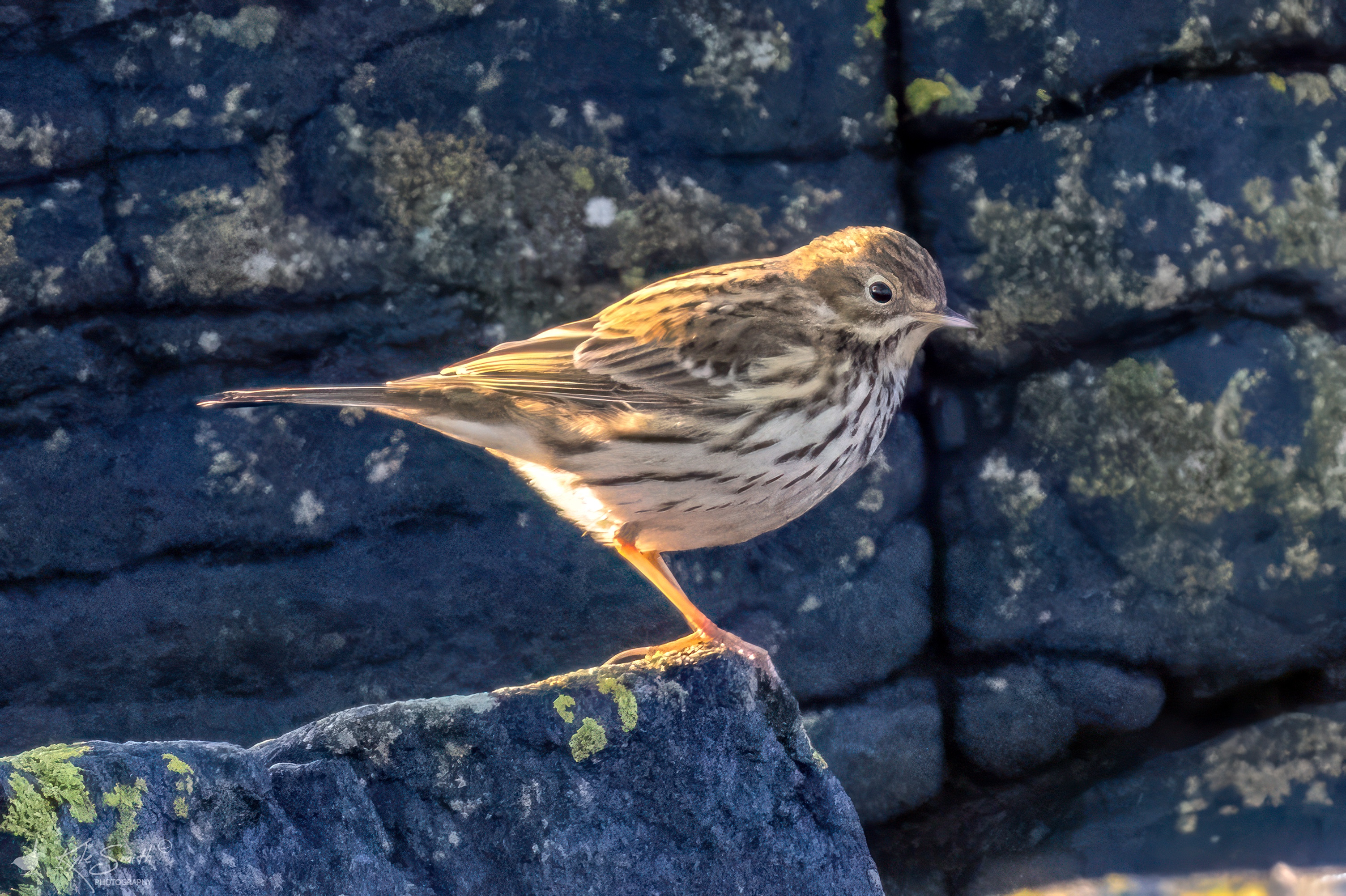
Rock pipit
Meadow pipit
Kayaks
Kayaks

We turned to return to the car and on to my mum's and spotted ringed plovers on the rocks, razorbill and eider on the water, and then two purple sandpipers on the water's edge. A terrific morning despite connecting with our dipper.

Ringed plover
< div class="separator" style="clear: both;">Razorbill
Eider
Purple sandpiper

Although not the reason for my visit to Scotland, my mornings had delivered great birding and the weather had also held out. Most enjoyable.

2024 year list: 85.

Saturday, 30 December 2023

RSPB Greylake & Slimbridge :: 29 December 2023

This would most likely be our last outing of the year for Kev @kev07713 and I, and fingers crossed would be a lifer for all of us - we would be joined by Karen @karenheath62 to visit RSPB Greylake for the 'returning'? Baikal teal from two years ago.

The Baikal teal is also known as the bimaculate duck and is slightly but noticeably larger than the common teal - drakes, like the bird we were going to see, have a striking green nape, yellow and black cheeks, neck, and throat, with a darker crown. They have long, drooping scapulars with front and near white bars. They breed in northern and eastern Siberia and typically winter in East Asia. There are generally only a few genuine European records, but this bird had been accepted by the powers that be on its previous visit. It had also been recorded in Wales (Llangorse Lake, Powys & Foryd Bay, Gwynedd) - a true vagrant with only a few records in the UK per decade.

We stopped enroute for our customary breakfast and met up with Kev's sister Karen @hobbylovinglife and her partner in crime Dean @worlebirder. We didn't stop for too long and were on the road in convoy, Dean leading - soon we arrived in the car park to find very limited spaces - but enough for two.

We made straight for the Treetop Hide where the best views were to be had, along the boardwalk, and joined about 20 other birders - the seats were all taken and so we had to view from the back of the platform. The bird was asleep behind a clump of grass but could just be seen. There were lots of descriptions of where to look ,but until you were on it the observations were tough to follow. Having located it, I put Kev's scope on the brown mass. Two ravens cronked over.

We waited and hoped that the bird would emerge, but other than a few peens and a shake of the head it stayed put - at least the views were now good enough to confirm the ID and tick it. It stayed well-hidden until a marsh harrier appeared nearby, flushing the birds onto the water and then we stared to have some great views. I was handholding my camera and lens and hoped I'd be able to extract something from the photos - a new camera, a whole new set of focusing options and settings, and taking photos over and between people at the windows.

Baikal teal
Baikal teal
Baikal teal
Baikal teal
Baikal teal
Baikal teal
Baikal teal

As we watched, Alan Boddington @alanbodd sidled-up, tapped Kev's shoulder and stopped for a chat before heading back to the car to collect his kit (having established the bird was here). Water rails called from all around and I managed to see one scamper through the reedbed directly behind. Bearded tits called from across the boardwalk.

Handfuls of people arrived at a time and the other closed hide back down the boardwalk was fully occupied and so we decided that, having seen the bird, we'd make tracks and leave some space - Dean would be working later and so he and Karen were off in any case - they can come back later as it is not far from home. Karen, Kev and I decided to stop off at Slimbridge on the way back, for a quick sandwich and to let me play with the camera. Little did we know there had been an accident ahead and we joined a 4-mile queue to get off the motorway.

After lunch we strolled along the path to the Estuary hide seeing the usual collection of ducks and swans from Rushy hide, and a few snipe.

Bewick's swan
Pintail

We climbed the stairs to the lower platform and scanned the Dumbles, Tack Piece and Estuary. A dozen or so white-fronted geese could be seen on the far hedge line, associating with a larger flock of Canada geese. The Ross's goose was far out to our right with a flock of barnacle geese, while two snow geese were off to our left.

Ross's goose

I thought I'd try and photograph something in flight and the obvious starting point were the Bewick's swans - big and manageable.

Bewick's swan

We'd tried to locate the usual peregrine on the posts by the estuary without success but eventually Kev found it on a tree branch upturned on the sand itself. It stayed for a while but then took to the wing flying away and then left, only to be lost from view. Later Kev found it again, now a bit closer on a different branch out on the grass. Despite the distance I had a go at trying to photograph it and with the window frame as a rest, it came out OK.

Peregrine

A chap in the hide called a sparrowhawk as it cut across in front of the hide and eventually stopped in a distant tree, pushing the pigeons out. We'd spent a bit of time here and as Karen and Kev had been up earlier than me, we decided to call it a day.

However, as we passed between the Knott and Willow hides, we looked through the wall to see a water rail in plain sight. I was stopped where the viewing window was high, and it made it damn near impossible to take a photo - should have continued on and joined Kev ... very nice views and my second of the day.

Home James and don't spare the horses.

Year List: 279

I usually create a collage of some of my favourite birds and photos from the year and post with a New Year message on my Twitter and Facebook feeds. If you are reading this then first of all thank you, and then accept my wishes for health, wealth and happiness in 2024 to you and yours. Lets hope for another cracking year and see if I can add to my 39 life ticks in 2023 ...

2023 Collage

Friday, 22 December 2023

On the hunt :: 16 December 2023

So the wait goes on in my quest to see a merlin perched at close quarters. There was little on offer and in reach, so we stayed a little closer to home with the intention of seeing a merlin and perhaps follow up with an attempt for an early glaucous gull.

Without a clear plan to begin with we'd set off slightly in the wrong direction and had to make a correction for breakfast and then to our chosen site - there have been good views of merlin there in the past, but no reports so far this winter - this was a bit of a punt. When we arrived, we were instantly alarmed as there was a lot of work going on in the fields around and the perching stones from the previous year had been removed. We set up and watched fruitlessly for a while.

The merlin we sought is a small falcon: adult males have slate-blue backs with finely streaked underparts; females and immature birds have brown backs; all have a tail with narrow white bands. In the UK most merlins nest on the ground, which is unique to the UK population, although since the 1970s they have started to nest in conifer trees. The female builds the nest which is a shallow scrape in the ground lined with twigs, heather, and other plant matter.

Merlins are predators of birds including sparrows, thrushes, warblers and small to medium-sized songbirds. They will also eat small mammals such as bats, squirrels, mice and voles as well as reptiles and amphibians. The birds here were often seen lunching on meadow pipits and skylarks. Merlins can be seen in the UK all year round. In breeding season, they can be found in the uplands of Scotland, Wales, and northern England on moorland but also in conifer plantations. In winter they are joined by birds from Northern Europe and move to lowland areas as far as south-west England. This site held three birds last winter and is the reason why we'd chosen it today.

We decided to move down and along a footpath running between water pools on our right and the main field of interest on our left. We spotted meadow pipits and skylarks, plus partridges out in the scrub. The habitat still felt right although visually the area had changed. Eventually we worked back to the car and on, to try instead for a house sparrow which this spot is known for. We stopped to scan across other pools along the lane and were joined by a local birder. We said where we were headed, and he said he regretted to inform us that their winter population appeared to have been lost - another casualty.

As we searched for other birds of interest a stonechat popped above a hedge, quickly dropping from view and then another appeared on the embankment to our left. The lapwings got up and a sparrowhawk flew through behind - there was another raptor in the sky but heading away from us - seemed a little large for a merlin - perhaps another sparrowhawk?

The local birder was a nice chap and when we told him about our search, he said that he'd seen a merlin earlier. Initially he was blasé about it but shortly after, showed us some photos he'd digiscoped on his phone - the merlin perched on a post eating a skylark. I know we'd just met him, but I hated him already (😂). We birded with him for another quarter of an hour and as he left, we picked out song thrushes, Cetti's warbler, yellow-legged gull and a kestrel.

We made back to the car - the direction of the spot he'd observed the merlin. We started our search again along the footpath with renewed purpose. I was drawn to a small low shrub and there on the left side was a bird - I focussed on it and as it moved, I saw it was a raptor - a merlin (f). It hopped around the foot of the scrub/shrub and briefly showed a little higher. Kev got his scope on it and took some video - wait as we might it didn't budge and mostly faced away, preening.

Eventually we decided to try and locate the spot where the bird had been feeding and as we walked, we could still see the merlin until it took to the wing and flew below the ridge. I managed to pick it out again against the far trees and too distant for anything but record shots.

Merlin
Merlin

We eventually located the spot he must have been scoping from and now have a clear idea should we ever take the opportunity again.

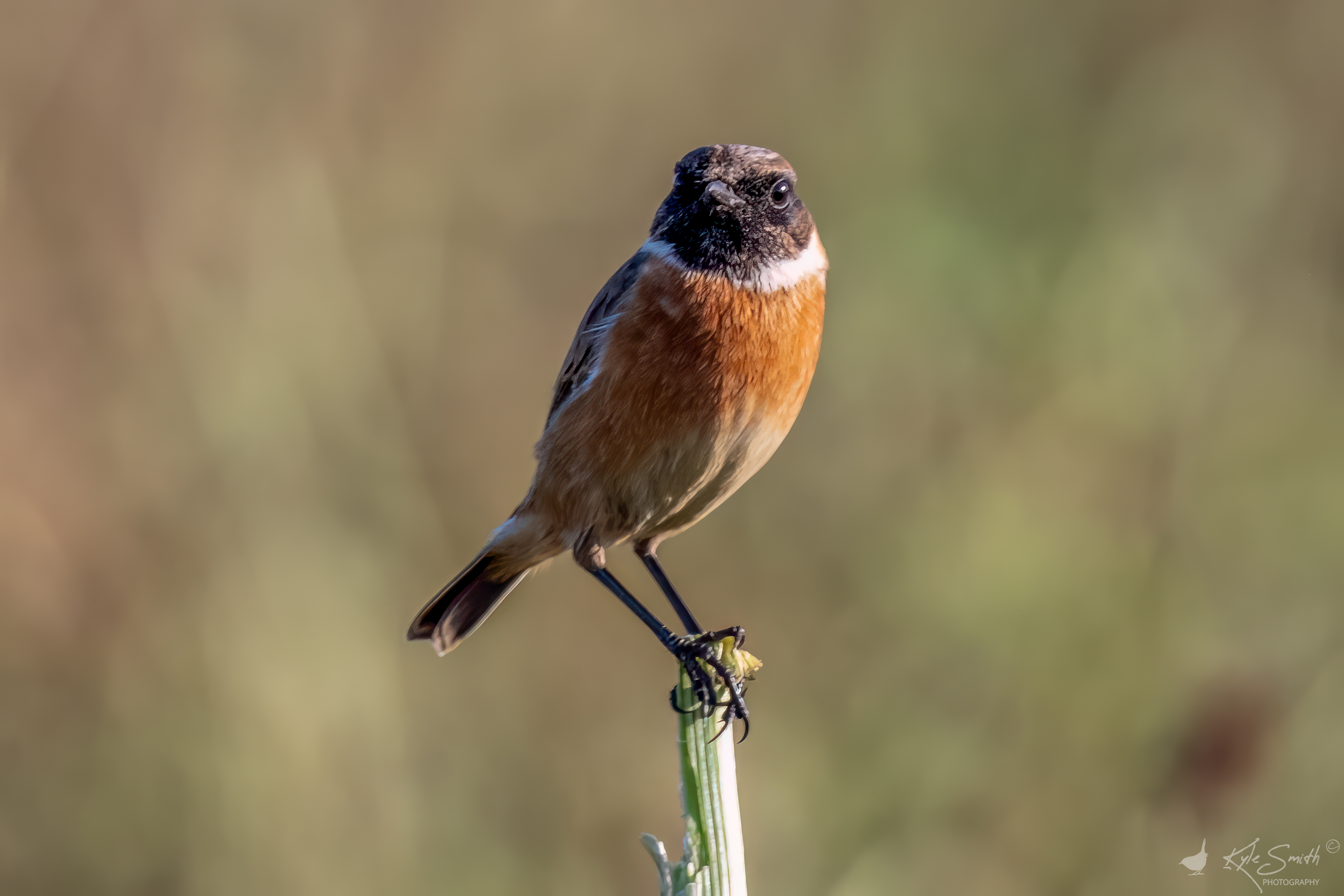
Stonechat
Stonechat

Our quest had been partially successful, found the target bird (lovely) but not views at close quarters - other raptors are available.

Kestrel

On the way home we dropped into a spot well known for white-wingers and met rather a nice local birder who visits almost every day. He hasn't seen anything yet and we didn't while we were there.

Wednesday, 13 December 2023

WWT Slimbridge :: 09 December 2023

Saturday’s forecast was for heavy rain through to lunchtime, and then for the wind to increase to 40-45mph for the rest of the day. The weather was to clear from the southwest and so we decided that a site with hides and towards the southwest would be best. Kev @kev07713 had been keen to return for seconds to the Devon coast where he'd had Hume's and yellow-browed warblers plus cirl buntings – and he knew I still hadn't added a yellow-browed on my year list. We opted though for WWT Slimbridge as the weather wouldn't be conducive to catching up with the warblers (neither the rain or the wind) - never a bad day at Slimbridge.

On the way the roads were edged with large puddles, the rain already in full swing and heavy - it became lighter as we progressed and slowed to a drizzle by the time we stopped for breakfast. As we arrived it had almost stopped altogether - we decided to make for the path with the longest path to take advantage of what might be a brief interlude.

At this time of year at Slimbridge it is all about returning swans and so we made for Rushy and it was great to see the Bewick's swans back. Bewick’s swan is a winter visitor to the UK and is the smaller of our two winter swans, with a relatively small bill. The Bewick’s swans which winter in the UK breed largely in the Russian tundra and each autumn, adults arrive with their grey young from the year and even in large winter flocks they will maintain family bonds throughout the winter.

We arrived at Rushy Hide and counted 54 Bewick's - no doubt there would be others across the reserve - and at least 9 of them juveniles. There were lots of ducks and geese on view.

Bewick swan
Bewick swan

It is a good time of year for numbers of many of the duck species, most notably wigeon. Another population that seems to swell at this time of year are pintails - long-necked and small-headed ducks, the males easily distinguished from other species. The pintail is a 'quarry' species, meaning that it can be legally shot in winter, but unlike in parts of Europe it does not appear that shooting is affecting their population status in the UK; the UK has a small breeding population but a significant winter population. Pintails, and pochards were represented in significant numbers and looked dashing on a grey, dank and increasingly blustery day.

Pintail
Pochard

Having scanned through all the birds and noted grey wagtail and a handful of common snipe, we moved along and from the Robbie Garnett Hide we could see two whooper swans. The whooper swan is one of the larger swan species and like the smaller Bewick’s swans, adults have a characteristic black-and-yellow bill, but in the whoopers the yellow markings extend in a wedge-like shape from the base to (or beyond) the nostrils. They swam to the left and eventually stopped to preen. Along the front edge of the water, we could see around seven snipe - but no jacks.

Whooper swan
Whooper swan

We soon reached the Estuary Hide and looked out hoping to pick up some cranes - it would be a while before we found two very distant individuals. We looked back across the Tack Piece and saw a couple of dozen curlews and large groups of mixed redshank and ruff. There were also large numbers of golden plover, lapwing and dunlin.

Curlew
Redshank and ruff

Looking out in front of the hide we picked out a marsh harrier on the ground - it seemed to be standing on something and then appeared to start feeding on it. While lapwings often get up as a marsh harrier quarters the area, you don't often see lapwing in their talons ... there were flocks of lapwing around and a few bombed our harrier, but it only moved away by around ten feet but taking it's quarry with it. Perhaps a sparrowhawk/peregrine catch and picked up, or a sick lapwing?

Marsh harrier

With some of the windows open we could hear geese coming in, a large flock - white-fronted geese that didn't stop, flying straight through. In the distance were bar-headed, Ross's and snow geese plus a brief appearance of the lesser- white-fronted goose. To the side were two Brent geese amongst a flock of Canada geese.

White-fronted goose

I looked out the back of the hide and spotted a male sparrowhawk resting in a tree. I watched as it was blown about, feathers dancing in the wind and branches swaying. Kev and I looked through the window and shared the bird with another birder in the hide. Once everyone had seen the bird, I eased the window open and thankfully didn't spook the bird, allowing some better views and photos. No doubt one of the reasons the golden plover, dunlin and lapwing were frequently driven onto the wing.

As we left the hide we met up with Kev's sister Karen @hobbylovinglife and her partner Dean @worlebirder. Kev had been birding with Karen in recent days and so we chatted briefly before agreeing to meet up later.

Sparrowhawk
Sparrowhawk

We made our way on to the Kingfisher Hide and watched black-tailed godwits and flocks of geese containing barnacle, Canada, greylag, and white-fronted geese. We heard a call from a kingfisher but never got eyes on it. The wind was really getting up now and was howling over and through the roof. Time to head back, stopping on South Lake on the way.

We bumped into Karen and Dean again, looking for jack snipe and finches, without much success. After another catchup we were off again.

Black-tailed godwit
White-fronted goose

We'd been keeping our eyes open for redpoll and siskin around the site and had only heard but not seen, siskins. Now we saw a male in the tree canopy actively feeding. One became two and then ten, in a mixed flock with goldfinches. In the winter, siskin often gather in groups with lesser redpolls and feed on seeds in birch and alder. Try as we might we couldn't make one into a redpoll.

Siskins are a resident breeder from southern England to northern Scotland, but generally most numerous in Scotland and Wales - many are residents but in winter many more birds arrive to the UK from Europe.

Siskin
Siskin and goldfinch

Happy with our day, we made our way back to the car, dropping in on the way home to try and catch up with some short-eared owls but were unsuccessful largely as a result of the weather, the wind and temperature conspiring against us.

Tuesday, 5 December 2023

Peep-o-Day Lane, Abingdon :: 02 December 2023

With temperatures forecast to stay below 0°C on Saturday (even during the day), and a persistent covering of fog to envelope much of England, Kev @kev07713 and I decided to go out birding, but to stay local. We hadn't visited Abingdon since the Pallas's warbler in January 2022 and a ring ouzel later in April 2022 - we liked the site - pools and damp grassland on one side, and wooded areas and hedges on the other.

The area has been producing sand and gravel for almost 40 years and much of the wider site is now restored with some other areas undergoing restoration. Two overhead electricity transmission lines cross the site. Original planning for the area was for restoration to agriculture but instead planning allowed for restoration to allow for the establishment of a damp grassland habitat with a nature conservation afteruse - proposed because the hydrology of the area had changed, creating an area that had greater biodiversity value.

We walked down the lane and encountered first a few, and then so many more chiffchaffs. We'd noticed how many there were when we visited almost two years ago now, but hadn't thought we'd see as many this time and especially in these foggy and dank conditions. In these cold conditions they fed frenetically along the hedgerows in groups of two to half a dozen at a time.

Most of the UK’s chiffchaffs are summer migrants, breeding here before flying to warmer climes in autumn, flying all the way to sub-Saharan Africa to overwinter. However, an increasing number of birds are now staying in the UK all year round. It’s thought this is due to the country’s warming climate, which means the birds can survive the winter here. Although most UK warblers are breeding migrants, four species can be found here during winter. Two of these are resident species, the Dartford and Cetti's warblers - the other two are the blackcap, and the chiffchaff.

Chiffchaffs are insectivorous all year round, so they can't rely on garden feeding like blackcaps during winter. Overwintering suitable habitats include sheltered coastal areas, but they also use urban and suburban sites, especially near water, sewage treatment plants (where warmer water means an abundance of insects), woodlands and hedgerows.

Chiffchaff

Amongst the chiffchaff were handfuls of goldcrests, also feeding frenetically and working the trees, hedges and scrub to find insects on the leaves and stalks. Not much chance of feeding on the wing here.

The goldcrest is our smallest bird species, but what it lacks in size it makes up for in colour. Goldcrests are named after the crest of bright feathers in the middle of their head. This is completely yellow on females but has an orange centre on males. The rest of the plumage is mainly green-brown.

Adults typically weigh just 5g, which is the same as a 20p coin. On average, goldcrests are slightly lighter than the similarly diminutive, and closely related, firecrest. The UK has a large population of breeding goldcrests that stay here all year round. However, the population is often boosted in winter by individuals that migrate from Scandinavia. Kev had seen numbers (in the hundreds) come off the sea when birding in Spurn earlier in the Autumn.

Goldcrest

We walked further along the path and at the top by a right turn and a gate allowing entrance into fields we came across Tom Wikens - we exchanged sightings and noted the sudden increase in winter thrushes feeding along these hedgerows. We expressed our surprise at his attire as he was in shorts, much as the photos posted on the groups during the summer (July) when he had found a night heron at the southern end of the lane, by Abingdon.

We scanned the ducks on the water to our left noting shoveler, wigeon, teal, mallards, and gadwall. We'd hoped to pick out some snipe on the damp grassland and water margin but nothing doing. Eventually Tom found that standing still wasn't a good plan in his attire and bid us farewell. As we walked back down the path we had some lovely views of the winter thrushes, the redwing being more likely to continue feeding as we passed.

Redwing

We heard a call from snipe and I picked one out as it spun out and over the hedge, then down the lane - there was another call but no view. Continuing down the path we started seeing chiffchaff, goldcrests and a grey wagtail, in the hedge line and ditch. They continued to show and feed and we spent quite a while watching them and hoping that we might find another species in amongst the tits, chiffchaff and goldcrests - but not.

Grey wagtail
Grey wagtail

On a tree on the edge of a ditch filled with water sat a rather unhappy looking buzzard. It occasionally flew from a prominent perch to the centre of a large tree but soon returned. It showed no signs of leaving and feeding, seemed happy just to watch and wait.

Buzzard

Finally we heard and then saw a couple of cetti's warblers chasing one another, landing on the tree just ahead. Thet skirted around quickly with one departing and flying along the hedgerow down the lane. The other stayed for another 30 seconds but remained out of shot for a decent photo. It then left and returned from whence it had come, to trees out in the field and out of reach.

Cetti's warbler

As we stood by the edge of the playing fields we were approached by a chap - we must have looked as if we were up to no good - he was the Chairman of the Football Club. We had been watching as a handful of people drilled holes in the ground and he explained to us that they were trying to improve the drainage on a section of the field as it was very prone to standing water - to prevent anyone falling into the holes they were back-filling with sand. There certainly has been a lot of water of late and it was obvious that the water was still sitting on top of the grass. A crack team on a cold day.

We finally bumped into Tom again as we were almost back to the car and he relayed sightings of mandarin and goosander on the Thames. We then spotted siskins in the treetops, perhaps ten. We decided to call it a day and made for home – a nice day out without the pressure of finding a ‘target’ bird.

Siskin

Year List:  278