Sunday, 27 December 2020

Grimsbury Reservoir :: 27 December 2020

The sun was out in a clear blue sky and so we decided to go for another exercise walk, this time choosing Grimsbury Reservoir. Having entered Tier 4 yesterday we had to stay local in any case. I picked up my camera and bins with the hope that we might see something on our circuit.

The reservoir entrance had been submerged a couple of days ago but the water had largely receded. The Spiceball Park car park had obviously been under water but two-thirds of it was now free from the standing water - the sign on the entrance is correct "liable to flood".

We started our circuit and soon were being followed by a number of people who had thought the same as us. As we reached the far end we could see a pair of goosander - not something I've seen here often. There were eight mute swans and a single Canada goose. We tried to head through the woods, and round to the canal but in each direction there were significant pools of water.

Goosander

Goosander

We returned to our circuit and saw 37 rook, c.70 jackdaw and c.44 black-headed gull in the cattle field. c.17 fieldfare travelled between the trees on the distant hedge line and two redwing joined a flock of c.35 starling. Five cormorant fed on the water and as we reached the pontoons another dropped in.

Unfortunately a kingfisher saw me before I saw it below the railings of the concrete pontoon sticking out into the water. Not the most exciting visit but good to be in the fresh air.

Sightings (25) included: black-headed gull, blackbird, blue tit, buzzard, canada goose, carrion crow, chaffinch, cormorant, fieldfare, goosander, great crested grebe, jackdaw, kingfisher, lesser black-backed gull, magpie, mallard, mute swan, pied wagtail, redwing, robin, rook, song thrush, starling, woodpigeon and wren.

Sunday, 20 December 2020

RSPB Otmoor :: 13 December 2020

I decided on a late trip to RSPB Otmoor, primarily hoping to find a short-eared owl - yes I know it has only been seen very sporradically, but it sounded like my usual site hasn't yet reported any.

Golden plover

I walked down along the path between The Closes and Moorleys. The noise made it clear that many of the golden plover had recollated to The Closes, as had some lapwing.

At the feeders we coild see the usual suspects, but including two great-spotted woodpecker and a treecreeper.

I managed to connect with five white-fronted geese but not close enough for any identifyable photos. There were a growing number of people and it occurred to me that they must be coming for the starling murmuration. I decided to turn and head to the footpath leading to The Pill. There was a flock of geese - mixed greylag and Canada. As I watched a single barnacle goose ascended a bank into view.

Barnacle goose

I went through the gate into the field leading to The Pill and had to swing through on the gatepost as the mud was too deep for my walking boots. I walked along the edge of the field but saw nothing of note. The further I went, the wetter it got. I eventually turned back and stood on the edge of the field looking through to the MOD land. I saw a dozen or more blue tit presumably gathering to roost and a squirrel entering a hole in a tree - 'no talk me, I'm angy'.

Squirrel

I decided not to chance having to walk against the incoming flow of people and head back to the car down the Roman Road. I stopped on several ocassions to see if the short-eared owl might be quartering these fields but with no success. However, thousands of starlings were coming in from the south east, in flocks of 10s to 100s. The wing noise as they passed over was fantastic.

Not the longest visit but I think I'll have to consider how busy it gets at the end of the day. I had to squeeze between several cars to make my way out as every possible place for a car was occupied.

Signtings (28) included: barnacle goose, blackbird, blue tit, canada goose, carrion crow, chaffinch, dunnock, fieldfare, golden plover, goldfinch, great spotted woodpecker, great tit, grey heron, greylag goose, lapwing, magpie, mallard, mute swan, pheasant, red kite, redwing, robin, rook, starling, teal, treecreeper, white-fronted goose and woodpigeon.

Friday, 4 December 2020

Seamill :: 01 December 2020

A visit to Seamill that I hadn't planned to make and there for the worst reason. Having packed up for the journey home we decided to have a walk on the beach outside the Seamill Hydro for some fresh air. The sea was calm and the temperature cool but not cold.

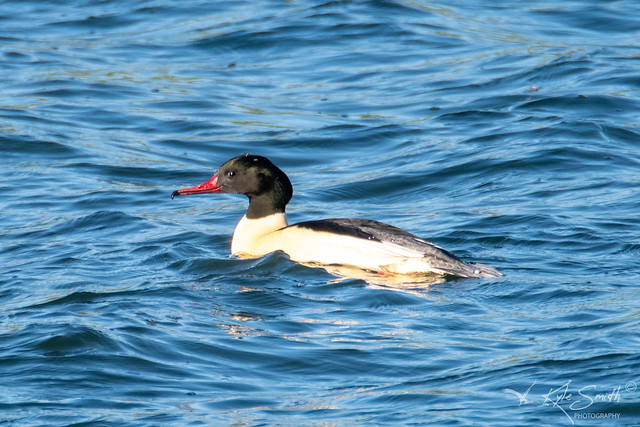
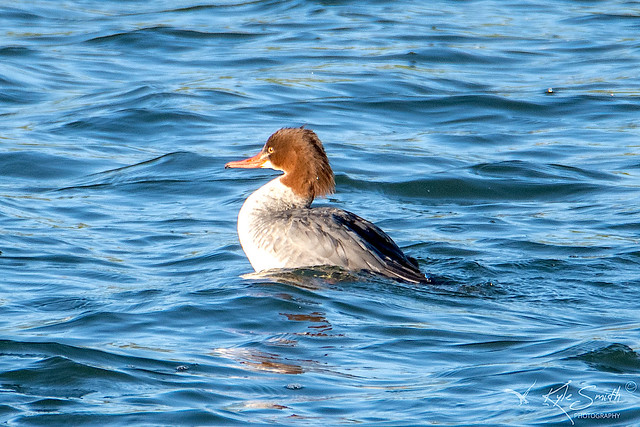
We had five red-breasted mergansers off-shore with groups of seals bobbing beyond. One male cruised close enough for decent photos.

red-breasted mergansers

Red-breasted merganser

There were numbers of herring, common and great black-backed and a couple of black-headed gulls. A handful of redshank and turnstone fed in the rocks by the gulls. Oystercatchers were mobile.

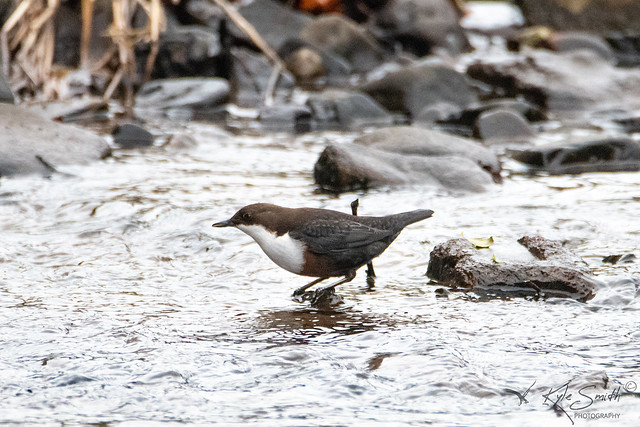
Crossing the burn we found a single dipper feeding. We watched for a couple of minutes before it flew back up the burn and out of sight. We continued on an down to the point. I'd hoped to see purple sandpiper but it turned out that this wasn't going to happen today.

Dipper

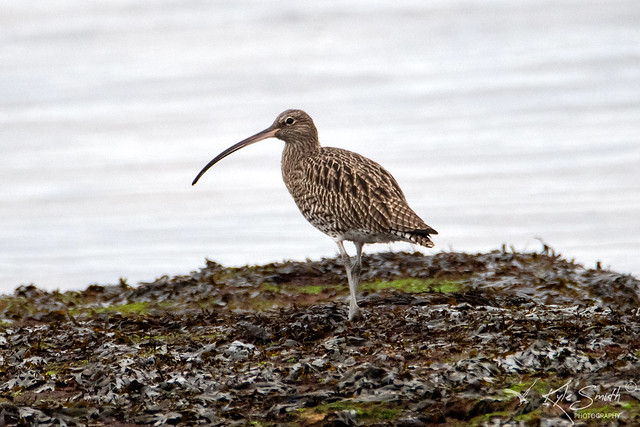
First a single curlew then a small flock of seven in the next bay. A gannet hunted at a very large distance, only really visible with bins. A few more redshank scattered along the shore.

Curlew

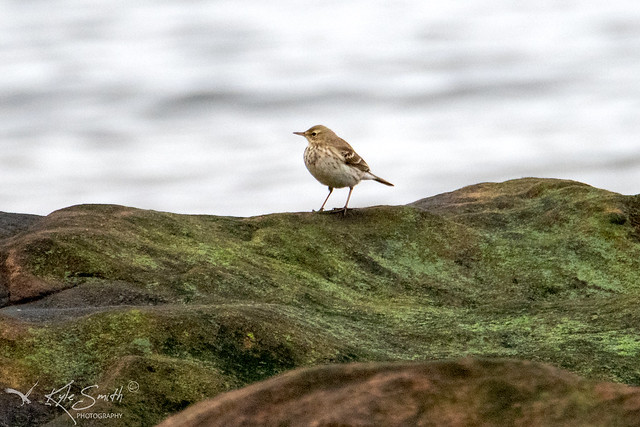
Soon we had to turn back and as we reached the bench a small bird flew passed, flushed from below by a dog. I scanned across the rocks where it had landed and noticed it was pale and not just a meadow pipit, but a water pipit.

Water pipit

Crossing back across the burn we found that there were now two dippers - they fed under the flowing burn.

Dipper

Back to the car and off to say goodbye to the family before the drive home.

Species (34): black-headed gull, blackbird, carrion crow, chaffinch, collared dove, common gull, cormorant, curlew, dipper, dunlin, eider, gannet, goldfinch, great black-backed gull, herring gull, house sparrow, jackdaw, mallard, meadow pipit, oystercatcher, pied wagtail, red-breasted merganser, redshank, robin, rock dove / feral pigeon, rook, starling, stonechat, teal, turnstone, water pipit, wigeon, woodpigeon and wren.

Sunday, 22 November 2020

Farmoor Reservoir :: 22 November 2020

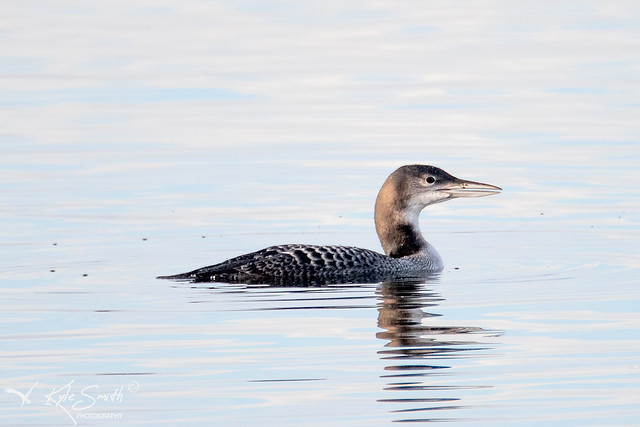
Busy doesn't really cover the last week and so an opportunity to get out after 10 days was well received. A choice of Farmoor Reservoir seemed to be right. In the car park we chatted to a regular who was heading off to look at the winter thrushes by the river and see if there was anything unusual with them. We popped on our walking boots and set off onto the reservoir. We stopped by the left side of the marina and soon were on the great northern diver.

Great northern diver

Great northern diver

Eventually we were left trying to work out how long it could stay under - sometimes it was down fro minutes but this was just ridiculous. Looking out in the distance we picked out the GND - what a passage to get out there on its last dive!

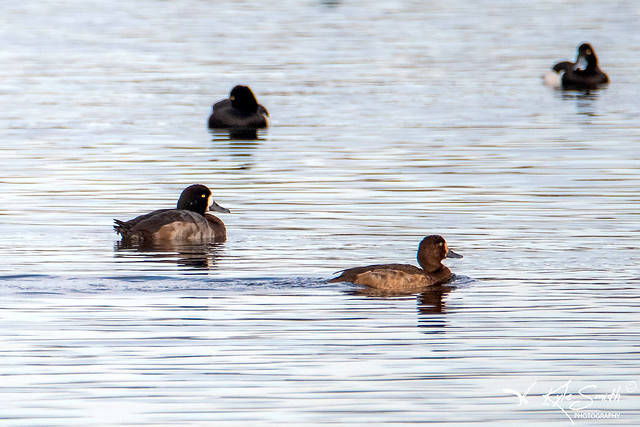
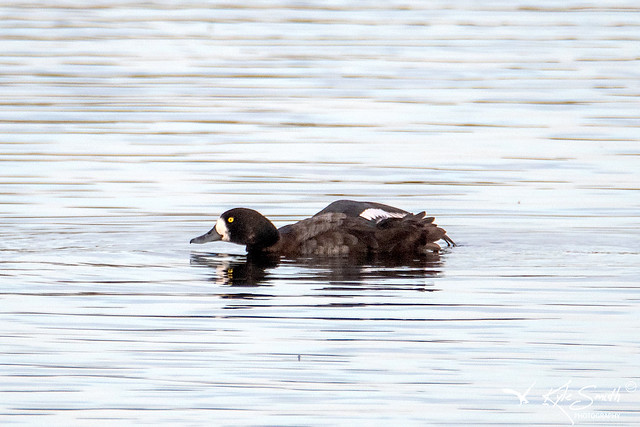
We opted to set out across the causeway, hoping to catch up with the GND on our return. We reached the end of the causeway and located the scaup, hanging out with tufted duck.

Scaup

Scaup

We set off round F2 to make for a longer walk and at the turn to head down to Shrike Meadow we stopped to see a mixed tit flock, a great spotted woodpecker and several dunnock.

In the trees over the perimeter fence we saw a flock of c.20 fieldfare, and a chiffchaff. There was also a cormorant fishing party having great sucesss and surfacing with a range of fish from small to something I may have considered for my own dinner!

There were an increasing number of walkers and fisherman and by the time we got back to the Visitor Centre the GND had been chased off and replaced by little grebe.

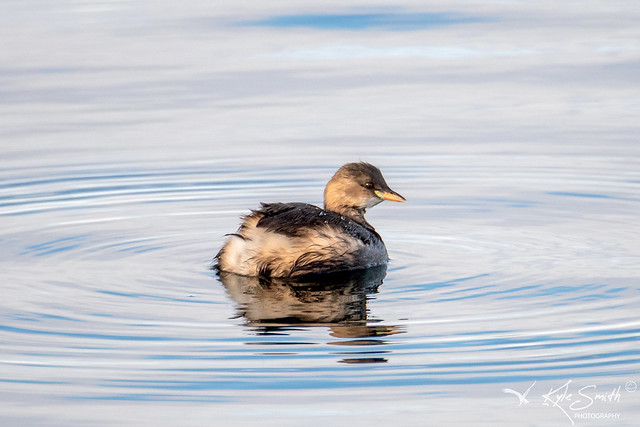
Little grebe Sightings (29) included: black-headed gull, blackbird, blue tit, carrion crow, chaffinch, chiffchaff, coot, cormorant, dunnock, fieldfare, goldfinch, great black-backed gull, great crested grebe, great northern diver, great spotted woodpecker, greylag goose, herring gull, little egret, little grebe, long-tailed tit, magpie, mallard, mute swan, pied wagtail, robin, rook, scaup, tufted duck and woodpigeon.

Bucknell Woods :: 11 November 2020

My eldest was on holiday from work, whatever holiday is meant to mean during this pandemic. She hadn't been out for ages and so I convinced her to come for a walk with me, to Bucknell Woods.

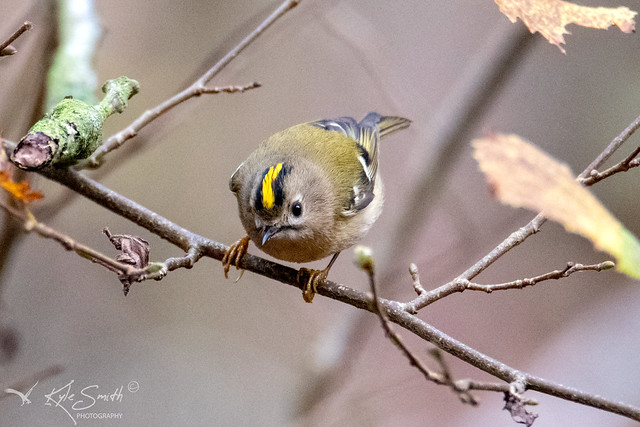
As we entered the wood, we could see that the Forestry Commission had been busy felling trees all up the main track from the car park. To be honest it changed the feel and as we walked awe had fewer encounters than usual, until we reached the first turn. Here we came across some blue and great tits and chaffinch. As we continued we came across a couple of goldcrest and then a few siskin, the siskin very high in the tree-tops.

We tried to follow one of our usual routes but the path turned into a swamp and I almost lost a walking boot. We double-backed and took a shorter and critically passable route. We heard calls but I couldn't distinguish anything unusual. We came across more goldcrest on more than one occasion, and with a mixed tit flock had views that allowed reasonable photos.

Goldcrest

Goldcrest

Despite the curtailed route we enjoyed our time out in fresh air - a great contrast to life of late.

Sunday, 8 November 2020

Pauline Flick, Balscote & Grimsbury Reservoir :: 07/08 November 2020

What a beautiful morning it turned out to be - bacon sandwich and coffee to get me going and then a walk with Charlotte at the Pauline Flick Reserve, managed by the Banbury Ornothological Society (BOS). To be precise it is managed by Jan Guilbride and as we pulled off the road we found her unloading feed and compost from the boot of her car into a wheelbarrow. I'd listened to her giving a presentation on a monthly Zoom Meeting for the BOS members during lockdown and knew who she was straight away. We chatted and she realised who I was from the sightings and blog post from my previous/first visit.

Charlotte offered our help with the wheelbarrow but Jan opted to stick to her plan.

Pauline Flick Reserve

We started on ahead and walked through the trees looking increasingly autumnal. I'd mentioned some flyover fieldfare on my last visit but now we could hear and see at least 24 individuals - we also counted 4 redwing on the same berries. No doubt why these winter thrushes were here - the abundance of berry-laden bushes was evident.

We saw the usual blue and great tits at the feeders but also coal and long-tailed on or nearby. Dunnock, chaffinch and robin fedd too. A red kite quartered the hedgerow but soon drifted away.

Red kite

We reached the area where Jan has erected a barrier to limit disturbance of a tawny owl roost and we could see where that was ahead. Jan also mentioned nesting jays in the spring but there is little evidence of a food source along this stretch so likely across the Chipping Norton - Stratford Road.

I showed Charlotte the exposed layered limestone before turning back. In the tops of the trees and bushes opposite there were branches laden with berries. A single bird cut through, stopping briefly on a stalk to the back. We could see a colour and initially had it down as a chaffinch but as we moved round we could see it was actually a male bullfinch - made Charlotte's day.

We passed Jan near the feeders and chatted briefly before making our way back to the car. On the way we had more views of winter thrushes feeding and watering by the stream in the valley below, and female bullfinch feeding on treetop mast.

On the return to Banbury we saw great spotted woodpecker over the fields. All in all a very pleasant morning.

After lunch I thought I'd pop up to Balscote Quarry to see if I could connect with brambling or the merlin being reported intermitantly. There were very large flocks of winter thrushes, mostly fieldfare and totalling c.100. There were also small flocks of redwing that passed over, c.6 each time. A great spotted woodpecker passed over twice and the kestrel hunted for a short time before landing on the sand martin pill where it stayed for more than 30 minutes.

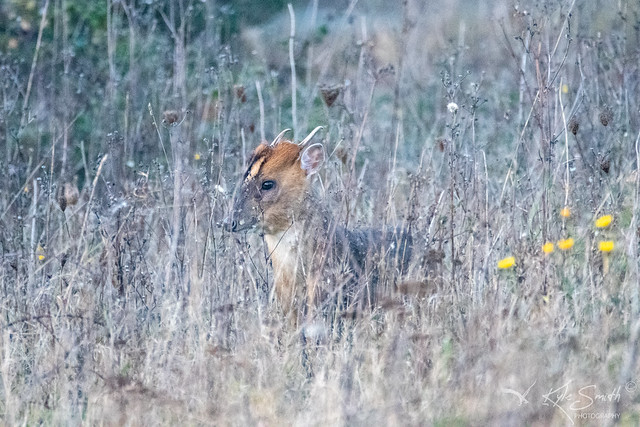
As the light left a pair of muntjac deer passed, the female bounding through and the male deciding to turn back.

Muntjac deer

Muntjac deer

Two mute swan dropped in to join two thers already in residence. They swam but then comically stood up as the water was still relatively shallow. They then had a second thought and left, stage left.

Mute swan

The sun dropped and a late jay passed the viewpoint giving no opportunity to raise a camera in time and not enough light to do much with it if I had. The sunset was one to be enjoyed.

Balscote Quarry

As a opened the boot of the car a small flock of 9 long-tailed tits made for their roost and pipistrelle bats passed overhead.

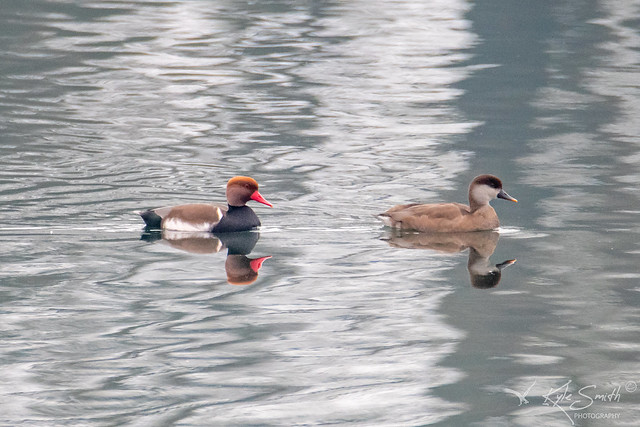
An early alert went out of a pair of red-crested pochard at Grimsbury Reservoir - a rare visitor there. I swethered whether to go but when an update came that they were still there after 30 minutes I got dressed and went. They stayed distant but were graceful enough to put on a show of gently cruising back and forth for a good while.

Red-crested pochard

Eventually the female decided to have a kip and that was when I decided to pull stumps. Kevin Heath of recent brambling fame joined and the finder John passed by. Another regular Mike P also came for a look and while we socially distanced for a quick chat a pochard passed overhead but didn't stop.

Red-crested pochard


I returned to Balscote Quarry and counted 74 black-headed gulls, 11 lapwing, 9 fieldfare, fa pair of song thrushes, locks of mixed yellowhammer and reed bunting, and both great spotted and green woodpecker. Despite Steve Holliday having scattered seed under the feeders, the brambling never showed - the various finches did grow in numbers but not with their new friend. A single goldcrest passed behind and a pair of stonechats were initially distant but closed the distance enough for some shots before the weather drew in.

I packed up and as I turned to go a muntjac slipped back out of view into the bushes.

Sunday, 1 November 2020

BOS Balscote Quarry :: 30 October - 01 November 2020

It had been a funny week with my boiler breaking and being stuck at home due to wet weather or work. I got up late on Saturday morning and after breakfast started some housework. The rain set in so I didn't rush to see what had appeared on my phone. When I did eventually sit down I found that the Banbury Birders WhatsApp Group had been very busy - people had been enjoying a first ground feeding brambling (eventually 2m & 1f) at the BOS Balscote Quarry Reserve. The weather though had been foul but everyone thought it had been worth the visit.

I had lunch and decided to pop to the reserve to see if I could catch up with a brambling - by now the sun had made an appearance. I bumped into Mark Ribbons, Steve Holliday and others as they came and went but had no direct sightings of a brambling, although Adrian Bletchly pointed out a bird in a flyover finch flock - to be honest I didn't see the individual despite his best efforts.

After most had moved on, Mike Pollard dropped in and we continued our vigil watching green woodpeckers, song thrush, linnet and three muntjac deer.

Muntjac deer

We also enjoyed flocks of 20 lapwing and c.130 golden plover as they landed in fields behind and on the far edge of the water pool. As we waited Mike fetched his scope from his car and pulled out 9 snipe on the far bank. Kestrel, red kite and buzzard hunted over the site.

Golden plover

All very good but no brambling.

I woke on Sunday to my wife telling me there was a leak in the loft and water was dripping from the ceiling light onto the landing. I got dressed and brought step ladders in from the garage. I eventually located the likely culprit and contacted our plumber. As the leak was just a drip, I checked my phone and found that a brambling had been seen again and reported by Kevin Heath (Kev). I jumped into the car and headed to Balscote - the leak would wait.

I got to site and two cars were already in place. I found Adrian Tysoe watching below the feeders and made him jump as I crept behind. We waited and were joined briefly by Iain Brown. In Balscote he'd seen two brambling over and a flock of 30 continental blackbirds. Kev was also on site but down at the far screen watching yellowhammer amongst other species. Iain left us to continue the vigil. A pair of stonechat fed in the scrub between us and the water's edge.
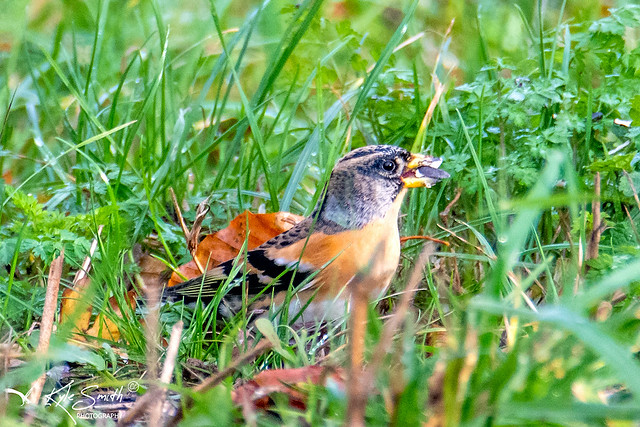
Brambling

After a little while we saw a male brambling drop down and feed from the ground. We shot off some photos and chatted, content that we'd connected with the bird. Adrian turned to look at the water in the bowl and reported that two little egrets had just dropped in - this was exciting as we believed this was a first for the year. We started to look through our bins and Adrian excitedly realised that the bird on the left was actually a cattle egret.
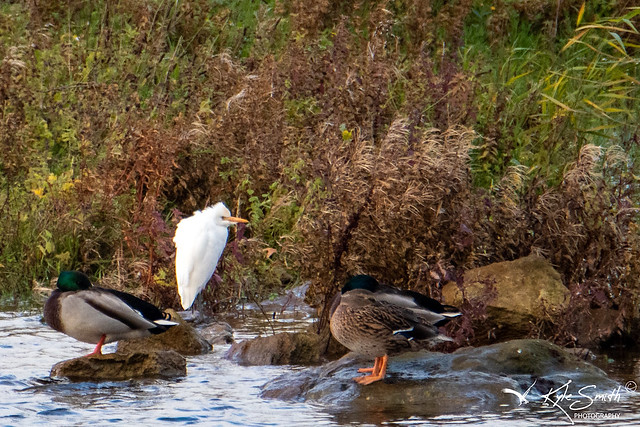
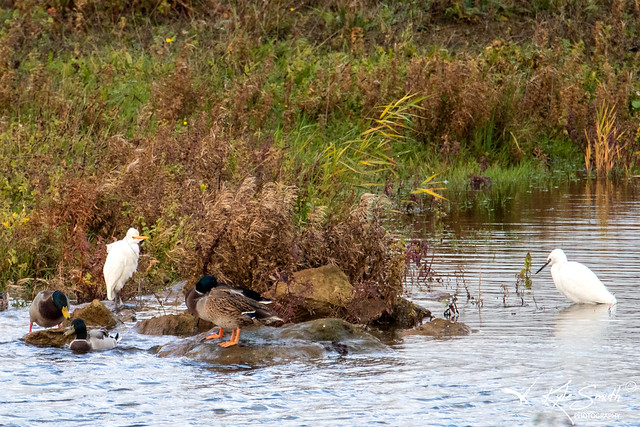
Cattle egret

Cattle egret

Adrian posted the sighting on the WhatsApp group and this brought the return of Iain. Just as well he was local as the egrets only stayed 10 minutes.

Cattle egret

A few others started to arrive but they would have to make do with a wait for the brambling - it did show again. I'd left by then as a sparrowhawk had cut through the feeders scattering what birds there were. Sandra Bletchly had also suggested that she'd not have let me leave the house with a water leak of any size and so I headed home - the plumber had looked at the photos I'd sent and suggested what I do to rememdy the situation.

Sightings included: black-headed gull, blackbird, blue tit, brambling, buzzard, carrion crow, cattle egret, chaffinch, coal tit, dunnock, fieldfare, golden plover, goldfinch, great spotted woodpecker, great tit, green woodpecker, greenfinch, kestrel, lapwing, linnet, little egret, long-tailed tit, mallard, pied wagtail, red kite, snipe, song thrush, stonechat, sparrowhawk and woodpigeon.