Thursday, 18 August 2022

Ayrshire Coast :: 8-11 August 2022

We'd booked to make a trip up to see my mum and stopped at RSPB Leighton Moss on the way up - we couldn't stay long and as it happened the regulars said they'd never seen the reserve so quite (bird wise). We will have to try again during the winter to see if we can connect with bearded tits on the grit trays.

The following morning I arose early to get on Seamill beach at sunrise and popped on some walking boots mainly just to stop picking up sand on my shoes and trailing it through the hotel and car. As soon as I got on the beach, I could see a godwit feeding on the water's edge with oystercatchers - I took photos as I closed the distance to be sure and have a record should it depart. I got reasonably close, and the bar-tailed godwit seemed relatively at ease.

Bar-tailed godwit

A couple of gulls flew too close and put up the oystercatchers and barwit up and they flew off towards Portencross - I decided to follow in pursuit all the while being watched by grey seals bobbing in the shallows. A big storage ship was positioned offshore (the Petrojarl Foinaven - length overall x breadth extreme: 250.2 x 34.05 m) - the Petrojarl Foinaven is an Offshore Support Vessel built in 1997 and currently sailing under the flag of Bahamas. Who knows what it is up to ... after about 10 minutes it set sail towards dock at Hunterston, taking a couple of support vessels with it.

Grey seal
Grey seal
Petrojarl Foinaven

I walked along, investigating each curlew however distant to see if I could identify a whimbrel - no joy along to Portencross Beach. It was obvious though that the number of redshanks had increased considerably from my previous visit - there were also more pied wagtails. On two occasions a group of six sandwich terns flew passed, presumably the same individuals on a circuit.

Curlew
Redshank

There was nothing else of note other than the usual gulls, gannets, cormorants and shag out on the water and so I turned and made my way back and passed the Seamill Hydro then out towards the three towns. Passing over the bridge crossing the burn I stopped to see if I could see a dipper - no dice - perhaps on the return. Not far ahead I came across a common sandpiper, working along the edge of the beach and away from the water's edge - it observed me from a distance and flew ahead and closer to the water, this time allowing me closer and a photo to be taken. On the rocks I stopped to look for rock pipits but was frustrated until a bird flew through, sporting a white flash on its rump - a wheatear - they must be back on the move after the breeding season. I followed it along the beach and eventually found it with a rock pipit just before the corner leading to the Waterside Hotel. Out on the rocks, amongst the oystercatchers, was my bar-tailed godwit taking a rest before it would be moved on by the incoming tide.

Common sandpiper
Wheatear
Rock pipit

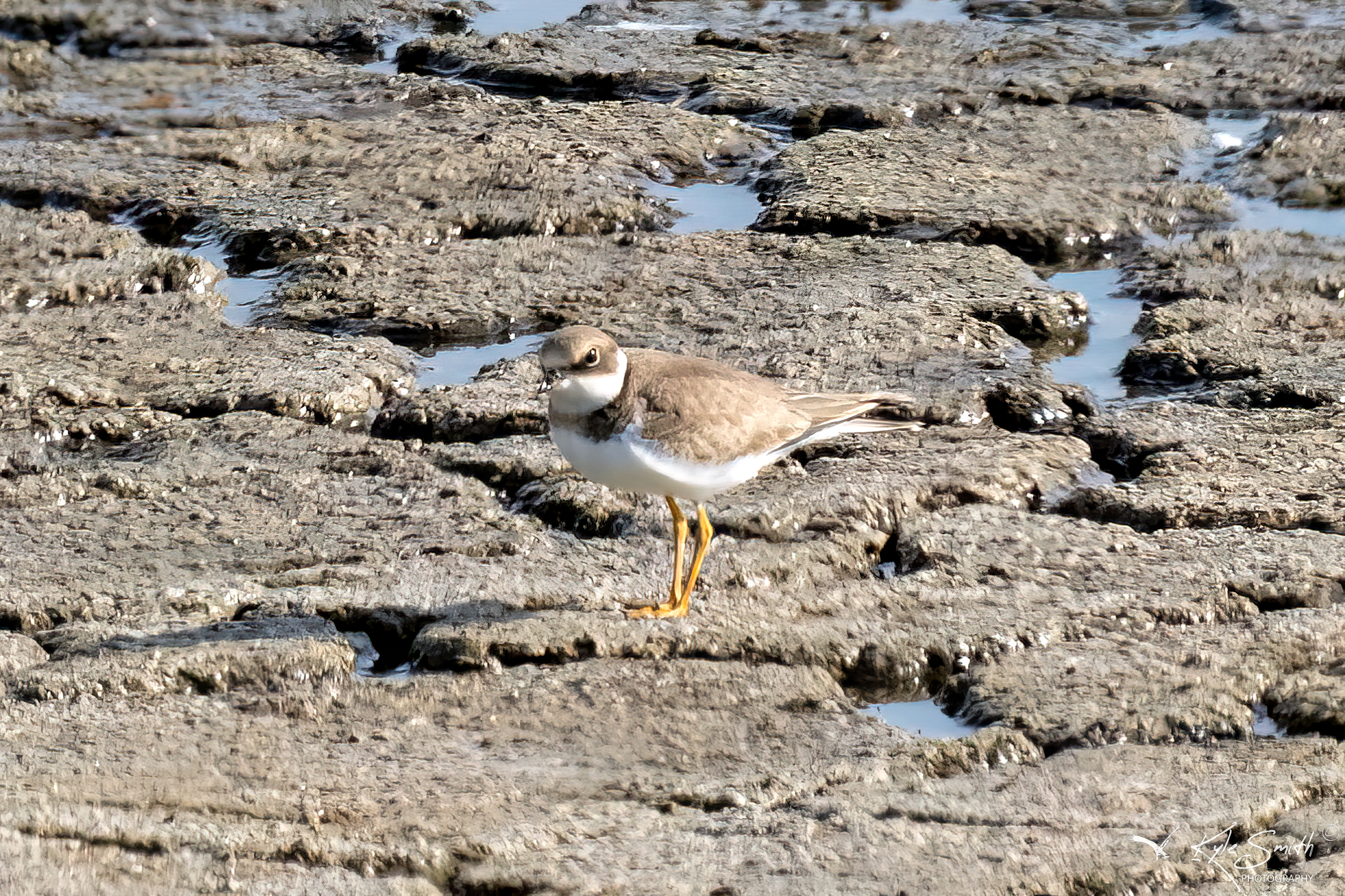
Time was marching on and so I turned back noting linnet and meadow pipits overhead. A pair of ringed plovers were very keen to catch my attention and are presumably still have a nest given their display. I tried not to linger long so as not to disturb them but still long enough for a couple of photos.

Ringed plover
Ringed plover

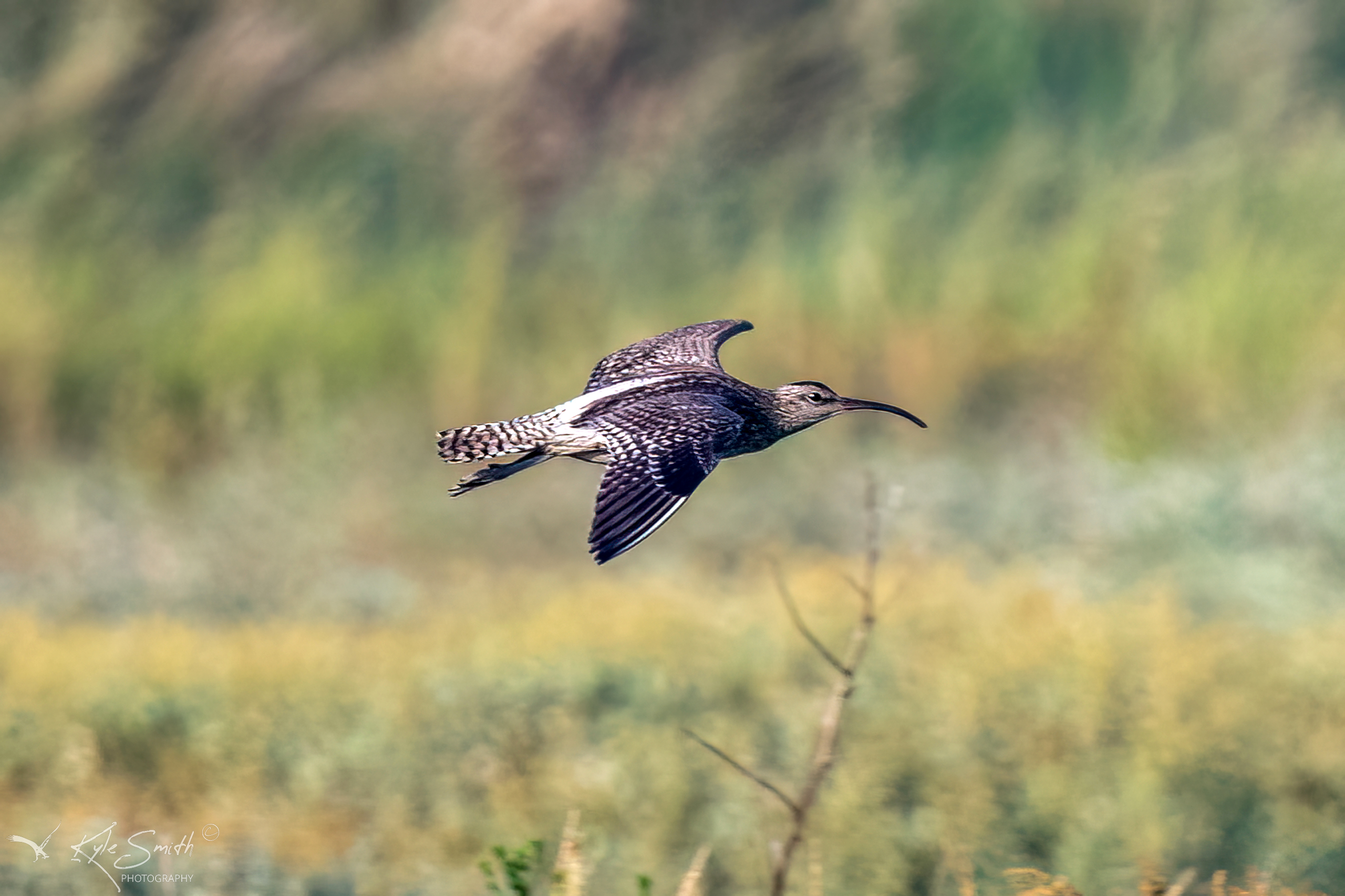
Halfway back I stopped and scanned the rocks as there were a number of birds together including curlew. A smaller bird flew across a channel and when it landed I could see that it was a whimbrel - excellent. I kept on surveying, but I couldn't locate any purple sandpipers. Back to the hotel at the allotted hour, a shower, and then breakfast.

Whimbrel

The following day started warmer and clearer, so I decided to have a trip down to the Irvine Bogside Gold Course and Bogside Flats SSSI beyond. Here there have been hen harriers and short eared owls in the past but not on this occasion. I got a little excited when a large bird opened wings on a distant structure but on review it was a juvenile pheasant. I watched and waited at the end of the driving range seeing chiffchaff, willow warblers, sedge warbler, stonechat, skylarks and both house martins and swallows. Eventually I moved on to see if I was in the wrong spot and reached the Garnock River. Here I saw many stonechats, skylarks, meadow pipits and flyover curlews and also the usual redshank and oystercatchers out on the muddy water's edges. A number of stonechats that I was watching appeared to be a family group.

Willow warbler
Stonechat
Stonechat
Stonechat

I wandered back to the driving range and found someone almost able to reach the perimeter fence. I kept off to the side just to be sure. Looking out I could see a roe deer watching me and presumably thinking I couldn't see it. I heard grasshopper warbler call briefly but couldn't see it - focussing on stonechat and sedge warblers instead. Then again, I heard grasshopper warbler - while I'd seen them at this site before it was on the opposite side of the flats. A sedge warbler had dropped into an area of pinkish flowers, and I took some photos - the bird was too obscured and so when I reviewed the photos they were not in sharp focus. A dunnock dropped in on the front edge of the flowery stalks and I took a photo; it was only then I realised it was actually a grasshopper warbler - that made my morning.

Roe deer
Grasshopper warbler

I made my way back to the hotel for breakfast and a shower - we were going to have lunch at Souters Inn in Kirkoswald; built on the site of the old schoolhouse where Robert Burns studied in 1775. The restaurant is named after Souter Jonnie, a shoemaker immortalised in a poem by Robert Burns, unveiling his everyday life and the skills of his trade. After a delicious meal we made our way across to Maidens Harbour only to find the tide out - while this exposed much of the harbour bed for waders, there weren't many of them. There were ringed plover, dunlin, oystercatcher, redshank and assorted gulls but nothing of interest out on the water. A single sand martin caught flies over the harbour, returning regularly to the pier wall - presumably still young in the nest. Grey mullet cruised up and down in the shallows of the harbour. We walked around, admired Ailsa Craig from close quarters and then set off down the coast road to Girven. Passing Turnberry Lighthouse we noted the parking and I hope someday to do some sea watching from there.

Souters Inn - Souter Jonnies
Dunlin
Ailsa Craig

Wednesday morning birding didn't come to pass - I had a work thing - normal service was resumed on Thursday with a trip out to Stevenston Point. The sun was just rising as I arrived and watched rock pipits, sandwich tern, gannets, shag, cormorants, and eider ducks from the car park. I could see sanderling down on the beach to the south and made my way there passing stonechats on the way. I counted individuals along the shore and decided there were about 100 sanderling in three main groups.

Stonechat
Sanderling
Sanderling
Sanderling
Sanderling
Sanderling
Sanderling
Sanderling
Sanderling
Sanderling

For a change I walked right along the beach, the gulls ahead being particularly skittish. At the far end I could see guillemots and eider ducks out at distance, plus a bird I couldn't identify - it looked a bit like a Slavonian grebe - others thought so too in response to my Twitter post. I walked back to the point and from there watched the sandwich tern and gannets feeding offshore. I didn't manage to see any manx shearwaters but did see a couple more distant guillemots.

Gannet
Sandwich tern
Sandwich tern

On the rocks I could see there were now ringed plovers with dunlin but no sign of purple sandpipers - I was going to be leaving Ayrshire empty handed with this species. As I packed up a group of sanderlings spun across the water and back, landing on distant rocks. All in all, a very enjoyable few mornings of birding.

Sanderling
Sanderling
Sanderling
Guillemot

Wednesday, 17 August 2022

RSPB Otmoor :: 31 July 2022

It had been a busy day on Saturday and when my wife said she was going for a walk with friends (and then a drive with our youngest), I decided to make for RSPB Otmoor as a ruddy shelduck had been showing for a number of days. As I drew into the car park, I met Sandra and Adrian Bletchly; they confirmed that the ruddy shelduck was still showing at first screen, as was a juvenile black-necked grebe. Apparently they hadn't seen anything else of note and suggested just making for first screen directly.

Arriving at the screen there were a couple of people already in residence. They communicated that a number of cattle egrets had showed closely but had departed shortly before I arrived. Two kingfishers had also shown well.

It wasn't difficult to pick out the ruddy shelduck and so I quickly got my tick. The black-necked grebe wasn't so easy to locate but it was pointed out and stopped me scanning beyond the actual location. The bird wasn't diving but scurried around the teal and mallard duck, emulating their feeding behaviour; quite a difference from the summer plumaged birds we'd seen at Pitsford Water.

Ruddy shelduck
Ruddy shelduck
Black-necked grebe

There was a solitary oystercatcher out in the shallows, and a number of little egrets and little grebes - eventually some cattle egret landed in the bushes at the back of the pool but never close enough for a photo.

I talked with another birder - Louise Donovan - who had captured some cracking shots of a cattle egret when it had been closer - later I came across her post on Twitter. She had also captured some great shots of the shelduck before I arrived - particularly interesting to see the colour under the wing.

I didn't stay long and beat my wife home - she wouldn't know I'd abandoned my post!

Thursday, 4 August 2022

RSPB Pagham Harbour & Medmerry :: 30 July 2022

The phone rang at 4.35am and it was Kevin Heath to ask if I was up - he could see no sign of it from the roadside. How embarrassing ... we'd agreed to meet at 4.30am and head for the south coast – the meet time had been chosen as I had an appointment in Banbury at 2.00pm. I had to admit that I had no explanation of why, but I was still in bed - the alarm appeared to have the correct time set but either hadn't gone off, or I'd turned it off in my sleep when it rang. Kev said that he was going to get some fuel and would be back shortly and so I dressed, made a flask of coffee and was on the drive pulling kit from my car as he returned 10 minutes later. I apologised and we set off, stopping for breakfast on the lower part of the A34, arriving in the RSPB Pagham Harbour car park by around 7.00am. We started getting ready to set out when Kev said he felt a bit under the weather - we hadn't been sure where we could park and had opted for the official car park. Along the track we realised that we could have parked in an area about half the distance from our target bird - an error, especially when Kev wasn't feeling right. We bumped into a chap coming the other way and he confirmed we were heading in the right direction and that the bird was showing.

Having crossed a couple of fields we passed through a gate and could see some watchers peering down into a burn ('rife'). A birder approached from the other direction and as he got level with us he pointed slightly behind us and there was our bird, a Squacco Heron, perched on a distant hawthorn bush - we'd been so intent on the rife and birders we hadn't seen it. We stopped where we were and viewed through our bins and scope - I also rattled off a few photos as this might be the best views we got, unless it flew closer. A life tick for me!

As we watched, a chap could be seen working along the hedge line and I wondered if he would flush the bird - not knowing what the bird would be able to see I waited and hoped. Although there was a moment of increased alertness the bird didn't seem disturbed. After a few minutes we talked with a couple of birders who then went off an did the same thing - we talked with a chap who suggested he was also going to view from closer and so I went with him, leaving Kev to view from the path.

Once on the hedge line I could see how the birders were staying partially under cover, in a hollow within the hedge itself. I joined and started taking photos from a more reasonable range - the bird was still relaxed in our presence and was preening. On a couple of occasions, it turned facing first left and then right, but showed no sign of being in a hurry - apparently it had already been perched for almost an hour.

The last thing that I hoped for was to get a photo of the bird in flight and so I stayed put. Eventually the Squacco took off, made a low circle and dropped into the rife. I took a couple of record shots of it there and made my way back to Kev.

Squacco heron
Squacco heron
Squacco heron
Squacco heron
Squacco heron
Squacco heron
Squacco heron
Squacco heron
Squacco heron
Squacco heron
Squacco heron

Kev was still feeling a bit rough but there had been reports of curlew sandpiper further along the North wall - a chap Kev had talked to suggested he'd seen them earlier. We saw him ahead and decided to follow, chatting to another birder as we went. When we reached the pools of interest, we all scanned the waders finding only black-tailed godwits, dunlin and three little ringed plovers. A sedge warbler dropped onto a reed ahead.

Black-tailed godwit
Black-tailed godwit
Little ringed plover
Sedge warbler

We scanned BirdGuides to see what else was about and reports had come in for a white-rumped sandpiper, curlew sandpiper and wood sandpiper at RSPB Medmerry - just along the road from where we were. We set off and chatted to another birder doing the same – it appeared that he had been down at the lesser yellowlegs with us a few weeks ago and was planning to make for Medmerry too; he had parked closer and set off well before us. Whimbrel flew across the marsh - I think I've seen more this year than any other perhaps due to the range of places we've visited.

Whimbrel

We parked up at Medmerry and started down the track … people had said it was a long walk and they weren't exaggerating. About two-thirds of the way down the track we talked with a birder coming the other way who crushed our hopes telling us the white-rumped sandpiper had already departed - a second week of missing this species. When we got to the designated spot it was confirmed the main target had gone, and there were no curlew sands. We could see the wood sand though - there were also black-tailed godwits, avocet, common sandpiper and yellow wagtail.

Time was marching on and we had to turn and make our return to the car, bidding our farewell to the chap we'd followed to site - we arranged to see each other in another couple of weeks when something else arrived. The return back to the car was even longer (at least felt like it) than on the way in - the temperature was also increasing. We heard someone call on us and a familiar face waved - it was the South African chap from RSPB Cliffe Pools that had located the stone curlew last weekend – an amazing coincidence we’d come down here within hours of one another. Gosh we are getting about and meeting people.

Wood sandpiper

We made it to my appointment in Banbury with just five minutes to spare. I thanked Kev for driving and hoped he'd soon feel a bit better.