Wednesday, 19 June 2024

Berkshire & WWT Slimbridge : 07 & 08 June 2024

Back from Scotland and time for our annual pilgrimage to see nightjar and woodcock. Kev @kev07713 Karen @karenheath62 Charlotte and I dropped down to a site we know in Berkshire that is an ideal habitat offering a mix of open ground for hunting and dense cover for roosting during the day. We parked in a lane and made the short walk from there to the same area we enjoyed the spectacle last year.

Nightjars feed on flying insects, particularly moths and beetles, catching their prey in flight using their wide mouths and bristle-fringed feathers. The best time to observe them is during their active periods at dusk and dawn, and although we'd seen some video footage of the dawn period, our preference was for dusk.

We saw a pair of great spotted woodpeckers in their preferred tree and watched as both left to feed and probably return with food for their nest. Very shortly after we had our first indication confirming the presence of nightjars, churring very early at 7.39pm - nightjars are known for their distinctive churring song; it lasted only a couple of minutes and then stopped for the next couple of hours.

We chatted and listened (just in case) but noted that we'd had our first flyover woodcock at 9.00pm last May (the report here) - it wasn't until almost 9.20pm before we had our first view of a woodcock this time. The light was being lost quickly and I managed a few record shots of woodcocks as they started to pass regularly - circa 15 while we were counting.

Woodcock
Woodcock
Woodcock

Once we'd counted 15 woodcock flyovers the nightjars started calling around us, mainly from behind. Kev strolled back to see where the calls may be coming from and found an individual in a tree - he managed to get a video (see his post on X here) before the bird departed and I arrived (no chance for a record shot). We watched over the back treeline and had great views of flying nightjars, watching them drop into the heather and scrub before rising again. All too far for photos, and the light had gone. Woodcocks continued to pass over, but we were distracted now.

A couple of people appeared, conducting a nightjar survey for the BTO. They moved around the area to get the best views and record the number of birds calling. Since nightjars are primarily active at night, they are difficult to study, and little was known about their movements during breeding and migration. However, recent tracking with high-resolution GPS devices has provided the most detailed and accurate information ever on the migration and movements of British nightjars. These surveys at known locations are an excellent way to monitor changes through the seasons and over the years.

We watched at least three nightjars flying and perching on various trees and Kev managed to take another video - I was again on the other side of the trees and path - idiot. I'd had great views though, just not the photo I wanted. We eventually packed up and made for the car - we'd be getting home after midnight.

Kev and I agreed to meet the following morning and made for WWT Slimbridge - as it doesn't open for members until 8.30am, we didn't rush. There were a handful of cars already in the car park - members that had gone in a little early. We got kitted up and made for Middle Point where a white-spotted bluethroat has been showing again. This is most likely a returning individual that birders have been going to see for the last three years. I feel it is becoming easier to see – I’ve heard a number of people recount the number of repeat visits they had before seeing it in previous years, but it has been a simpler exercise in the last two.

Male bluethroats are particularly colourful, with a bright blue throat featuring a white or sometimes reddish spot, a white belly, and a combination of brown and orange on the upperparts and flanks. The primary component of the bluethroat’s diet includes insects such as beetles, flies, caterpillars, ants, and spiders and so the bird is often out of view and down in the reeds. Bluethroats typically forage on the ground, where they search for insects and other invertebrates among leaf litter, under stones, and in low vegetation.

We passed a birder coming the other way who confirmed the bird was showing - we walked on reaching the Shepherd's Hut and set up outside. As expected, the bird had gone to ground and we scanned around waiting for a view - reed and sedge warblers, and reed buntings popped up and down. A crane flew passed.

Common crane

After quite a wait Kev spotted our bird on a post way off to our left - he alerted the assembled birders, and we all got our tick.

White-spotted bluethroat

For the next half an hour it flew up and down this fence line, occasionally dropping from view for 5 - 10 minutes. Eventually it did the decent think and perched on a long twig protruding above the reeds and made a record shot a bit easier. Eventually it flew right at greater distance and out of view.

White-spotted bluethroat

I was scanning with binoculars and pointed out where I was searching on posts in front of the reeds, away to our right; Kev scanned the area and picked up our bird again. It was too far for photos but soon it reappeared on another perch out in front of us. We decided to make our way back to the Visitor's Centre for some breakfast/brunch.

White-spotted bluethroat

We made our way round past Rushy Hide having seen a report of drake garganey there just an hour before. Entering the hide it wasn't apparent that it was there at all but as we know they can go AWOL for long periods of time, sleeping/feeding in reeds or dense scrub. It took a while but eventually I saw it in a bay largely concealed by reeds, before it disappeared - Kev didn’t have a chance to see it. 15 minutes had passed when it reappeared at the end of the scrub and at the very far end of the pool. It is entering eclipse plumage and so not quite the stunning individual I'd been hoping for.

Talking of stunning birds, the gadwall is usually a rather plain species but at this time of year really ups its game. A number of these striking individuals were preening close in front. A male gadwall in breeding plumage has a finely marked grey head and neck, with a subtly mottled appearance. The body is primarily grey, featuring intricate patterns and a distinct black rear end.

Just in front of the garganey were two families of shelduck, the young looking particularly cute, quite a number with each pair of parents. They took to the water and looked very conscious that they should stay close to mum and dad. A little ringed plover dropped in very briefly.

Garganey
Gadwall
Shelduck
Little ringed plover

We continued walking, and while I paused to watch a warbler in a tree, a kingfisher flew over the path between us and a woman approaching from the other direction. It headed towards a pool beyond a hide. Hoping it might stay around the pool, we entered the hide and spotted it right in front of us. The kingfisher perched for a couple of minutes before relocating to another branch on the left side of the pool. Before finally departing, it moved to the front of the reeds and scanned the water below.

Out in the fields beyond we could see an Egyptian goose on the edge of a pool, feeding on the grasses.

Kingfisher
Kingfisher
Kingfisher
Kingfisher
Egyptian goose

We toured around the rest of the hides and enroute Kev rescued a drinker moth caterpillar crossing a path where it was very likely to be stepped on - footfall traffic was very heavy now. I suggested that he should select an implement to lift it with as I'm sure I'd read that the contact with the hairs is an irritant and care should be taken if you handle one of these. Of course, Kev didn't listen - I know how his wife Karen feels 😂. Reading up on this species it appears that this large, fluffy-looking moth is on the wing in July and August, but that you might spot a caterpillar at almost any time of year. They're most often found in marshy places such as the habitat we were standing in at Slimbridge, the caterpillars feeding on a variety of grasses and reeds. The moth is called the "drinker" because of the caterpillar's habit of drinking drops of dew from grass stems.

Drinker moth caterpillar

Eventually we reached the Kingfisher Hide and found that there were no views of kingfishers to be had. Scanning around we saw a crane working through the meadow to the right, just visible above the long grasses. This crane became two as another raised its head above the height of the grass and followed the first as it worked further and further right.

As they got closer to one another, I had the thought to try and get the two birds in the same photo; as I focussed, I saw a juvenile working along between them. Now trying to get the three in the same photo, I spotted a second juvenile ahead of the leading adult. Like most cranes, this species displays indefinite monogamous pair bonds and their clutch usually contains two eggs, with seldom one laid and, even more rarely, 3 or 4. It was therefore great to see the successful fledging of likely both eggs. I got a photo with three birds, but never the four.

Crane

Trying to distract us were three roe deer (one buck and two does) also working through the meadow and dropping to the pool edge for a drink. One doe made the most of abilities prancing left to where the buck was largely concealed from view.

Roe deer

It was getting late in the day, and we could see reports of diversions on the road home, so made tracks encountering road closures and road works in a few places.

Year list: 213.

Monday, 17 June 2024

Ayrshire coast :: 03 & 06 June 2024

I was headed north to celebrate a significant birthday with my youngest brother and family, and as usual I took the time before breakfast to do a bit of birding. I hadn't had the opportunity to try and see a grasshopper warbler this year and so this gave me a site that I should visit as it is reliable for these.

Bogside Racecourse, located near Irvine in North Ayrshire, Scotland, was once a prominent horse racing venue. It opened in 1808 and held significant races, including the Scottish Grand National until 1965. The racecourse closed in 1965 due to declining attendance and financial issues. Areas of the old racecourse have been maintained for green space, walking paths, and wildlife conservation.

The area around here, especially given its proximity to Irvine and coastal wetlands, is rich in birdlife. The varied habitats, including marshlands, grasslands, and nearby coastal areas, attract a diverse range of bird species.

The grasshopper warbler is a small, elusive bird that is found in various parts of the UK, particularly during the breeding season, arriving in the UK in spring (April) and leaving for their wintering grounds in Africa (primarily the Sahel region) by late summer (August-September).

The males are known for their continuous, mechanical reeling song, which they often deliver from a hidden perch within dense vegetation. This song is most frequently heard from dawn ,and later at dusk.

I snuck out of the hotel at 05.00am, parked up at The Irvine Golf Club, walked through the golf course to the edge of the flats, and started my way along the trail on the perimeter of the marshland. I listened as I have previously even seen grasshopper warblers this far up but still hadn't seen or heard anything by the time I got to the woods. This corner is where I most regularly encounter this species here. UK breeding birds amount to 16,000 pairs but can be hard to spot as it moves like a mouse creeping through the foliage and grass.

I listened and heard calls from lesser whitethroat but nothing from my warbler. A willow warbler called from the trees behind. Twenty or so minutes passed, and I was beginning to wonder if I was going to dip when a bird flew low across the grass towards me - I thought willow warbler or chiffchaff but when I got a look it was a grasshopper warbler. It didn't make a sound and I wonder if it might be a female - their calls are generally less prominent. It showed carrying some food but dropped from view and reappeared close by in a fern before climbing up into a bush. working through and away. I had no further views despite waiting for another half-hour or so.

Grasshopper warbler
Grasshopper warbler
Grasshopper warbler

Eventually I thought I'd move on and perhaps visit Stevenston Point. However, as I reached the access point back to the golf course, I scanned the reedbeds and grasslands beyond, spotting a short-eared owl hunting at distance. It worked along the edge of the river and back a couple of times, dropping into the longer grass on a few occasions.

Short-eared owl
Short-eared owl
Short-eared owl
Short-eared owl

It wasn't the first time I've found short-eared owls around the Garnock River, and it is not surprising as the area provides very suitable habitats such as wetlands, grasslands, and marshes - ideal for these owls. It was great to watch the characteristic low, quartering flight as it hunted for small mammals, the flight buoyant and moth-like, helping to distinguish it from other birds of prey.

I walked further down the track towards Irvine but soon the bird was lost into the grass and out of view. I waited and hoped for another view, but it didn't come. As I waited a roe deer watched me from the grass, presumably thinking it was concealed.

Roe deer

Soon I looked at the time and had to make tracks to be back at the hotel for a shower and breakfast. I messaged my brother to wish him a happy birthday and say we'd see him later for dinner when he got home from work.

I played golf the following day (had two hailstorms) and so didn't attempt an early start, and then Wednesday morning was wet. Thursday, our final day arrived, and I went out at 05.00am again but this time to Stevenston Point - boy was it cold! There was a wind and occasional spots of rain. On the water I couldn't spot anything of note and the rocks held none of the usual suspects. Some gannets fed offshore and on a couple of occasions came closer, plunge-diving for their prey underwater. Most plunge-divers go relatively shallow, but gannets can dive as deep as 20 meters, using its wings and feet to swim deeper in pursuit of fish.

Gannet
Gannet
Gannet

I watched and waited when eventually a couple of sandwich terns passed by, just once and then back down the shore and out of view. A rock pipit called and then appeared on rocks and seaweed at the foot of the bank, soon flying off to the most distant rocks at the point.

Sandwich tern
Rock pipit

Some ducks approached from the south and stayed well offshore - I could see they were common scoter. Afterwards three flew past a bit closer in.

Common scoter
Common scoter

I decided that enough was enough and I started to pack up but noticed something far out but showing white highlights. I got my scope out and could see it was a single red-throated diver; not in full breeding plumage but nevertheless great to eventually find one. Too far out for a decent photo.

Red-throated diver
Red-throated diver

I packed the scope away, checked my watch and saw I still had some time so relocated to Saltcoats. I couldn’t locate any purple sandpipers but could see some birds way way way out over the water - Manx shearwaters (my first of the year). I'd talked to a chap who'd seen a handful when I visited in March but I'd not been lucky enough to see any then.

These black-and-white shearwaters track schools of small fish, including herrings and sprats, diving from moderate heights or chasing them underwater. Unlike other shearwaters, they often hunt in smaller groups and are active during daylight hours. After the breeding season, manx shearwaters depart their colonies, migrating from our shores to the eastern coast of South America, near the Antarctic fringe. The feeding grounds here are abundant, ensuring the birds can thrive and return for the next Spring.

Manx shearwater

I waited and sure enough some passed closer to shore, then a couple almost within range of the camera lens.

Manx shearwater
Manx shearwater

I decided to move down to the harbour and even from the car could see some black guillemots flying around. As I got into the harbour, I could see a couple of birds on the edge of the wall and another couple on the steps. I would count eight; they were spectacularly confiding. They relocated regularly but didn't seem to worry about landing close to where I stood. They typically nest in rocky crevices or burrows, sometimes even using old structures as nesting sites, these in the harbour walls.

Black guillemot
Black guillemot
Black guillemot
Black guillemot
Black guillemot
Black guillemot

I had to make my way back, stopping to fill up with fuel for the journey home later in the afternoon.

Year list: 210.

Friday, 14 June 2024

Harry's Wood, Bedfordshire & Ouse Fen :: 01 June 2024

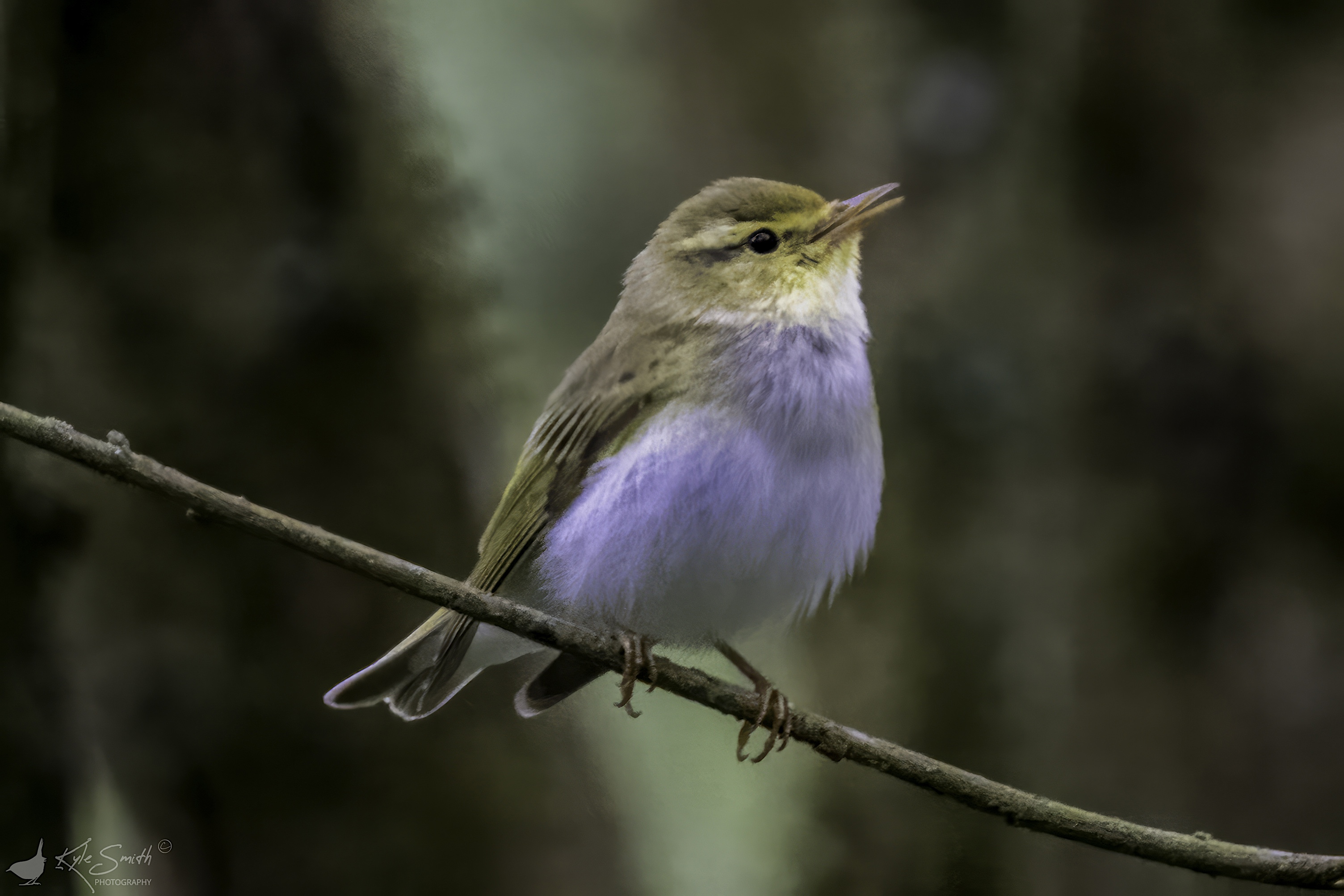
I've struggled to find any wood warblers this year, and my regular site in the Wyre Forest appears empty, with almost all birders reporting no sightings. So, on Friday night it was good to agree with @kev07713 to visit a site near Corby where an individual had been singing and showing well for a number of days. This male wood warbler had been found in Harry's Park Wood which is an interesting piece of woodland between Corby and Oundle.

It is an interesting forest writes Marian Pipe, a historian, as Robin Hood once had a narrow escape in Rockingham Forest. According to Marian in her book, in part of Rockingham Forest, Harry's Park Wood, there is the Bocase Stone, which is near Brigstock. "It marks the site of an ancient oak tree, which was blown down in a gale in the 17th century". On the path bisecting Bocase Farm and Harry’s Park Wood is a rectangular limestone slab, leaning backwards at 30° and inscribed at the top, in crude capital letters, “In this plaes grew Bocase tree”. The Bocase tree, believed to have been a large hollow oak, stood on the edge of a clearing in Rockingham Forest, marking the intersection of parish boundaries.

This location is steeped in folklore and tales. One story tells of a fairy princess who enchanted an elderly man, temporarily restoring his youth. Other legends suggest that this site was where Saxons gathered to "read out the Bocas Calendar" or where foresters and archers met for practice. The most popular legend, however, claims that Robin Hood used this tree to conceal his famous bow and arrows to evade capture. Who knew!

We would plan to make more of the day, but this would be our first stop, ignoring breakfast to get there early. We parked in the narrow lane and met another birder coming the other way who confirmed the presence and ongoing performance of the wood warbler. We walked down the footpath and even before reaching the left turn, we could hear our bird calling. We entered the trees to find two birders already in position and joined them in enjoying our bird flitting from perch to perch, singing almost constantly. We've never seen a wood warbler quite like it, so confiding and unconcerned in our presence. We snapped photos and Kev took some video on his phone, the bird so close that the magnification of a large lens or scope wasn't required - the sound was terrific.

The wood warbler is a migratory songbird known for its distinctive trilling song and bright plumage; the trilling notes are often described as sounding like a spinning coin. They prefer deciduous woodlands with a good ground cover of brambles and other shrubs where they forage in and within the canopy above, for insects and spiders. Having wintered in Africa, they return to the UK in late April and early May. Unfortunately, this bird is unlikely to encounter a mate in this wood.

Wood warbler
Wood warbler
Wood warbler
Wood warbler
Wood warbler

Eventually we thought we should leave the bird in peace and made our way back to the car, making sure we avoided any outlaws looking to rob us on the way. As we made our way out of the wood and onto the lane we came across a lovely lesser whitethroat, blackcap and a garden warbler – we noted how good a little spot this is. We wondered if it is birded regularly - presumably someone visits given they picked up the wood warbler.

Lesser whitethroat

Looking at where we were, we decided that we'd make our way to a site in Bedfordshire where we were likely to be able to see turtle doves - we hadn't seen or heard of any reports, but the site is generally not publicised and so that wasn't a surprise. We remembered where to park and were soon on the spot where we'd watched from last year. We listened and scanned but couldn't locate our quarry.

The population of turtle doves in the UK has dramatically declined over the past several decades. As of the latest estimates, there are only about 2,100 breeding pairs left, which marks a 98% decrease since the 1970s when there were approximately 125,000 pairs. Despite efforts, the turtle dove remains one of the fastest declining bird species in the UK and it is always special to be able to see them.

Kev strolled along a track, listening for any sign and after a few minutes I followed having failed to find anything in the opposite direction. There were some trees ahead that looked like they needed investigating - we listened, and I turned to look back up the track - a bird flew across between the two treelines that was just the right size, colour and flight. We finished checking ahead and turned back to investigate and soon had a view of a single bird, perched right behind two woodpigeons. We snapped a few photos just in time as one of the woodpigeons hopped directly at the dove, flushing it further along the treeline. We caught up, and passed, having great views of another confiding bird.

Turtle dove
Turtle dove
Turtle dove
Turtle dove
Turtle dove

We spent a while admiring the bird and chatted briefly to three birders that sidled up, before the bird took to the wing and disappeared into a dense area of bushes. We'd had great views, and it was time to leave the bird in peace.

We stopped for some breakfast and planned for our next target - the great reed warbler had been reported again at RSPB Ouse Fen and so we travelled to the car park we'd been to for the singing little crake last year. We stopped for a coffee before realising we were on the opposite side of the site from where the bird was. We drove round and parked in a much better car park. We set out and met a few birders coming the other way who confirmed the bird was there and showing.

The great reed warbler, typically found in mainland Europe and Asia, is occasionally spotted in the UK, although it is a rare visitor. It is one of the largest warblers, measuring about 19-20 cm in length. This would be our third of this species, our first being at Langford Lowfields RSPB in 2022 and another at RSPB Ham Wall in 2023. Ouse Fen is known for its extensive reed beds, providing an ideal habitat for the bird during its migration.

We joined a dozen or so people waiting for a view - the bird having disappeared from view. A few part calls confirmed the bird was out in front of us, but it took a good 20 minutes before we saw it perch at the far side of the front area of reeds. A tick and views but partly obscured for a record shot. We waited after the bird dropped from view and went awol for another 15 minutes or so. It popped up again, further left but still very much on the back side of the front reeds. Again, it dropped from view.

Now we heard the bird again but this time on the front of the back reeds and in better view.

Great reed warbler
Great reed warbler
Great reed warbler
Great reed warbler

At the Ouse Fen RSPB Reserve, the bittern population is doing remarkably well. The reserve has recorded up to 12 booming male bitterns, indicating a strong presence of this secretive bird in the area. This success is part of a broader conservation effort that has seen bittern numbers rise significantly across the UK, with 228 booming males counted during the last breeding season. We saw long flights from distant bitterns as we waited for the warbler, until one and then two birds circled out in front of us. Another bird flew across and so we were sure we had three separate birds.

Bittern
Bittern
Bittern
Bittern
Bittern
Bittern

We returned to the car and looked across the water on the other side of the car park seeing Egyptian geese, redshanks, lots of hirundines, amongst others. A Cetti's warbler called but refused to show. A couple of hares cavorted to our left, one appeared to think it was hiding behind the grass, but it was effectively out in the open.

Hare

Considering the number of hirundines we were surprised not to see any hobbies across the reed beds. A cuckoo called over the fields behind.

It had been a long day, we'd covered a bit of distance around multiple sites, and so it was time to head home after a successful day's birding.

Year list: 208.