Showing posts with label gannet. Show all posts

Tuesday, 31 March 2026

A day in North Wales :: 30 March 2026

With the clocks having moved forward an hour on Sunday, we were able to enjoy a lie-in, until around 2.30–2.45am and still arriving in North Wales in time for a black grouse lek at about 6.00am, with sunrise due at 6.42am - even allowing for a breakfast stop along the way. This has become something of an annual pilgrimage, though always a long day, as we planned to continue birding after the grouse before making the lengthy drive back to Banbury.

I picked up Kev @kev07713 at around 3.20am and we headed towards the lek site, stopping a few hundred metres short to get ourselves organised in the car - cameras ready, binoculars to hand, and coffee poured - positioning ourselves so we could both watch from the driver’s side, which offered the best view of the display area. Opening the doors revealed not the gentle breeze that had been forecast, but a stiff, biting wind that almost held them shut. Once outside, my hat was immediately snatched from my head by a sudden gust - fortunately, I have the reactions of a cat 😜 and managed to catch it before it disappeared down the slope.

We pulled in at the roadside to find two cars already parked ahead of us, leaving space for perhaps only one more vehicle behind without blocking the track for passing traffic. It was still dark but as we lowered the windows, we could hear the black grouse and just make out their shapes on the slope - seven birds in total. The wind made the air sharply cold; Kev pulled on his gloves while I zipped up my gilet. At least it wasn’t raining.

As the light slowly improved, we watched and counted again, only to realise that one bird appeared to have gone AWOL, leaving six remaining on the lek. There was still more than half an hour until sunrise, and with the slope backed by a hill, it would be at least fifteen minutes after sunrise before the sun finally crested the ridge and reached us.

A car pulled in behind us and in my rear view mirror I thought that the driver looked like Alan Boddington - likely my first and only positive ID of the day - Kev spun round on the back seats and confirmed that it was and sent him a message asking why he was so late and had needed a lie-in; Kev does like a bit of banter. We then settled down to watch the birds.

As the light strengthened, the black grouse on the lek became easier to watch in detail. These males stood out strikingly against the pale grass, their glossy blue-black plumage catching what little dawn light there was. Each bird held its lyre-shaped tail fanned wide, the white undertail coverts flashing whenever they turned or leapt into the air. The vivid red combs above their eyes glow as they postured and faced one another, heads lowered and wings drooped in exaggerated display.

Black grouse
Black grouse
Black grouse
Black grouse

From time to time, two birds would square up, circling stiff-legged before rushing together in a brief burst of energy, wings flapping and feet skittering across the turf. Between these confrontations they produced a constant chorus of bubbling, cooing calls interspersed with sharp hisses - sounds that carried clearly through the cold morning air.

As the light improved, the black grouse became increasingly active on the lek. The males spread themselves across the slope, each holding a small territory while keeping a wary eye on their neighbours. Much of the activity consisted of ritualised confrontation rather than outright conflict. Adjacent males edged closer in short, deliberate steps, circling one another before breaking into brief chases or rushing together in flurries of wingbeats and kicking feet. These encounters were usually short-lived, with both birds quickly returning to their chosen patches to resume displaying.

Meadow pipits lifted from the far side of the display area like back-garden fireworks, rising in gentle bursts before drifting slowly back down to the ground. Beyond the lek, an unlikely trio passed through - two mallards accompanied by a single male teal - while, in the distance, a lone male wheatear showed briefly.

After watching for a couple of hours, the van in front began manoeuvring to leave, which we took as our cue to do the same. As we pulled out, the two cars behind shuffled forward to take the space we had been occupying. Ahead, another pair of vehicles were parked up overlooking the display area, partially blocking the road, while a car approaching from the opposite direction was forced to pull in so everyone could carefully rearrange and pass.

Once clear, we continued on, setting off in search of red grouse, hoping to find birds perched conspicuously on the heather as we followed the winding single-track road.

A little further along the moor we came across a pair of red grouse beside the roadside, the differences between the sexes immediately apparent. The male stood more boldly in the open feeding, rich chestnut plumage glowing warmly against the heather and his red eye combs giving him a fierce expression. Just behind, the female remained more subdued and cautious, her mottled brown plumage providing excellent camouflage as she fed quietly among the stems. While the male paused frequently to stand upright and scan his surroundings, the female kept lower to the ground, moving deliberately and blending into the moor.

Red grouse
Red grouse

Behind us, we noticed Alan following along the track, and as we pulled into a passing place to let them through, we stopped for a quick chat. They drove on about 100 metres before turning around and passing us again in the opposite direction, explaining that they were heading off to see the long-staying lesser yellowlegs at Rhyl. As we were thinking of doing the same, we agreed we would probably meet again there.

For now, though, we continued along the track in search of more red grouse, adding several more sightings - some reasonably close and others much farther out across the moor.

Red grouse
Red grouse

Along the way we encountered many more meadow pipits, along with skylarks and stonechats. By the time we reached the woods at the end of the track we were ready for another coffee, so we stopped to refill from our flasks, during which a red kite drifted overhead along with two peregrines.

From here, the SatNav on my phone suggested we could continue down the hill rather than retrace our route along the track. As we followed the road alongside a stream, it began to widen and, just as Kev was scanning ahead, a dipper flew upstream right on cue - at least for Kev, as I was concentrating on driving and keeping the car on the road. We quickly pulled over and jumped out to search upstream, but the bird had clearly travelled farther than we could reasonably see.

With that, we set off towards Rhyl.

We arrived at the suggested parking spot and were surprised not to see Alan’s car already there. Parking up, we set off along the footpath towards the riverbank. Gulls and geese stood the fields on either side, while a pair of stonechats flicked up and down along the hedge, the male seemingly escorting us as we made the fairly long walk to the water’s edge.

On arrival, it became clear that the wind here was just as strong, and I quickly realised I should probably have swapped my baseball cap for a woolly hat before setting out. Across the water were scattered gulls, cormorants, black-tailed godwits and a couple of oystercatchers. Kev scanned to our right and picked out many more black-tailed godwits, along with redshank, additional gulls, and a couple of dunlins.

Stonechat

Looking back down the track, we could see Alan approaching with a group of eleven other birders - all volunteers from Warwickshire Wildlife Trust’s Brandon Marsh reserve. They soon joined us scanning the area, and Kev added two sandwich terns to the steadily growing species list. Before long we upped sticks and continued along the footpath towards the spot where Alan had seen the lesser yellowlegs on his previous visit, and where the pinned location suggested it should be.

Before we even reached the area, Alan was already standing with binoculars raised, having relocated the bird. Scopes were quickly set up on tripods while those with cameras attempted record shots of this first-winter individual. The lesser yellowlegs showed well, albeit on the far bank - a delicate and elegant wader. Its first-winter plumage appeared neat and subtly patterned, with soft grey-brown upperparts edged pale, creating a gently scaled effect across the back and wings. The underparts were clean white, marked only by light streaking across the breast, lacking the heavier patterning of breeding adults.

Its long, bright yellow legs stood out even at distance against the muted mud and pale grass. The bill was fine, straight and entirely dark, reinforcing the bird’s dainty structure. Feeding actively and purposefully along the water’s edge, it picked briskly with quick, precise movements while remaining constantly alert.

At times it paused upright, revealing its elegant proportions - long-necked, slim-bodied and slightly attenuated towards the rear - before resuming its steady feeding. At one point the bird flew out over the water and briefly looked as though it might land on our side of the river, only to change its mind and return to the opposite bank, perhaps wisely deciding against settling alongside fourteen eager birders.

Lesser yellowlegs
Lesser yellowlegs
Lesser yellowlegs
Lesser yellowlegs

Kev and I weren’t quite sure what to do next, but while chatting with the Brandon Marsh group they mentioned they were planning to head to the Great Orme in search of chough - Alan confidently remarking that he had never failed to see them there, a bold claim. It sounded too good an opportunity to miss, and as neither Kev nor I had visited before, it also offered the chance to gather some useful intelligence for future trips.

Birding at the Great Orme has a distinctive feel, the open limestone headland rising above the sea with sweeping views in every direction. The short, grazed turf and rocky slopes create ideal habitat for coastal specialists, and even on a windy day like today there always seems to be movement. Jackdaws and crows drifted effortlessly along the cliff edge, occasionally tumbling in display, while a handful of gulls wheeled below against the backdrop of the Irish Sea.

The main attraction, however, was the chough. We made our way to the car park at the top, where Kev went to buy a parking ticket while I scanned the surrounding fields from beside the car. Almost immediately, I spotted three choughs feeding on the slope below. When Kev returned, we grabbed his scope and headed down the hillside to close at least half the distance.

The three choughs moved across the slopes with buoyant, elastic flight, their glossy black plumage flashing in the sunlight and their long red bills and legs standing out vividly whenever they landed. They fed by probing the short turf, sometimes disappearing briefly into dips in the ground before reappearing further along the hillside, calling with their distinctive ringing notes that carried clearly on the wind.

Reaching a vantage point opposite the birds, we stopped to scan, and before long the Brandon Marsh birders appeared, making their way down to join us. Shortly afterwards, three more choughs flew in and briefly joined the original trio. Having enjoyed good views, and after being thoroughly buffeted by the wind, we decided we’d seen enough, excused ourselves, and headed back up to the café for a sandwich lunch.

Chough
Chough
Chough
Chough
Chough

After lunch we returned to the car park, where we found some of the Brandon Marsh birders finishing a packed lunch beside their cars. Alan, it seemed, had already moved on, heading down to the cliffs in search of black guillemots - a species he remarked he had missed there only once. Kev still needed the bird for his year list, so we decided to join them, and one of the chaps kindly offered to lead the way if we followed his car.

We soon arrived at the walled cliff edge and looked out over the sea, with Alan commenting on how unusually quite it was on the water was compared to his previous visits. Overhead, a couple of choughs passed through, announcing their presence with their distinctive calls.

Chough
Chough
Chough

We began scanning the water more carefully, working slowly across the surprisingly calm sea in the hope of picking something out. The chap standing next to me mentioned he thought he had a diver far out in front of us - a red-throated diver. It didn’t take long to locate it through the scope, the bird sitting low in the water as it preened before drifting steadily farther from the shore with the gentle swell.

The sea felt unusually quiet, with little surface activity, though occasional gannets passed through in ones and twos, powering low over the water on stiff wings. They appeared to be travelling rather than feeding, continuing purposefully along the coastline without pausing to plunge-dive. Every so often we rescanned the same stretch of water, hoping a black guillemot might suddenly appear among the ripples, the anticipation keeping everyone fixed to their scopes despite the persistent wind.

Red-throated diver
Gannet

We could find singles and pairs of common guillemots but none of their cousins - a shame but there was little activity on the water, and we'd given it a good try. On the cliffs were both shag and cormorants, joined by a couple of fulmars. Several fulmars circled effortlessly on stiff, outstretched wings, barely seeming to move as they rode the updrafts rising from the rock below. They glided back and forth, tilting subtly to adjust to the wind, giving distant scope views of their pale grey backs and clean white heads.

From time to time, one would angle towards a narrow ledge, lowering its feet and fluttering briefly as if preparing to land. For a moment it appeared committed, wings half-folded as it touched down, only to change its mind almost immediately. With a quick push and a few shallow wingbeats, the bird dropped away from the rock face and was instantly airborne again, swept outward by the wind before resuming its effortless circling.

This tentative settling seemed repeated again and again - approach, hover, land, then abandon the attempt within seconds - as though the birds were constantly reassessing the ledges in the shifting gusts, never quite satisfied before taking once more to the air.

Fulmar

Alan and the rest of the Brandon Marsh birders began packing up after watching a rock pipit on the rocks behind us, mentioning they were off to continue birding elsewhere. Kev and I stayed a little longer, but we didn’t manage to add anything more to our day list, and eventually set off on the nearly four-hour journey back home. Traffic in Banbury was disrupted by a couple of collisions on the main road from the motorway, delaying our arrival by an additional half hour. It had been a long day, but a thoroughly enjoyable one.

Year list: 210.

Friday, 18 July 2025

RSPB Bempton Cliffs, Wykeham Forest, & Ayrshire :: 30 June - 03 July 2025

This time last year, I was stuck at home, confined to a room after catching COVID, an incredibly inconvenient turn of events; Charlotte and I had been due to meet up with Kev and his wife for a short holiday in Amble on the Northumberland coast. The trip was especially exciting because it was a chance for Charlotte to see her favourite bird, the puffin. Unfortunately, by the time we finally made it to that part of the world on August 20th, all the puffins had already departed from both RSPB Bempton Cliffs and Coquet Island.

We’d planned to visit Bempton Cliffs earlier, on June 20th, when I had a day off but that plan fell through. Charlotte had been in London with friends the night before, attending the Queen’s Club Tennis tournament, and was on her way back by train when it was severely delayed by a broken-down train ahead. She and her friends eventually got off at High Wycombe, having had enough of the stifling carriage conditions. By the time she got home, the idea of getting up early to make a long journey didn’t seem to land well.

Fast forward to today, we were heading north to visit my mum in Ayrshire and decided to take the long way round via the east coast, this time determined to see puffins. After the puffins we planned an overnight hotel stop along the route, breaking up the journey before the final 3.5-hour stretch the next morning. For now, and after stopping for breakfast, we arrived at RSPB Bempton Cliffs to find the car park already full - we were directed to the overflow, which surprised us a little given that it was a Monday and still before the school summer holidays.

We geared up and set off through the Visitor Centre, heading west along the cliff path toward the spots where I’ve previously had the best luck spotting puffins.

Sure enough, Charlotte soon picked out a couple perched on the cliff, and then, further along, we saw several tucked into a rocky crevice. They really are comical little birds, perched together, looking at one another with an expression that somehow manages to be both puzzled and mournful. There’s something cartoonish about them, as if they’ve been drawn into real life: oversized, triangular beaks brightly striped in orange, yellow, and blue like they’ve been coloured in with crayons, and beaks that seem just a bit too big for their faces.

They walk about on vivid orange feet with a stiff, waddling gait, like little penguins in tuxedos who’ve forgotten how to be elegant. Despite their slightly clumsy look on land, puffins are superb swimmers and strong fliers. But on the ground, their awkward tripping and bumbling movements only add to the sense that they’re doing their best but charmingly falling short, in the most endearing way imaginable.

Puffin
Puffin

Unsurprisingly, the puffins were a big draw among the throngs of guillemots, razorbills, and kittiwakes clinging to the cliff walls. I believe I once read that around 3,000 of these distinctive birds return to the crags here each year to breed. They’re what everyone comes hoping to see, their annual puffin, or perhaps their very first. Puffins mate for life and return to the same nesting site each spring, so it’s entirely possible to spot the same pairs year after year. A few perched close enough to give excellent views as they turned slightly on their ledges, and I hoped I’d managed to capture some decent shots.

Puffin
Puffin
Puffin
Puffin
Puffin

From our first stop at the Grandstand viewpoint, we made our way along the path, pausing at Mosey Downgate and Bartlett Nab before eventually reaching the far end at Jubilee Corner. There, we looked out across the water and could see puffins coming and going from the sea, some returning with food for their chicks, mostly what looked like sand eels dangling from their colourful beaks. It won’t be until late summer or early autumn that the pufflings emerge from their cliffside burrows and take flight for the ocean for the very first time.

Puffin
Puffin
Puffin
Puffin
Puffin
Puffin
Puffin

From the viewpoint at the top of the cliff we were able to look out over the water with a wide vista and soon were able to see two small pods of bottlenose dolphins working across from left to right. The waters off Bempton Cliffs benefit from nutrient-rich fronts that attract fish species like sand eels, cod, herring, and haddock - all ideal for both seabirds and dolphins. The high chalk cliffs provide an excellent vantage point, making Bempton one of the best UK land-based locations to observe from.

Since earlier this year, Bempton Cliffs has served as England's first "Shorewatch" site, led by the RSPB in partnership with Whale and Dolphin Conservation (WDC). Trained volunteers use fixed-point, 10-minute binocular watches from the Bartlett Nab viewpoint to record marine mammals, including bottlenose dolphins. Over 80 monitoring days, 33 individual bottlenose dolphins were recorded on 22 of those days - volunteers have also reported harbour porpoises, grey seals, and even a well-known dolphin called "Runny Paint", which had previously been identified in the Moray Firth in Scotland. Over 30 individuals have been recorded in single pods, sometimes delighting onlookers with their aerobatics. Reports suggest that these dolphins originate from the Moray Firth population, initially migrating south to the Yorkshire coast, and now appear to be resident year-round, with peak views in late spring and summer.

Bottlenose dolphin
Bottlenose dolphin
Bottlenose dolphin
Bottlenose dolphin

The sky was busy with gannets, the odd fulmar, kittiwakes, puffins, guillemots, and razorbills - the puffins, razorbill and guillemots could often be seen speeding through carrying fish, presumably returning to their nests to feed young.

Kittiwake
Kittiwake
Guillemot
Gannet

Razorbills are striking, seabird relatives of puffins found along UK coasts, are members of the auk family, and are known for their smart black-and-white plumage and distinctive, deep-billed profile. The UK hosts approximately 150,000 breeding pairs, which is a about a quarter of the world population. Like puffins, razorbills are pelagic for most of the year, coming ashore only to breed. During the breeding season these birds nest on cliff ledges often alongside puffins, guillemots, and kittiwakes - during July they disperse back out to sea, into the North Atlantic. Primarily they feed on small fish: sand eels, sprats, and herring, diving underwater using wings like flippers, reaching depths of more than 100 meters in pursuit of prey.

They lay only one egg per year, with both parents incubating and feeding - chicks fledge by jumping off cliffs into the sea, sometimes before they can fully fly! Bempton Cliffs is one of the best UK spots to see them.

As we tried to pick out puffins we had to try and exclude these close relatives - often cutting through with sand eels and sprats.

Razorbill
Razorbill
Razorbill
Razorbill
Razorbill

My favourite razorbill photo was taken back in 2022 when visiting Bempton Cliffs to see Albert, the black-browed albatross and is the picture just below - an account of the visit can be read here. They have a surprisingly vivid mouth interior that you might not expect from their sleek black-and-white exterior. It’s thought that this yellow gape may serve as a visual signal to potential mates or rivals, like the bright mouth colours of puffins and other auks.

Razorbill

We’d had some fantastic views, but as lunchtime neared, we made our way back to the Visitor Centre and came up with a plan to head north in hopes of catching up with the long-staying Ortolan Bunting at Wykeham Forest. On the way back to the car, we paused at the feeding station and were pleased to see the resident tree sparrows, regulars at this spot. While we have a few reliable places to get our annual fix of these charming little birds, it’s sometimes disheartening to witness their decline across so many regions. The tree sparrow has experienced a dramatic long-term decline in the UK (93% decrease between 1970 and 2008), though there have been modest signs of stabilisation or local recovery in recent years around: east and north Yorkshire, Cambridgeshire and Lincolnshire Fens, Wiltshire and the Marlborough Downs, Staffordshire and West Midlands, and sites like Musselburgh and Aberlady Bay in Scotland.

Tree sparrow
Tree sparrow
Tree sparrow
Tree sparrow
Tree sparrow

The first confirmed report of the Ortolan bunting was on 11 June and Kev had been to see it the previous week and said how easy a twitch it was - guaranteed to see it he said. The journey was about 45 minutes but on arrival we talked to the birders present to discover that the Ortolan bunting had disappeared, just as many hopeful birders arrived, making it a classic case of a rare bird that was there ... and then wasn’t when it mattered - some of the birders had already been there for 7 hours. This female Ortolan buntings had been associating with a male yellowhammer. This behaviour has been observed in both mainland Europe and, occasionally, the UK during rare vagrant appearances.

In their native range across southern and eastern Europe, Ortolan buntings often nest in the same open habitats as yellowhammers and rock buntings, and it’s not uncommon to see them foraging together. So, mixed-species associations aren’t unheard of. There had been reports suggesting that the Ortolan here had been seen mating with a male yellowhammer. We did spot a male yellowhammer nearby, calling persistently and clearly doing his best to attract a mate. Kev had mentioned that this lone male had been observed behaving this way, in addition to the presence of the mixed pair.

Yellowhammer
Yellowhammer

We hoped that as the day was very warm that eventually our bird might show - it had been reported the Ortolan frequently returned to a small puddle or damp area near the log piles and clearing edges, drink and bathe briefly, before returning to low brambles. Drinking and washing I think indicate the bird was settled and behaving naturally, rather than just passing through. For rare vagrants, this kind of relaxed, routine activity is often a good sign they may linger ... which the Ortolan did for nearly two weeks.

We watched as mainly linnets moved through the area. Activity centred around a sallow and a few other species moved through, often difficult to see through the dense leaf cover, including a single male siskin.

Siskin

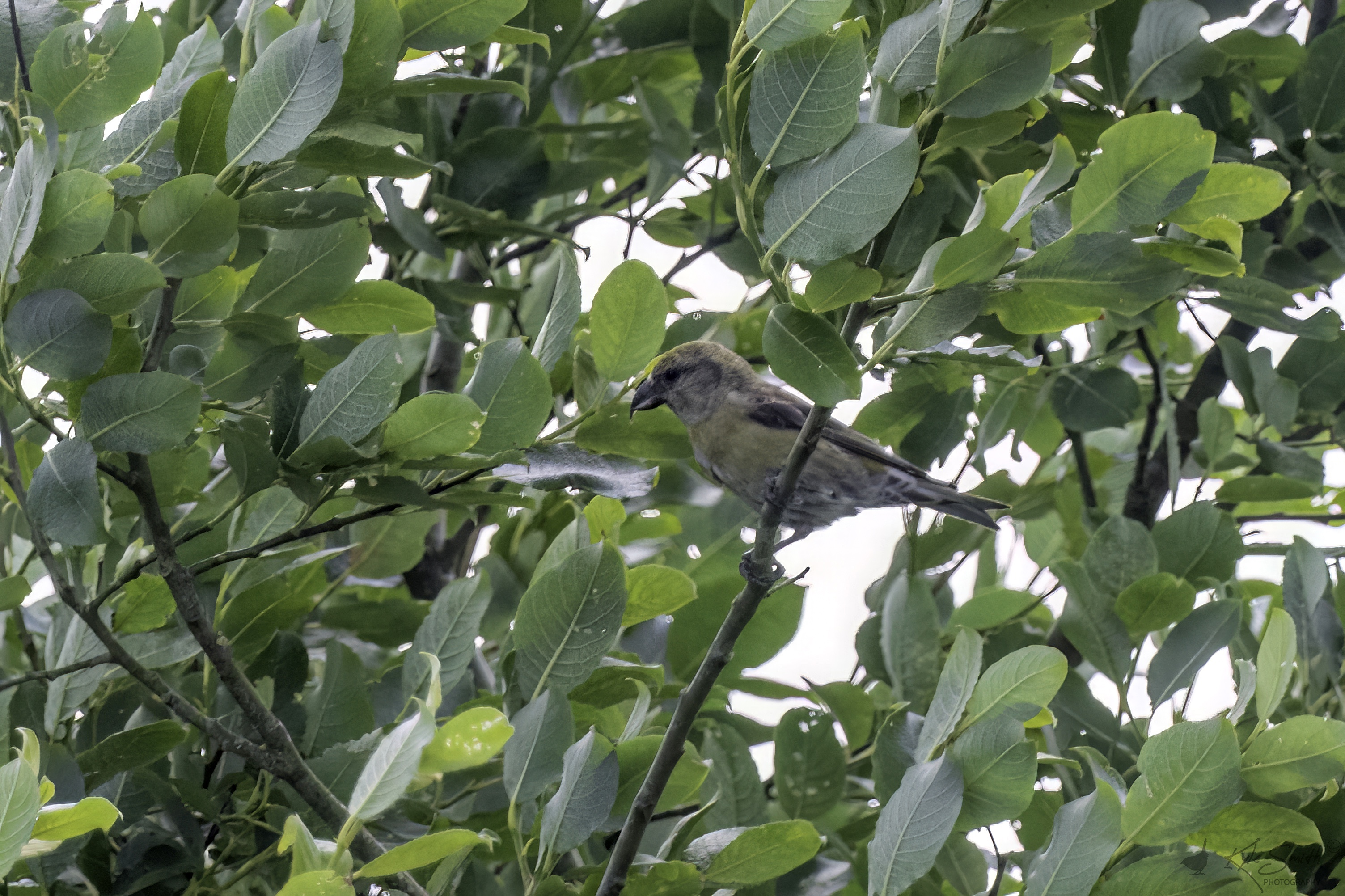
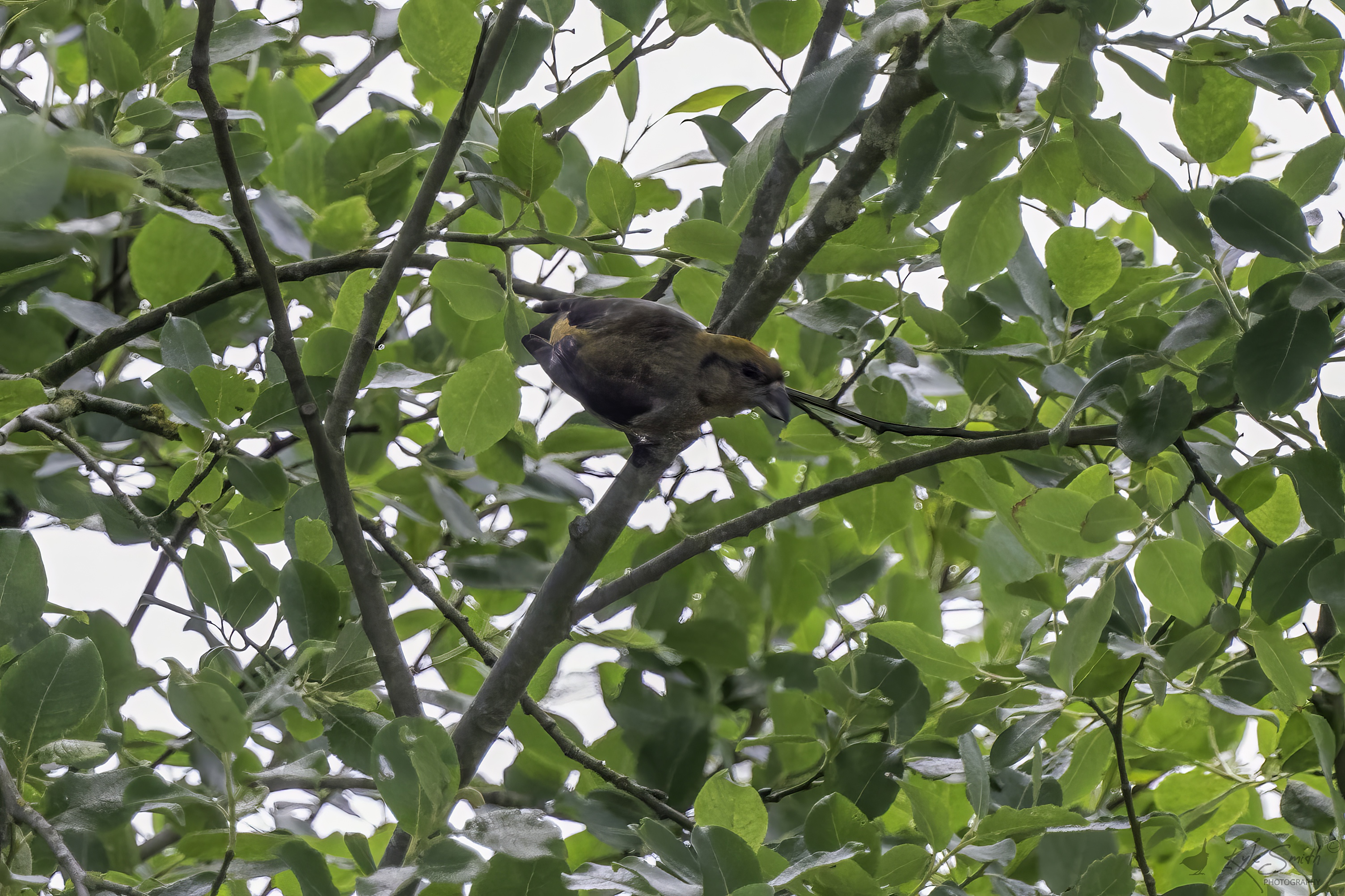
We continued to wait and eventually a pair of crossbills appeared again in the sallow - the female seemed to show better but I managed to get some photos of both. I'd heard reports of a few returning to the UK from continental Europe. Some years bring just a trickle; others (irruption years) bring hundreds or thousands of birds. Reports from southern Scandinavia and Poland suggest mixed cone crop health this year which is likely to result in moderate crossbill arrivals into the UK over the coming months. Their movements are irregular and food-driven, so local flocks can grow quickly with little warning.

Common crossbill
Common crossbill
Common crossbill
Common crossbill
Common crossbill
Common crossbill

After almost 2½ hours we had to accept defeat and left the remaining birders to continue their now 9½ vigil, travelling on for a couple of hours to our hotel for the night, and dinner.

The next day, we travelled to my mum’s and checked into our hotel, heading out for dinner later that evening at the Troon Yacht Marina.

The following morning, I got up early and made my way to Maidens, where a Western sandpiper had been lingering for some time. Initially identified as an overwintering little stint on 12 November 2024, the bird was reidentified in May 2025 — an obvious first for Ayrshire. What had originally been a “nice-to-see” rarity quickly became a “must-see” lifer. They can easily be confused with: semipalmated sandpipers - very similar but typically has a straighter bill and lacks the Western's subtle reddish tones in breeding plumage; little stint - slightly smaller, straighter bill, and different plumage details.

According to the BTO’s British List, the Western sandpiper is classified as "Accidental", with only (I think) 12 accepted records in Britain. It breeds in Alaska and eastern Siberia and migrates to wintering grounds as far south as Central and South America - a common migratory shorebird.

It had rained overnight and was still coming down as I made my way along the 45-minute route. Oddly, the BBC weather app showed clear skies and no rain. I checked several other apps, all agreeing that the rain would persist until about 8.15am. When I arrived at the car park by the harbour, I considered waiting for the rain to ease, but after a few minutes, I decided to gear up and head out anyway. I walked toward a cluster of rocks where I thought the bird might be and was drenched before I even got there. Setting up my scope, I scanned the area, feeling a bit anxious about spotting the bird in the rain and stiff sea breeze. After about ten minutes, I paused to scan again with my binoculars. That’s when I spotted a bird crouched low in front of some rocks, sheltering from the worst of the weather. I steadied myself and looked closer - this was my bird. Big tick!

Western sandpiper
Western sandpiper
Western sandpiper

After another 10–15 minutes, the bird scurried across the rocks, onto the sand, and then took flight across the bay, landing on the beach opposite. I made my way around and was treated to some incredibly close views as it shuffled back and forth, edging closer each time. Occasionally, it would fly back to the rocks, but within 5–10 minutes, it always returned to feed on the beach. Time was ticking, and I had to start thinking about heading back to the hotel to make it in time for a shower and breakfast before 8.30.m. The weather had been less than ideal, but it was a cracking little bird, and a life tick to boot.

Western sandpiper
Western sandpiper
Western sandpiper
Western sandpiper
Western sandpiper
Western sandpiper
Western sandpiper
Western sandpiper
Western sandpiper
Western sandpiper
Western sandpiper
Western sandpiper
Western sandpiper
Western sandpiper

The following morning was dry, but the sky hung heavy and grey, with a stiff breeze coming in off the sea at Stevenston Point. I’d arrived before breakfast, my visit coinciding with the high tide, hoping to catch sight of some Manx shearwaters - regulars here at this time of year. The bay was busy with cormorants, shags, gannets, and gulls, but no sign of any shearwaters ... at least, not at first. Eventually, I picked out a few on the distant horizon through the scope. A couple did pass slightly closer, though they were still miles offshore. I grabbed a record shot anyway. Among the at least 15 gannets feeding in the bay, a pair that appeared to be second-calendar-year birds stood out. Overall, it was surprisingly quiet, and apart from the usual suspects, there wasn’t much else of note. Still, with four year ticks in as many days, it had been a rewarding run - this would be my final outing before heading back to Banbury.