Showing posts with label lesser whitethroat. Show all posts

Monday, 12 August 2024

RSPB Otmoor :: 10 August 2024

With Kev @kev07713 away with his wife Karen in Cornwall and on the Scillies, I looked around for what to do on Saturday. There had been a rosy starling down on Keyhaven Marshes, Lymington earlier on Friday but it had flown at a little after 2.00pm. There wasn't anything else within reach - all major bird activity looked to be on pelagic trips or from distant seawatch sites.

Instead I opted to make my way down to RSPB Otmoor to see the leucistic juvenile marsh harriers reported through July - late to the party as usual - there are two individuals likely exhibiting the genetic condition called leucism. This causes a reduction in pigmentation, resulting in birds that have much paler feathers than normal but retain some colour, unlike albinos which have no pigmentation at all. One of the harriers is noticeably larger than the other, indicating they may be of different sexes. Additionally, an adult male with unusually pale plumage has been observed on the reserve. However, a source on X suggests that this colouration might result from inadequate or unbalanced nutrition and/or stress during the growth of juvenile feathers. This could have led to the feathers becoming fragile and resulting in pale and translucent patterns. I'd seen photos and it was worth connecting with them.

I arrived at 6.15am to find I was the first on site; it might be the first time this has happened as even when in the dark previously, someone got there first. I made my way to and along the bridle path, hearing and then seeing a couple of green woodpeckers but seeing little else. A roe deer welcomed me as I reached the kissing gate to make my way down to 1st Screen, soon prancing further out into Greenaways.

Roe deer

I could see another birder with a camera back down the track, but I decided to push on to 1st Screen and set up and wait for the marsh harriers. It wasn't long before I was joined by Paul Mallarini and we exchanged sightings - a bit sparse. There wasn't anything of note on the water either. We could see a couple of distant marsh harriers but not those I was waiting for, and though they flew briefly, much of the time they just roosted on top of far bushes. While there was little of note, the species count ticked along. A kingfisher landed directly in front of Paul but as we raised cameras it spooked and departed out across the water. Eventually Paul and I decided to leave - he headed back to the car park while I continued down to 2nd Screen. As we left Peter Barker and Co arrived and we exchanged pleasantries before I set off listening to and seeing a number of sedge warblers, green woodpeckers, and chiffchaff along the way.

Sedge warbler

I got to 2nd Screen and immediately saw all three egrets (little, great white and cattle) roosting on exposed mud; they were all preening and in the company of a grey heron.

The great white egret is a larger and less common species than the little egret, with an all-white plumage, long black legs, and a yellow bill. It has been increasing in numbers in recent years, with breeding first recorded in the early 2000s, they are now seen regularly.

The cattle egret is the rarest of the three egret species - smaller than the great white and more robust than the little egret. It has a stockier build, with a short, thick neck, and during the breeding season, they display distinctive orange-buff plumes on their head, chest, and back. There were c.12 individuals which I think was about half the number reported the previous day. The first recorded breeding of cattle egrets in the UK occurred in 2008 in Somerset. This marked a significant expansion of the species into the UK, reflecting broader changes in bird distribution patterns across Europe, likely influenced by climate change.

Three egret species
Cattle egret

In front and to the right were handfuls of snipe and a single common sandpiper; the ringed plover from the previous day had departed. I heard water rails call but there were no views. Within ten minutes Peter and his posse arrived, joining the search for anything in the fringes, but nothing was found.

I started back to the 1st Screen and soon after I got there one of the leucistic juveniles appeared across the reedbed on the far hedge line. It dropped and perched on a bush, just before the second appeared. For a minute or so both birds took to the air but never close enough for me to get them in the same frame. At this distance and with a grey sky I was only ever going to get record shots - they were beautiful. After another few minutes they dropped from view.

Marsh harrier
Marsh harrier
Marsh harrier
Marsh harrier
Marsh harrier
Marsh harrier
Marsh harrier

I walked back to the bridleway and met another birder - we walked and chatted, occasionally splitting but eventually joining up again. I could see one of the leucistic marsh harriers across at the back of Greenaways, but it didn't venture into range and soon dropped from view.

We reached the car park and I decided that I'd take a stroll down Long Meadow and see if I could find any common redstarts. I saw a single willow warbler and a few chiffchaff, but no redstarts. I started back and spotted a couple of birds dropping into a bush in the meadow and through bins could see they were lesser whitethroats. They left into the hedgerow along the edge of the meadow, and I walked on.

Looking back I saw another four lesser whitethroats drop in and then two blackcap, a spotted flycatcher, and a bullfinch - quite a haul for a single bush! Soon they all departed and were replaced by two more lesser whitethroats, likely the pair from earlier.

Lesser whitethroat
Lesser whitethroat

The weather was not improving, and a very light drizzle started to fall - not enough to make you wet. I checked out all the bushes again on my return down the meadow but added nothing more, failing to locate a redstart.

A decent species count for the morning at 52.

Friday, 31 May 2024

North Wales & Wyre Forest :: 19 May 2024

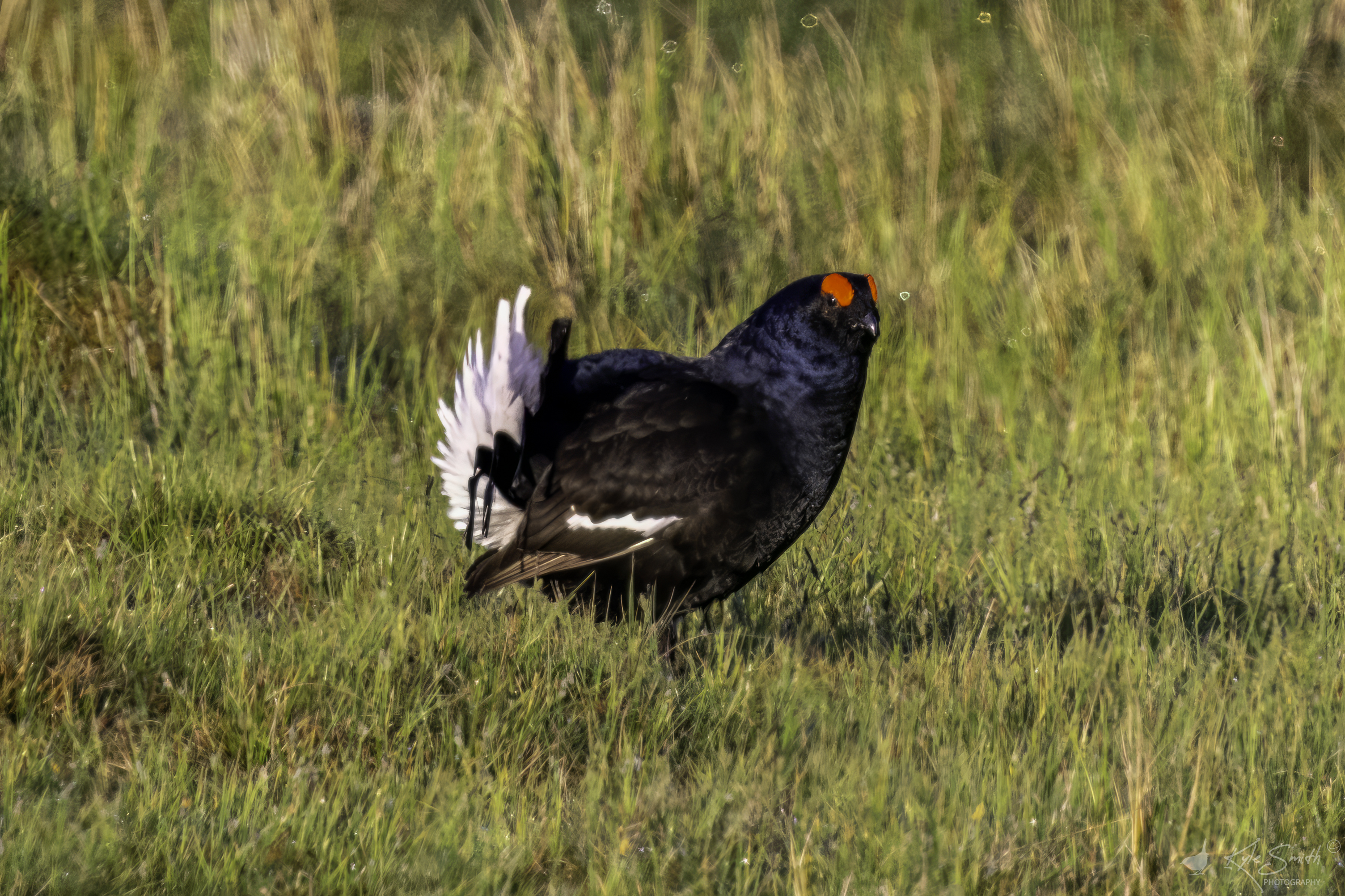
Kev was away on a birding holiday in Scotland and so I would be on my own for the weekend's birding. One of our friends Mark Ribbons had suggested joining Kev and I to experience a black grouse lek for the first time, and as it is a difficult trip with three, this was an ideal opportunity to take him. The best time to see black grouse is during their breeding season from late March to May. Also, early in the morning just before and at dawn to witness their lekking behaviour - a top wildlife experience. It is best to arrive at the site before dawn to settle in and minimise disturbance; the birds usually start their display before first light. The females are very elusive and are seldom seen. The nesting period generally starts in late April, with most females on the nest by early May. The exact timing can vary depending on the weather and location; the incubation period lasts about 25-27 days, with chicks typically hatching from late May to early June.

So at 01.20am I was up and preparing to collect Mark from his house at 02.00am - the journey is usually around 2h15m from Banbury at that time of the morning. We stopped just short of the site and got out the car for a swig off coffee and to arrange ourselves in the front and back seats on the right side of the car - with all our kit and provisions beside us to avoid the need to get out at any point. The car would be our hide for viewing the lek from a roadside layby. We'd had a number of pockets of fog along the way, but these had disappeared (thankfully) as we got close to the moors.

North Wales before sunrise

In place we could instantly hear the presence of black grouse as they bubbled and hissed - a cuckoo could be heard calling further along the valley. The light started to rise, and we could see 12 strutting males, fanning their tail feathers, and making bubbling and hissing sounds,then confrontational displays and occasionally physical clashes. Another two cars joined us, but we were in pole position and loving the spectacle.

Black grouse
Black grouse
Black grouse
Black grouse
Black grouse
Black grouse
Black grouse
Black grouse
Black grouse
Black grouse
Black grouse
Black grouse

After a couple of hours what at first appeared to be a sparrowhawk approached and flew through, scattering the grouse - it quickly became apparent that it was a ringtail hen harrier. It passed through and within about 15 minutes all 12 males had returned to the arena. Initially they seemed to have lost some of their purpose, but in the next 10 minutes they struck up again, tails fanned and picking fights with one another. We picked out a wheatear feeding at distance, and a male stonechat even further away. Meadow pipits and skylarks fed at closer quarters and both a raven and curlew flew through.

Raven
Skylark

A fourth car appeared and partly blocked the track - fortunately for them no one wanted to get through. After another hour we'd seen as much as we could see and edged out and moved the extra car on, our spot being rapidly claimed by the car behind.

A couple of hundred yards ahead we pulled into another layby and got out to stretch our legs after hours curled up in the car. We spotted a red grouse and then a second, but both were restricted in photo opportunities. A couple of curlews fed a hundred meters away. Soon we climbed back into the car and set out to see if we could get some better red grouse views - it wasn't long before I spotted one perched on some heather by the side of the road and we edged to get an angle for photographs. A very confiding bird.

Red grouse
Red grouse
Red grouse
Red grouse

On we went spotting red grouse and meadow pipits as we made our way to a layby by the trees. Last year I'd had seven cuckoos around here and this year managed to see two distant, being chased by meadow pipits as their nests were raided.

Cuckoo

We scanned along the valley and took in the vista - fantastic, and we could still see pockets of mist at the foot of the slopes. We scanned and had good views of male and female stonechats, and a lesser whitethroat that announced its presence by calling loudly. We turned to return to the car and as we did, I spotted a male whinchat on top of a bush, then the female lower down. They flitted around but stayed distant. My previous whinchat this year (at Greenham Common) had managed to escape before I got a photo and so this prolonged view was most welcome.

Welsh moors
Stonechat
Stonechat
Whinchat
Whinchat

We stopped to have our breakfast rolls we'd brought with us and has a wander up a higher track watching whitethroat, willow warbler and chiffchaff sing and flit around the tree line. A mistle thrush also passed through stopping on a more substantial bush out on the moor. Buzzards and a red kite cruised and circled in the distance. Eventually we returned to the car and made our way back along the track, stopping from time to time to watch stonechats and red grouse. On one occasion we were lucky enough to see the whole red grouse family, chicks (3) and all.

Red grouse
Red grouse
Red grouse
Red grouse

We scanned the slopes and Mark came across a buzzard perched in the distance, off to our right. Shortly after I spotted a raptor perched on a post in the very far distance, near a single male black grouse. I was excited for a while as to what it might be but from the photos it appears to be just a very pale common buzzard.

Buzzard
Buzzard
Buzzard

Soon we reached the lekking arena and found that all our males had departed and there was just a single car in residence in the layby, ever hopeful. It was more than five hours since we'd arrived and we decided that we'd drop into the Wyre Forest on the way home - sort of on the way - to add some forest birds to Mark's year list and as Mark is also keen on his butterflies, we'd look for pearl-bordered fritillary. I was also still short of a wood warbler.

An hour or so later we arrived at our usual car park to find it full but there was a space in the lower layby (holds three cars). We ascended the slope and onto the main arterial track through the forest. As we walked, we saw a couple of good candidates for our fritillary butterfly, but they didn't stop, then one did and result. Some may say I don't know my butterflies from my elbow but Mark does, and he pointed out the key features.

Pearl-bordered fritillary butterfly

We walked on and heard a tree pipit calling to our left and found it atop the same tree as Kev and I had seen it the week before. It stayed put and again I was only able to get a record shot - but a year tick for Mark. A handful of birders stopped to see what we were looking at; one had already picked up the call.

Tree pipit

We stopped again at a spot where I'd seen a pied flycatcher the week before, around a couple of bird boxes and within seconds Mark called a female - result, I hadn’t seen one the week before. It wasn't long until we were joined by a male. Another year tick for Mark - now five for the day. We retuned onto the main track and heard the male pied flycatcher singing above us and to our surprise it flew out from the trees and onto a wire cable running alongside and crossing the path, just as spotted flycatchers do.

Pied flycatcher
Pied flycatcher
Pied flycatcher
Pied flycatcher

We dropped down onto the path leading to Dowles Brook and came across another male pied flycatcher feeding lower down and just to our left - unfortunately sitting in challenging light for photos but great to watch. It stopped there for a minute or so and then set off again, as they often do.

Pied flycatcher

We continued down to try and find a dipper - another species that would contribute to Mark's year list - and it was Mark that spotted one preening at the foot of a tree on the edge of the brook. We watched and it continued to preen and stayed put, while we moved on. By the bridge across the brook, I was able to spot another in exactly the same spot as the previous week.

Dipper
Dipper

We continued back to the car and ate a late sandwich lunch. before setting off for home. It had been a great day and special to see a black grouse lek, one of nature’s true spectacles.

Mark and Kyle

Year list: 205.