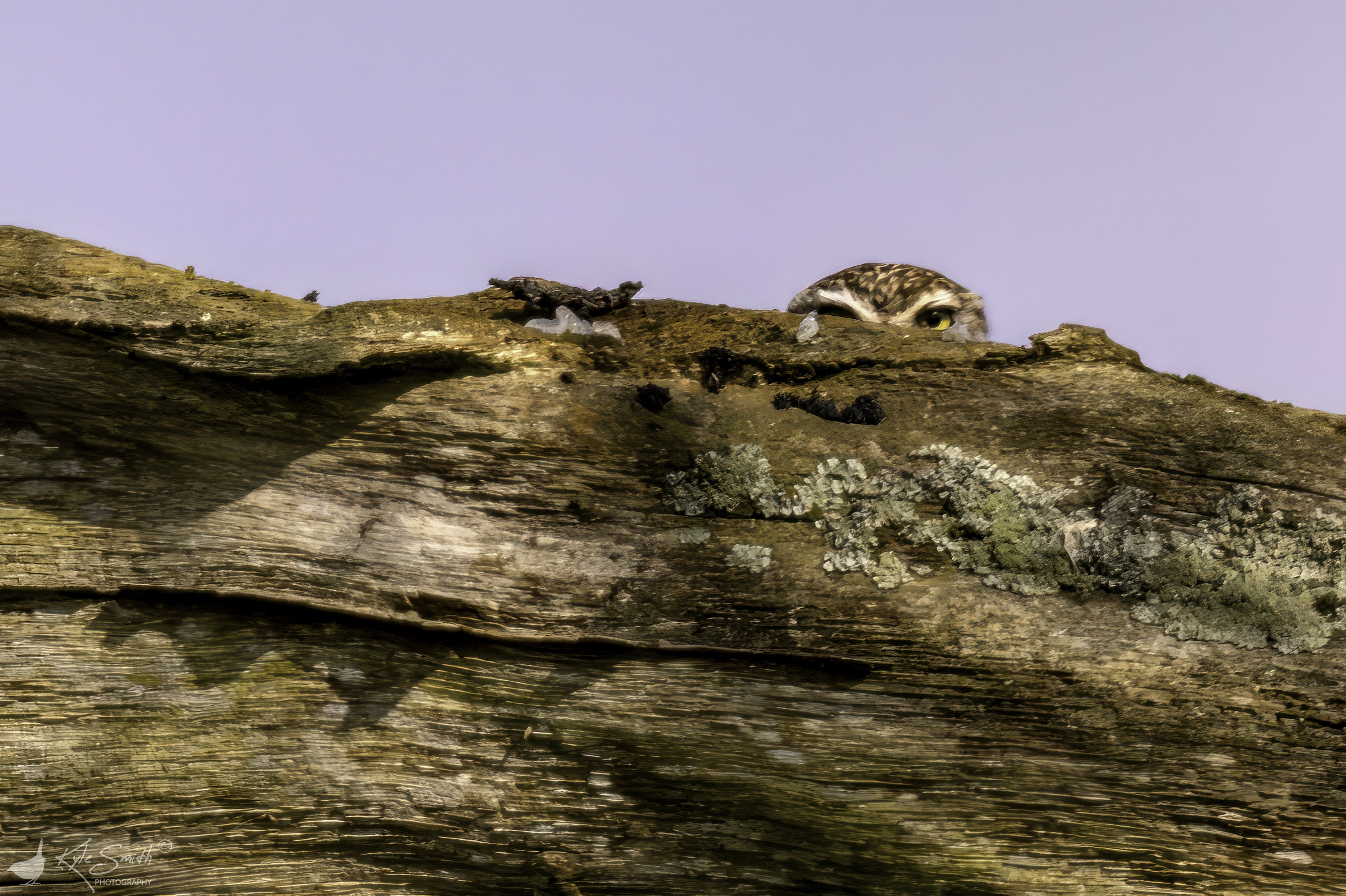
Looking at the forecast there would be rain and strong winds just about everywhere, particularly south, and west. Talking with Kev @kev07713 we considered various locations to bird, north and east, but opted for a trip south and west to try and connect with ring ouzel on Cleeve Common; a single female had been reported on Friday but many more on previous days. We'd have until mid-morning before the winds were forecast to be at their worst. Ring ouzels are migratory birds that breed in upland and mountainous regions of northern and central Europe, including Scandinavia, spending winter months in southern Europe and North Africa - their migration to the UK typically occurs from late March to early April. They are striking birds, slightly smaller than blackbirds, with a distinctive plumage - males have black plumage with a bold white crescent on their breast, while females and juveniles have browner plumage with less distinct markings.
Cleeve Common, the largest expanse of common land in the Cotswolds, spans over 400 hectares (1,000 acres), and is the region's highest point at 330 meters. The area is preserved as a conservation zone and recognised as a Site of Special Scientific Interest (SSSI) for its geology, diverse habitats, and botanical diversity. Oversight of this landscape falls under the care of the Cleeve Common Trust, a charity dedicated to its protection.
Historically and prior to 1935, such grasslands dominated more than 40% of the Cotswolds but today, a mere fraction of only 1.5% or so remains intact. Cleeve Common stands as a crucial stronghold for this endangered habitat, offering a haven for a myriad of flora and fauna.
Despite common perception, common lands such as Cleeve Common are not public property. Rather, they are privately owned, with visitors granted the ancient right to traverse them on foot. These lands derive their name from the grazing rights held by local landowners, known as 'commoners,' who have the privilege to graze specified numbers of livestock, such as sheep and cattle, from April through November.
With its considerable size, Cleeve Common can be accessed from various points. However, our journey led us to the main car park near the towering masts, where we arrived just before sunrise, around 6:30 a.m. As the day began to awaken, we braced ourselves for the brisk winds that often characterise this elevated landscape.
We set out and the wind was already so strong it was a challenge to keep our baseball caps on our heads; in fact, Kev changed for a woolly hat instead. We started across the common seeing lots of skylarks, meadow pipits, four wheatears, buzzard, and red kite amongst others. By the time we reached the Memorial Tree, a single beech tree which is the highest tree in the Cotswolds, the wind had strengthened even more, and it was hard to attend Kev's scope as it was very likely to blow over. We reached and crossed part of the golf course, inadvertently flushing a grey partridge from longer grass and below a shallow shelf/slope. We worked along the edge of the valley but there were just skylarks and meadow pipits on the ground, but a least we had dropped out of the wind. We spotted another birder making his way down the slope and I caught up with him to ask if he had any information, or better still a sighting of our target bird. He was also from 'out of town' and after a short chat he headed off down the valley. We didn't go far but started scanning the valley floor and opposite slope, seeing a handful of other birders, none of whom appeared to be on anything either.
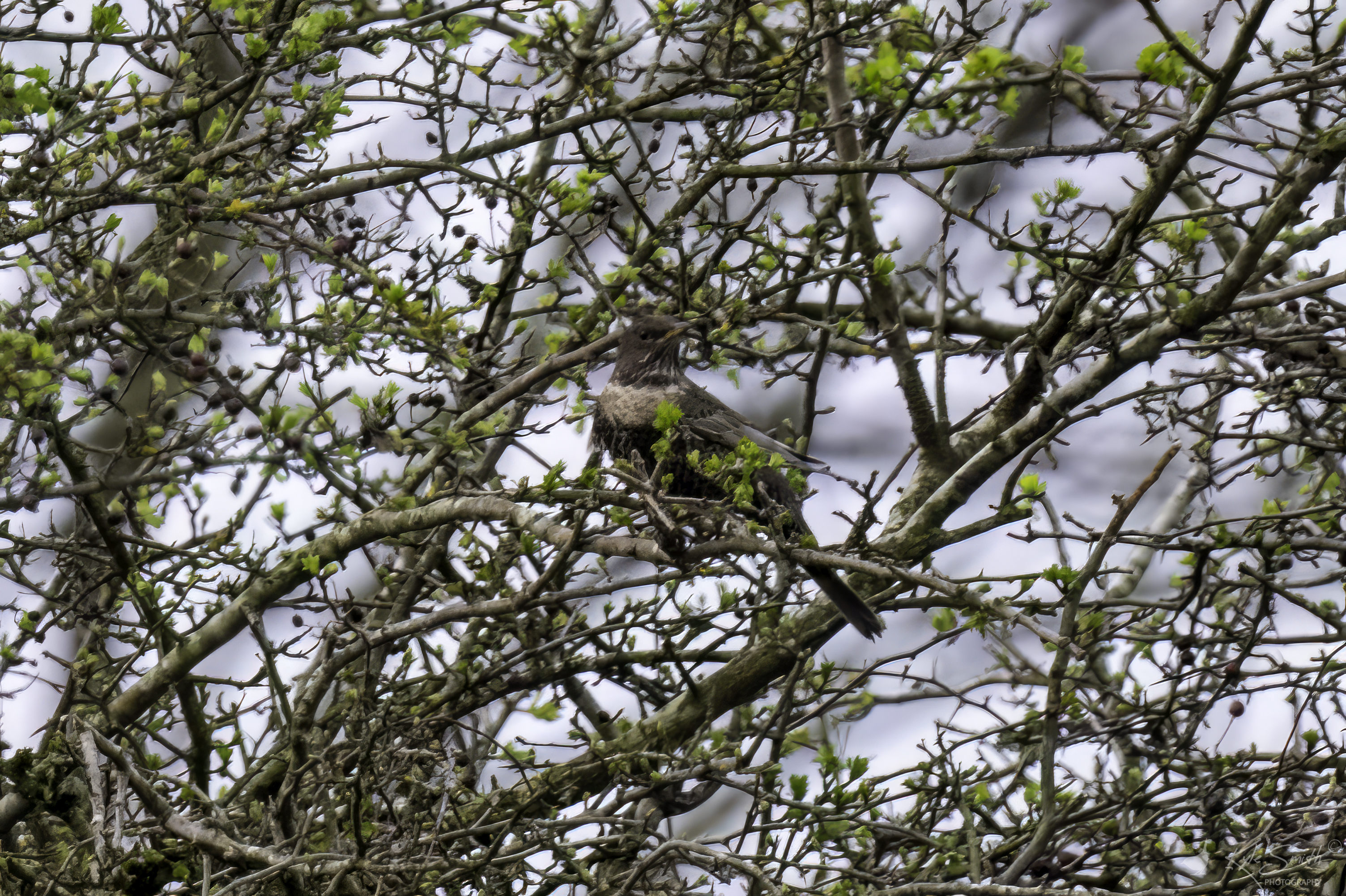
Another birder approached up the slope and stopped for a chat - we exchanged pleasantries and soon he headed off to the other side of the valley, each of us saying we'd wave our arms if we found our quarry. It was only five minutes or so and I picked him up through my bins waving his arms - we dropped down to join him, and a male ring ouzel. It had been perched on top of a bush when he approached it but dropped into the dense branches by the time we got there. A female then joined it before they both dropped from view. I worked around the copse under the cover of some gorse to see two male and two female ouzels depart and cross into a tree in the next copse.




I'd lost Kev but was now distracted by a calling willow warbler, and I worked round the bushes and trees to see if I could get eyes on it - I did, but initially failed to get a photograph. Willow warblers are migratory birds, spending the winter months in sub-Saharan Africa. They embark on an incredible journey covering thousands of miles to reach their breeding grounds, including here in the UK. Males often arrive a few days before females and establish territories through their singing; their song is a cheerful, descending melody. I found Kev and we worked back round - soon had eyes on the bird, more in the open, getting my year tick and a photo.

We then followed a track further along the slope to look down into the Washpool valley where Kev soon picked up another male ring ouzel. It was feeding around a male blackbird, but it wasn't difficult to separate. Another birder appeared and we pointed out where the bird had been but in the interim it had disappeared into cover. Before we departed it reappeared and we called back the chap so he could get on it - later we were to hear that those working the length of the valley had seen 12.

We decided that we would make our way back to the car and onto Slimbridge where we could maybe get out of the wind and make a day of it. On the way back we continued to see skylarks and meadow pipits but also a strange sight of four labradors sitting on the hillside (three black and one golden) within a couple of feet of one another. Their owner had walked a good 50m+ ahead and the dogs were obediently waiting to be called. Once they were, they bounded, on racing each other and looking so happy.


We arrived at Slimbridge and stopped for a breakfast/lunch having skipped our usual stop to get to the ouzels at first light. Fed, we made our way to Rushy Hide and noted how empty it was in comparison to our last visit and when there were still good numbers of Bewick's swans and lots more ducks. There were numbers of redshanks but the long-staying spotted redshank was also there feeding on the water's edge, but was walking further back as we approached the windows. In contrast to the bird at Lymington Normandy Marshes in the week, this bird is transitioning to summer plumage nicely. Outside of the breeding season, spotted redshanks undergo a moult, transitioning to a more subdued grayish-brown plumage but in the spring, adults develop striking black plumage with silvery-white spots and streaks on their upperparts. There was also a single ruff, the only one we'd see today.


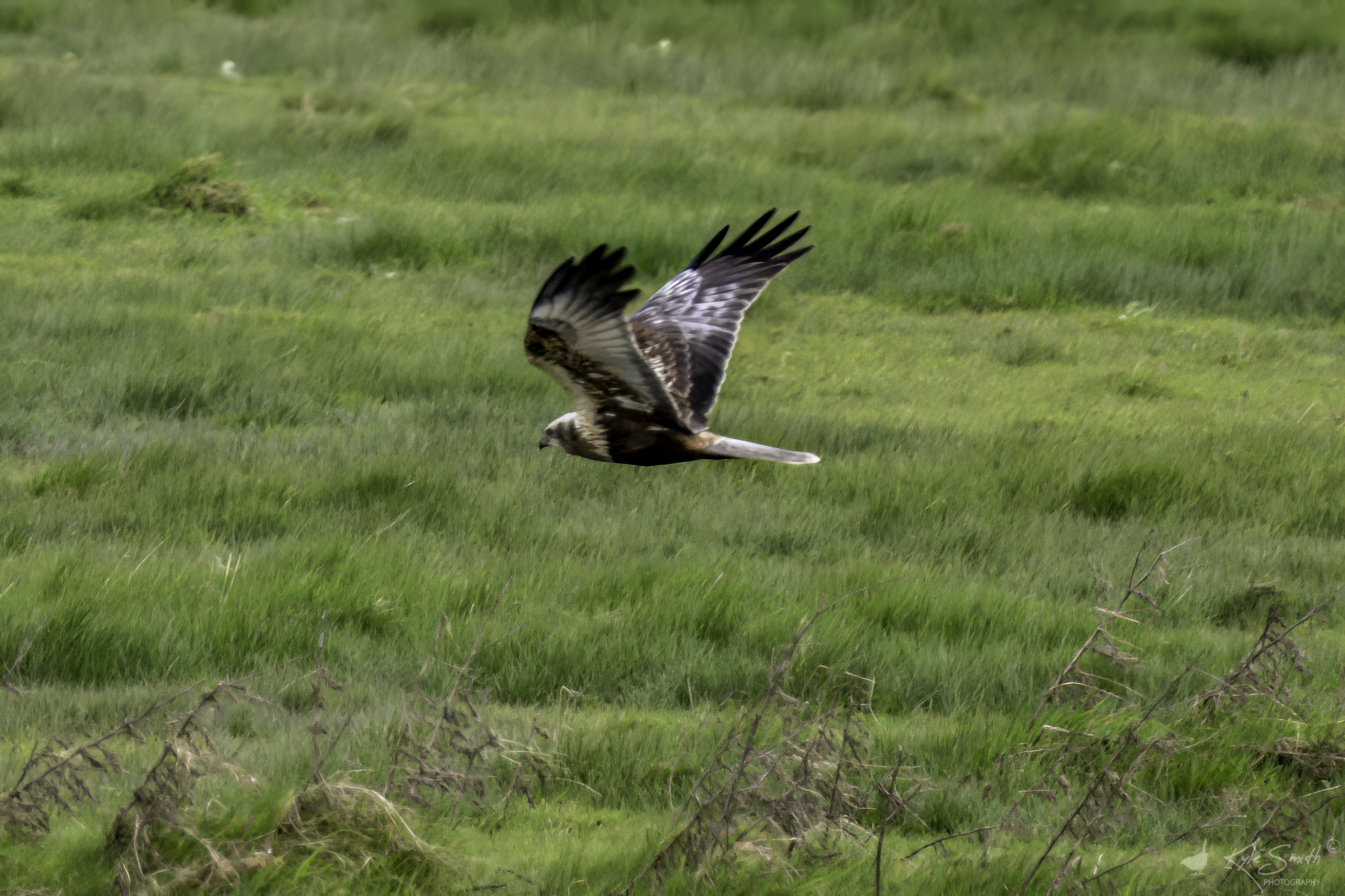
We continued on to the Estuary Tower, stopping on the first level so as to stay out of the wind. We scanned across the Tack Piece and Dumbles and picked out the bar-headed goose, then white-fronted geese - a year tick for me after I couldn't find any here or at Holkham previously. We watched a female marsh harrier flying low across the grass at distance, carrying some nesting material; it dropped and paused on the ground for a short while before continuing on. Later we saw a male running the same line. Another species neither Kev or I had managed to come across this year is spoonbill; one was sleeping directly out in front of the hide - after about half an hour it woke and strutted around the pools and across the field. I waited for it to fly and relocate, but it never did. Half a dozen sand martins flew along our side of the estuary, too far for me to even try for a photo.




On the way back down the track we heard a quiet call from a blackcap and found it showing very nicely - Kev and I have noted this muted song before, especially early in the season when newly arrived in the UK. Another quiet call of the Blackcap is often described as a soft "tuck", "tack" or "tut" sound, emitted at a lower volume and with less musicality compared to its song. This call is typically used for communication between individuals, such as during social interactions or to maintain contact with mates or family members while foraging or moving through its habitat. We stopped in one of the hides hoping to add a snipe and for a while failed to see one but did re-find a couple of greenshanks we'd spotted from the Estuary Tower. After ten minutes or so, a couple of snipe gave themselves up while feeding frantically on a small island largely out of the water.


We started to make our down to Kingfisher Hide but stopped to look back down to the estuary and spotted a lone crane sitting on the end of a small island, with redshanks and gulls. Making our way on further a treecreeper appeared and worked quickly from tree to tree.


Now at the Kingfisher Hide I took a place by the windows looking out at the holes in the bank opposite, and where kingfishers nest each spring. It took a while to pick it out but there was a single male bird static and then preening on a sapling on the front of the bank. Once seen the crowd in the hide watched excitedly until eventually it flew the short distance to the nest entrance hole and out of view.

We made our way back to Hogarth Hide and more than 250 black-tailed godwits and many avocets showed across the pools. In the tall grasses we could see the occasional head of a crane lifting into view. Briefly the crane stood up but in a couple of minutes dissolved back into the grass. A woodpigeon strutted its stuff allong the window, completely unphased by us looking right into its eyes. It would have been easier to poke the bird with the camera lens than take a photo through it.


We moved along to the Discovery Hide and found an oystercatcher sitting in the grass and moss on the entrance roof - a nesting spot? Another bird was out on the grass between the two pools. Working through the gulls, I spotted a Mediterranean gull firstly on the water, but then chasing black-headed gulls away from an area on the far side of an island. They do look so different in their black hood with a white eye-ring.


It was time to make tracks for home after a great day birding which was very enjoyable, even with the wind and occasional rain shower; six year ticks and 64 species at Slimbridge.
As I was having breakfast the following day, a report popped up on the Banbury Birding WhatsApp Group of a male ring ouzel at the Viridor Ardley ERF. It is located near Bicester and is built next to a landfill site. In April 2014 the closure of the landfill site was announced after 35 years of operations so that non-recyclable waste could be used as a resource at the ERF instead. 95% of Oxfordshire's municipal waste is redirected away from landfills, producing sufficient electricity to supply approximately 59,616 households. Charlotte announced she was going to the shops and was I not going to see the bird - I didn't need a second invitation.
Arriving at the bird I found Nick @old_caley and Anne Truby, and John Friendship-Taylor @987jonty already in position, the bird some distance further down the track but still present and feeding. We watched and took photographs until the bird vanished into the hedge - we moved a little closer and the bird departed the hedge and out across the lagoon, but back into a tree and back onto the track behind us. Phew - we didn't want to lose the bird for anyone else that might visit after us. We worked back down the track hoping for a decent photo but with distance and light it wasn't at all easy.


At the car we directed some birders to the bird and others managed to get views until early afternoon when the bird left the site.
Year list: 170.