
This time last year, I was stuck at home, confined to a room after catching COVID, an incredibly inconvenient turn of events; Charlotte and I had been due to meet up with Kev and his wife for a short holiday in Amble on the Northumberland coast. The trip was especially exciting because it was a chance for Charlotte to see her favourite bird, the puffin. Unfortunately, by the time we finally made it to that part of the world on August 20th, all the puffins had already departed from both RSPB Bempton Cliffs and Coquet Island.
We’d planned to visit Bempton Cliffs earlier, on June 20th, when I had a day off but that plan fell through. Charlotte had been in London with friends the night before, attending the Queen’s Club Tennis tournament, and was on her way back by train when it was severely delayed by a broken-down train ahead. She and her friends eventually got off at High Wycombe, having had enough of the stifling carriage conditions. By the time she got home, the idea of getting up early to make a long journey didn’t seem to land well.
Fast forward to today, we were heading north to visit my mum in Ayrshire and decided to take the long way round via the east coast, this time determined to see puffins. After the puffins we planned an overnight hotel stop along the route, breaking up the journey before the final 3.5-hour stretch the next morning. For now, and after stopping for breakfast, we arrived at RSPB Bempton Cliffs to find the car park already full - we were directed to the overflow, which surprised us a little given that it was a Monday and still before the school summer holidays.
We geared up and set off through the Visitor Centre, heading west along the cliff path toward the spots where I’ve previously had the best luck spotting puffins.
Sure enough, Charlotte soon picked out a couple perched on the cliff, and then, further along, we saw several tucked into a rocky crevice. They really are comical little birds, perched together, looking at one another with an expression that somehow manages to be both puzzled and mournful. There’s something cartoonish about them, as if they’ve been drawn into real life: oversized, triangular beaks brightly striped in orange, yellow, and blue like they’ve been coloured in with crayons, and beaks that seem just a bit too big for their faces.
They walk about on vivid orange feet with a stiff, waddling gait, like little penguins in tuxedos who’ve forgotten how to be elegant. Despite their slightly clumsy look on land, puffins are superb swimmers and strong fliers. But on the ground, their awkward tripping and bumbling movements only add to the sense that they’re doing their best but charmingly falling short, in the most endearing way imaginable.


Unsurprisingly, the puffins were a big draw among the throngs of guillemots, razorbills, and kittiwakes clinging to the cliff walls. I believe I once read that around 3,000 of these distinctive birds return to the crags here each year to breed. They’re what everyone comes hoping to see, their annual puffin, or perhaps their very first. Puffins mate for life and return to the same nesting site each spring, so it’s entirely possible to spot the same pairs year after year. A few perched close enough to give excellent views as they turned slightly on their ledges, and I hoped I’d managed to capture some decent shots.


From our first stop at the Grandstand viewpoint, we made our way along the path, pausing at Mosey Downgate and Bartlett Nab before eventually reaching the far end at Jubilee Corner. There, we looked out across the water and could see puffins coming and going from the sea, some returning with food for their chicks, mostly what looked like sand eels dangling from their colourful beaks. It won’t be until late summer or early autumn that the pufflings emerge from their cliffside burrows and take flight for the ocean for the very first time.


From the viewpoint at the top of the cliff we were able to look out over the water with a wide vista and soon were able to see two small pods of bottlenose dolphins working across from left to right. The waters off Bempton Cliffs benefit from nutrient-rich fronts that attract fish species like sand eels, cod, herring, and haddock - all ideal for both seabirds and dolphins. The high chalk cliffs provide an excellent vantage point, making Bempton one of the best UK land-based locations to observe from.
Since earlier this year, Bempton Cliffs has served as England's first "Shorewatch" site, led by the RSPB in partnership with Whale and Dolphin Conservation (WDC). Trained volunteers use fixed-point, 10-minute binocular watches from the Bartlett Nab viewpoint to record marine mammals, including bottlenose dolphins. Over 80 monitoring days, 33 individual bottlenose dolphins were recorded on 22 of those days - volunteers have also reported harbour porpoises, grey seals, and even a well-known dolphin called "Runny Paint", which had previously been identified in the Moray Firth in Scotland. Over 30 individuals have been recorded in single pods, sometimes delighting onlookers with their aerobatics. Reports suggest that these dolphins originate from the Moray Firth population, initially migrating south to the Yorkshire coast, and now appear to be resident year-round, with peak views in late spring and summer.


The sky was busy with gannets, the odd fulmar, kittiwakes, puffins, guillemots, and razorbills - the puffins, razorbill and guillemots could often be seen speeding through carrying fish, presumably returning to their nests to feed young.


Razorbills are striking, seabird relatives of puffins found along UK coasts, are members of the auk family, and are known for their smart black-and-white plumage and distinctive, deep-billed profile. The UK hosts approximately 150,000 breeding pairs, which is a about a quarter of the world population. Like puffins, razorbills are pelagic for most of the year, coming ashore only to breed. During the breeding season these birds nest on cliff ledges often alongside puffins, guillemots, and kittiwakes - during July they disperse back out to sea, into the North Atlantic. Primarily they feed on small fish: sand eels, sprats, and herring, diving underwater using wings like flippers, reaching depths of more than 100 meters in pursuit of prey.
They lay only one egg per year, with both parents incubating and feeding - chicks fledge by jumping off cliffs into the sea, sometimes before they can fully fly! Bempton Cliffs is one of the best UK spots to see them.
As we tried to pick out puffins we had to try and exclude these close relatives - often cutting through with sand eels and sprats.


My favourite razorbill photo was taken back in 2022 when visiting Bempton Cliffs to see Albert, the black-browed albatross and is the picture just below - an account of the visit can be read here. They have a surprisingly vivid mouth interior that you might not expect from their sleek black-and-white exterior. It’s thought that this yellow gape may serve as a visual signal to potential mates or rivals, like the bright mouth colours of puffins and other auks.

We’d had some fantastic views, but as lunchtime neared, we made our way back to the Visitor Centre and came up with a plan to head north in hopes of catching up with the long-staying Ortolan Bunting at Wykeham Forest. On the way back to the car, we paused at the feeding station and were pleased to see the resident tree sparrows, regulars at this spot. While we have a few reliable places to get our annual fix of these charming little birds, it’s sometimes disheartening to witness their decline across so many regions. The tree sparrow has experienced a dramatic long-term decline in the UK (93% decrease between 1970 and 2008), though there have been modest signs of stabilisation or local recovery in recent years around: east and north Yorkshire, Cambridgeshire and Lincolnshire Fens, Wiltshire and the Marlborough Downs, Staffordshire and West Midlands, and sites like Musselburgh and Aberlady Bay in Scotland.


The first confirmed report of the Ortolan bunting was on 11 June and Kev had been to see it the previous week and said how easy a twitch it was - guaranteed to see it he said. The journey was about 45 minutes but on arrival we talked to the birders present to discover that the Ortolan bunting had disappeared, just as many hopeful birders arrived, making it a classic case of a rare bird that was there ... and then wasn’t when it mattered - some of the birders had already been there for 7 hours. This female Ortolan buntings had been associating with a male yellowhammer. This behaviour has been observed in both mainland Europe and, occasionally, the UK during rare vagrant appearances.
In their native range across southern and eastern Europe, Ortolan buntings often nest in the same open habitats as yellowhammers and rock buntings, and it’s not uncommon to see them foraging together. So, mixed-species associations aren’t unheard of. There had been reports suggesting that the Ortolan here had been seen mating with a male yellowhammer. We did spot a male yellowhammer nearby, calling persistently and clearly doing his best to attract a mate. Kev had mentioned that this lone male had been observed behaving this way, in addition to the presence of the mixed pair.


We hoped that as the day was very warm that eventually our bird might show - it had been reported the Ortolan frequently returned to a small puddle or damp area near the log piles and clearing edges, drink and bathe briefly, before returning to low brambles. Drinking and washing I think indicate the bird was settled and behaving naturally, rather than just passing through. For rare vagrants, this kind of relaxed, routine activity is often a good sign they may linger ... which the Ortolan did for nearly two weeks.
We watched as mainly linnets moved through the area. Activity centred around a sallow and a few other species moved through, often difficult to see through the dense leaf cover, including a single male siskin.

We continued to wait and eventually a pair of crossbills appeared again in the sallow - the female seemed to show better but I managed to get some photos of both. I'd heard reports of a few returning to the UK from continental Europe. Some years bring just a trickle; others (irruption years) bring hundreds or thousands of birds. Reports from southern Scandinavia and Poland suggest mixed cone crop health this year which is likely to result in moderate crossbill arrivals into the UK over the coming months. Their movements are irregular and food-driven, so local flocks can grow quickly with little warning.
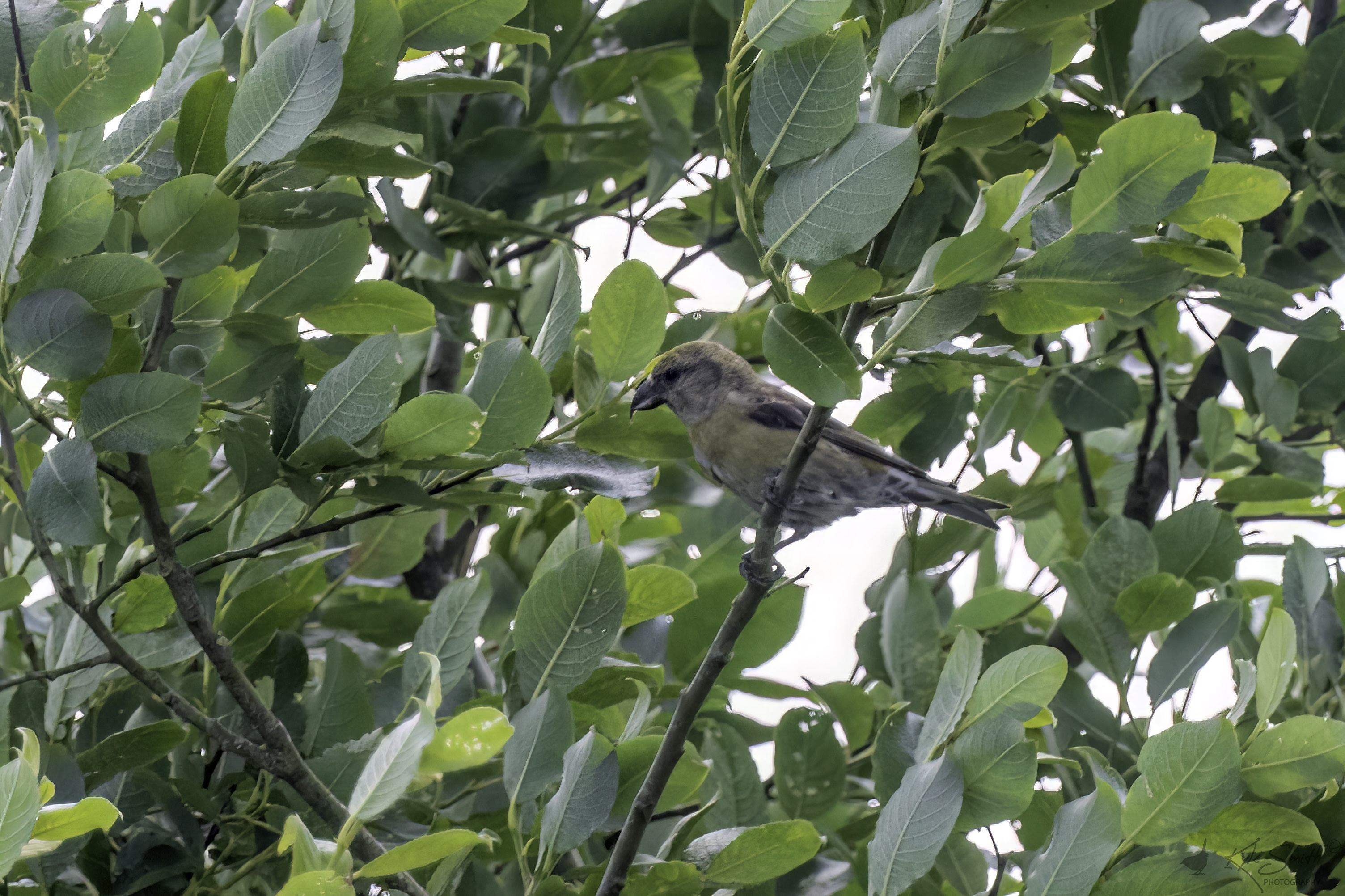


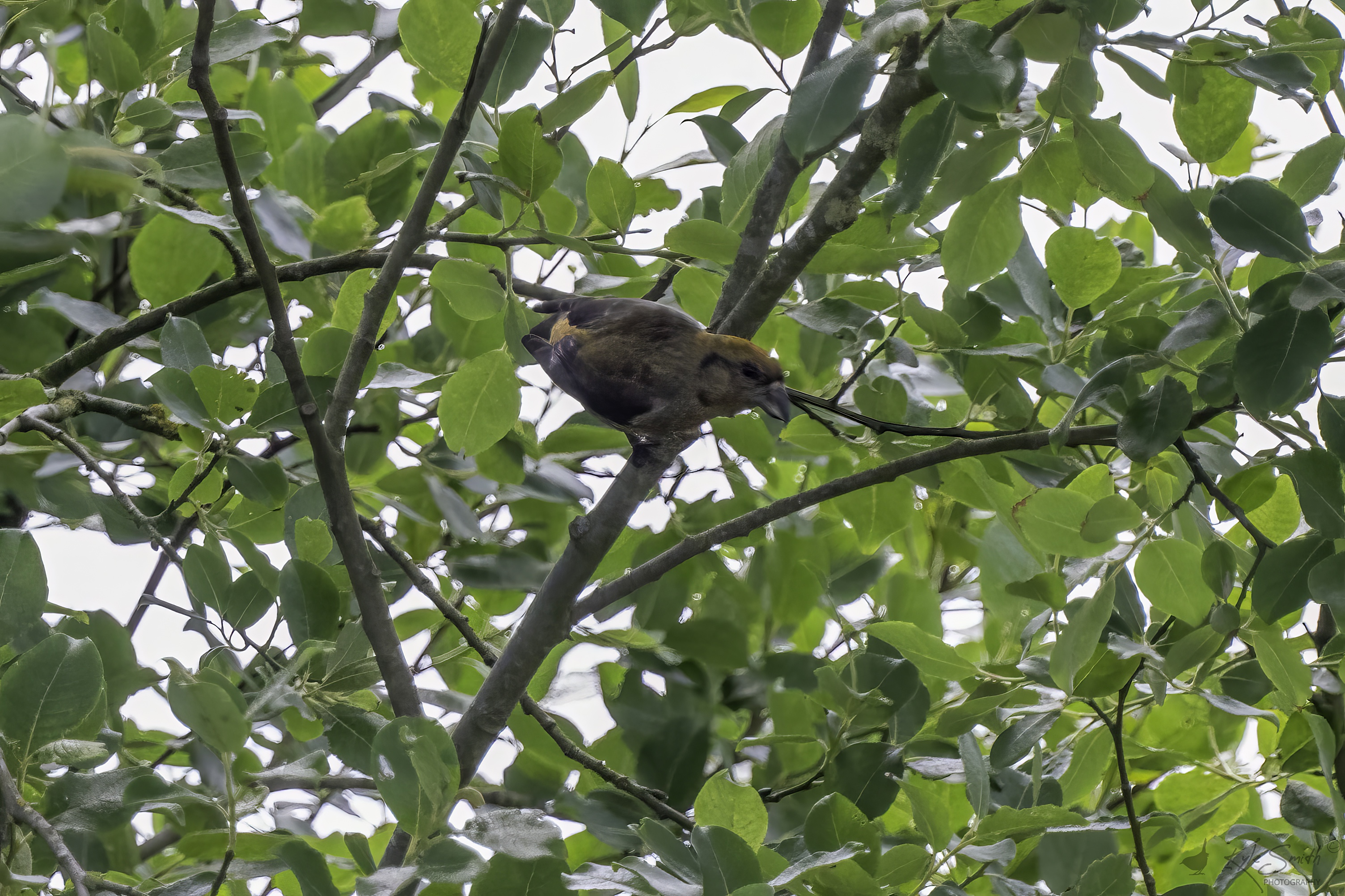


After almost 2½ hours we had to accept defeat and left the remaining birders to continue their now 9½ vigil, travelling on for a couple of hours to our hotel for the night, and dinner.
The next day, we travelled to my mum’s and checked into our hotel, heading out for dinner later that evening at the Troon Yacht Marina.
The following morning, I got up early and made my way to Maidens, where a Western sandpiper had been lingering for some time. Initially identified as an overwintering little stint on 12 November 2024, the bird was reidentified in May 2025 — an obvious first for Ayrshire. What had originally been a “nice-to-see” rarity quickly became a “must-see” lifer. They can easily be confused with: semipalmated sandpipers - very similar but typically has a straighter bill and lacks the Western's subtle reddish tones in breeding plumage; little stint - slightly smaller, straighter bill, and different plumage details.
According to the BTO’s British List, the Western sandpiper is classified as "Accidental", with only (I think) 12 accepted records in Britain. It breeds in Alaska and eastern Siberia and migrates to wintering grounds as far south as Central and South America - a common migratory shorebird.
It had rained overnight and was still coming down as I made my way along the 45-minute route. Oddly, the BBC weather app showed clear skies and no rain. I checked several other apps, all agreeing that the rain would persist until about 8.15am. When I arrived at the car park by the harbour, I considered waiting for the rain to ease, but after a few minutes, I decided to gear up and head out anyway. I walked toward a cluster of rocks where I thought the bird might be and was drenched before I even got there. Setting up my scope, I scanned the area, feeling a bit anxious about spotting the bird in the rain and stiff sea breeze. After about ten minutes, I paused to scan again with my binoculars. That’s when I spotted a bird crouched low in front of some rocks, sheltering from the worst of the weather. I steadied myself and looked closer - this was my bird. Big tick!


After another 10–15 minutes, the bird scurried across the rocks, onto the sand, and then took flight across the bay, landing on the beach opposite. I made my way around and was treated to some incredibly close views as it shuffled back and forth, edging closer each time. Occasionally, it would fly back to the rocks, but within 5–10 minutes, it always returned to feed on the beach. Time was ticking, and I had to start thinking about heading back to the hotel to make it in time for a shower and breakfast before 8.30.m. The weather had been less than ideal, but it was a cracking little bird, and a life tick to boot.


The following morning was dry, but the sky hung heavy and grey, with a stiff breeze coming in off the sea at Stevenston Point. I’d arrived before breakfast, my visit coinciding with the high tide, hoping to catch sight of some Manx shearwaters - regulars here at this time of year. The bay was busy with cormorants, shags, gannets, and gulls, but no sign of any shearwaters ... at least, not at first. Eventually, I picked out a few on the distant horizon through the scope. A couple did pass slightly closer, though they were still miles offshore. I grabbed a record shot anyway. Among the at least 15 gannets feeding in the bay, a pair that appeared to be second-calendar-year birds stood out. Overall, it was surprisingly quiet, and apart from the usual suspects, there wasn’t much else of note. Still, with four year ticks in as many days, it had been a rewarding run - this would be my final outing before heading back to Banbury.


