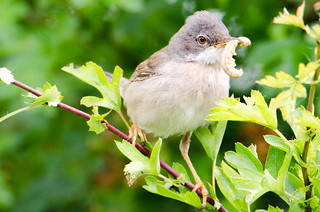
Saturday, 15 July 2017

WkWT Brandon Marsh :: 15 July 2017

Rain was forecast and so I opted for an early start and hopefully beat the rain. Reports of a green sandpiper at WkWT Brandon Marsh suggested this was the place for today. Due to the early start I was unfortunately on my own. A couple of spots on th windshield as I left Banbury headed for Southam - would the rain get here earlier than forecast?

Arrived on the reserve for just before 8.00am and still dry. Made my way down to Teal and East Marsh Pools where the sandpiper had been reported in the last few days - also reported on River Pool. Saw a juvenile green woodpecker land in a tree, calling loudly as I watched. Green sandpiperNo sign on Teal Poole so crossed to the East Marsh Pool - one person already there and as I sat down I asked whether he had seen the green sand ... he had, just a few minutes before - hopeful!
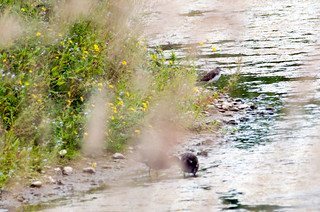
In about five minutes the green sandpiper [142] appeared on the right side of the island directly in front of the hide - result. Satisfied that today's objective had already been achieved (only 8.15am) I continued watch, picking up sedge and reed warbler, redshank, both male and female blackcap and three little ringed plover.

At around 9.45am I though I would pack up and head back but before I could, the rain started to fall. I spent a good 45 minutes watching and enjoying the Dunnockview but unable to return without getting a little wet. As the rain stopped I made my exit and was back to the car before 11.00am.
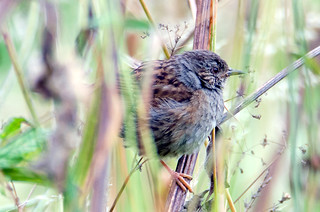
Sightings (31) included: black-headed gull, blackbird, blackcap, blue tit, carrion crow, chaffinch, common tern, coot, cormorant, dunnock, gadwall, great spotted woodpecker, great tit, green sandpiper, green woodpecker, grey heron, lapwing, little egret, little ringed plover, magpie, mallard, moorhen, redshank, reed warbler, robin, sedge warbler, swallow, teal, tufted duck, woodpigeon and wren.

Tuesday, 11 July 2017

Great Tew :: 10 July 2017

Another Outdoor Meeting for the Banbury Ornithological Society. We met in Great Tew at the free car park on the left as you enter the village. Some of the planned route passed by the site of the Cornbury Festival; they were still clearing up from the festival and so it was suggested we take a short route out and return the same way, only in reverse.

About 20 people walked and I talked for some of the way with Jo Morgan, one of Charlotte's work colleagues. Quite a few hirundines in the sky and an odd view of a song thrush on a ledge of a stone built house - I'd have expected it to be spooked by our presence but it presumably thought it was camouflaged (it nearly was).

A dozen or so swallows sat on a fence while we saw red kite and buzzard overhead. We were warned to listen out for marsh tit as we started and fortunately we saw one [141] in an area of brambles. While watching we also saw a treecreeper.

Long-tailed tits fed in numbers along one path while little grebe fished in the waters of a pond.

On the return we caught sight of a jay flying off having listened to it calling from a nearby tree.

I'll try to come back here to see if I can find any of the goldcrest supposedly present, but not seen on this occasion.

Sightings (19) included: blackbird, buzzard, collared dove, dunnock, goldfinch, great tit, grey wagtail, house martin, jay, little grebe, long-tailed tit, mallard, marsh tit, red kite, song thrush, swallow, treecreeper, tufted duck and woodpigeon.

Sunday, 9 July 2017

Rutland Water :: 8 July 2017

It has been about 25 years since I last visited Rutland Water. Last time was with a group of friends and we cycled around the perimeter of the site - around 23 miles if I remember correctly.

I'd seen that the final osprey chick in Manton Bay had fledged so dropped in to have a look. Another warm and sunny day. Unfortunately Charlotte didn't feel up to joining me this time and so I was just on my own.

The osprey nest in Manton Bay has been in use since 2007. OspreyThe first birds to breed on it were translocated male, 08(97), and Rutland-fledged female, 5N(04). 08(97) was one of the first ospreys to be translocated to Rutland Water, in 1997.

Paid up for parking and headed out along the path to the Waterscrape Hide. I wanted to make sure I caught up with my target bird so Manton Bay was a must. Met a nice couple of volunteers in the hide - the chap had been a metallurgist / microscopist and was from Scotland. Now retired, he and his wife had been volunteering on the osprey project since 2005.

I still find it comical watching cormorants roosting in trees - OspreyI think more so with larger numbers, around 12 in each of two dead trees.

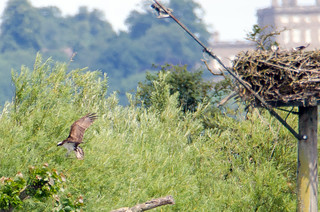
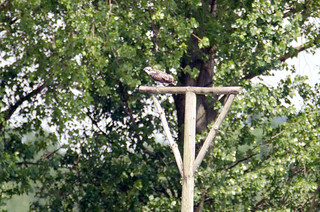
Not difficult to spot the ospreys [139] were across the bay, flitting between the cross pole and the nest - female (2AN) and male (2AM). A heat haze made it difficult to get photos at this distance. Right in front of the hide a pair of sedge warblers played silently. Three Egyptian geese [140] cruised past, again at some distance - another year tick. Spotted a water vole cross the water directly in front but too fast for a photo.

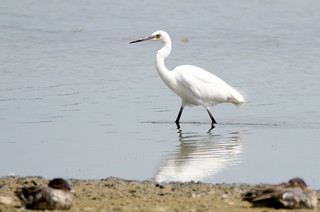
I decided to drop into the Shallow Water hide as it might afford a different perspective on the ospreys - in some ways it is better. From here the birds got closer with pied wagtail, little egret, Little egretcommon tern, mallard and black-headed gulls all parading by - the pied wagtails were busy feeding their young with the abundance of flies.

Shame Charlotte wasn't here but I won't leave it so long between visits

Sightings today (38) included: black-headed gull, blackbird, blackcap, blue tit, buzzard, carrion crow, chaffinch, chiffchaff, common tern, coot, cormorant, dunnock, egyptian goose, gadwall, goldfinch, great crested grebe, great tit, grey heron, greylag goose, house martin, lapwing, little egret, little grebe, mallard, moorhen, mute swan, osprey, oystercatcher, pied wagtail, redshank, reed bunting, sedge warbler, swallow, swift, tree sparrow, whitethroat, woodpigeon and wren.

Sunday, 2 July 2017

East Leake Quarry :: 01 July 2017

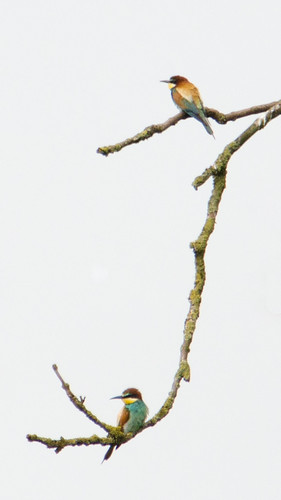
We joined the increasing number of birdwatchers rushing to a quarry to catch a glimpse of seven bee-eaters usually seen in southern Europe. Bee-eaterThe bee-eaters, rare visitors to the UK, were spotted at the Cemex quarry, in East Leake, Nottinghamshire. The RSPB said the birds have been seen mating and it may be likely they will nest at the site. One of the few positives of climate change? People obviously know I am interested and started sending me emails on Friday - Difficult to turn up the opportunity.

Arriving at site we could see the RSPB organisation in full flow with a field given over as a car park. Even at this hour there were at least 50 cars parked up. The RSPB staff asked if we needed directions but it was obvious where we had to go ... just follow the line of people heading out or returning to the car park.

Small groups stopped at various points along the path, scopes and cameras pointed at a large tree. We decided not to stop at any of these and walked to the very end of the path - this position afforded the best views as the resting beaches were clear of the foliage.

We spent an hour of so being entertained by the bee-eaters, watching through the scope. Amazing how you get drawn into a single species and hardly notice the sand and house martins buzzing close overhead and virtually through the crowd.

The Nottinghamshire Wildlife Trust had a stand at the best vantage point - it works in partnership with minerals firm Cemex - they said it was the first record of the species in the county since 1970.

Neal Trust Reserve :: 12 June 2017

Phil Douthwaite guided us round the newest, BOS manged Nature Reserve – The Neal Trust Reserve There is parking just off the Fosse Way B4455 just outside the BOS. SP293512.

A substantial group headed down the track to the wooded area and listened to an informative introduction from Phil. We didn't go through the wooded area but instead turned left and round. Not far ahead we crossed a brook where we had a flypast from a kingfisher.

The meadows provided for a range of butterflies and flowers - it was helpful having a few Orchidist along with us. Hemlock stood two meters high as we passed through the fringe of woodland.

We passed a barn, introduced as the most expensive bird box in Warwickshire. As we approached some people saw a barn owl exit, stage right ... unfortunately not a disappointed me. However, just minutes later we were afforded views of a bard owl hunting across the edges of fields on the other side of the dip.

A beautiful walk and one well worth remembering for butterfly watching.

Sightings (20) included: barn owl, blackbird, blackcap, blue tit, buzzard, carrion crow, chiffchaff, goldfinch, great spotted woodpecker, jackdaw, kestrel, kingfisher, long-tailed tit, magpie, rook, song thrush, swallow, swift, woodpigeon and wren.

Saturday, 3 June 2017

RSPB Ham Wall :: 29-30 May 2017

Arrived at the Avalon Marshes Centre just as the rain started to fall so decided on an early lunch - interesting as on a "no meat Monday". Easy for me to choose but Charlotte not so sure about the vegan sausages. After lunch took a walk through the craft centre and then decided to head straight over to RSPB Ham Wall instead of walking from the Centre - it turned out to be a good decision as the heavens then opened and we could see others being drenched. We therefore decided to detour and went to Wells Cathedral for the early afternoon and checked into our hotel - a beautiful building which we could see close up from our hotel room!

As the rain began to cease we decided to jump back into the car and head over to Ham Wall. It was still raining gently as we arrived and I had a chat to one of the locals on where on the site would be best for the day - light was poor and he didn't expect the weather to lift. Fortunately he was wrong.

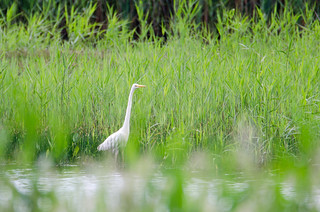
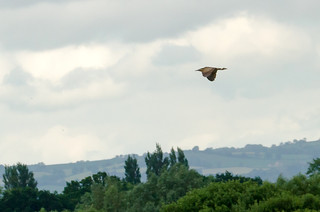
As we got onto the reserve proper we crossed the old bridge and from here we saw a group viewing a female red-footed falcon [#133]. Willow warblerVery (very) distant but visible from the scope. As we watched a bittern [#134] flew overhead. Stayed for a short while then decided to move on. Willow warbler teased but moved on each time I was near to focusing. At the first viewpoint we saw our first little and great white egrets [#135]. We walked all the way to the end of the map (and slightly beyond) until we came across a couple who were waiting and listening for the little bittern - we waited for a short while but decided to give it a try the next day - the couple had waited four hours for their first view and time was getting on. We turned and at the first viewpoint we caught sight of a cuckoo - they had beed quite vocal but were not showing until this point (only a fly-past).

Nothing much to add on our return walk but a small group Great white egretwere still present watching the red-footed falcon, now from the bridge itself.

After breakfast the next day we headed back and joined an even larger group watching the red-footed falcon - it was still staying in the same group of trees. We dropped into the Avalon hide and enjoyed marsh harriers and calling bittern. On the far side of the water I saw movement and after waiting found the birds to be bearded tits [#136] (male and juvenile). We strolled back to the car to pick up our sandwich lunch, sitting in the sun at the reserve entrance to eat them.

We set off to try our luck with the little bittern. BitternOn the way we stopped at a couple of the viewpoints and had good sightings of bittern and cuckoo. When we reached the reed bed we found a small group waiting patiently - unfortunately we had missed the bird fly over just 10 minutes earlier - this could be a long wait - would we have time? We could hear the bird "bark" from the other side of the bushes but it didn't climb for us to get a view. Suddenly it rose from the reeds and we enjoyed a 6 second transit before it dropped into another reed island. What a beautiful little bittern (male) [#137] - it was much smaller than I was expecting but also more dramatic looking.

We were happy with that and returned to the car - some way away - Little bitternnot spotting anything significant on the way. A great decision to visit and we must come back again.

Sightings at Ham Wall (50) included: bearded tit, bittern, black-headed gull, blackbird, blackcap, blue tit, buzzard, carrion crow, chaffinch, chiffchaff, coot, cormorant, cuckoo, dunnock, gadwall, goldfinch, great crested grebe, great spotted woodpecker, great tit, great white egret, greenfinch, grey heron, jay, lapwing, little bittern, little egret, little grebe, long-tailed tit, magpie, mallard, marsh harrier, moorhen, mute swan, pied wagtail, pochard, red-footed falcon, reed bunting, reed warbler, robin, rook, sedge warbler, shoveler, song thrush, swallow, swift, tufted duck, whitethroat, willow warbler, woodpigeon and wren.

Sunday, 28 May 2017

RSPB Otmoor :: 27 May 2017

Looking on the internet I couldn't see any reports from local sites on highlight birds so opted for another visit to RSPB Otmoor - I still haven't managed to see either the hen harrier or bittern this year.

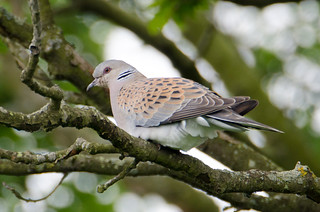
As I got to the end of Otmoor Lane, a red-legged partridge appeared Turtle doveon the verge and proceeded to walk ahead of the car. I progressed slowly so as not to startle it and enjoyed the close views. Another car joined behind me and I had to increase pace, spooking the bird, which resulted in it flying off left over the hedge.

From the car park I could hear a turtle dove over the hedge on the Roman Road. We went round to have a look but it was out of sight. Coming back to the car park, chiffchaff and blackcap darted about the trees singing loudly.

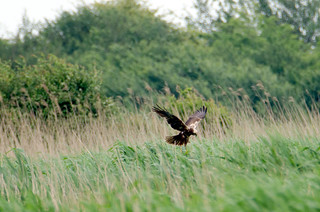
Once at the feeding station cuckoo and turtle dove could be heard clearly. Marsh harrierLooking along the hedgerow at the back of the bridleway a cuckoo landed low and out of sight of those on the other side. Distant and quiet it paused there for at least five minutes. Another could be hear back down towards the car park and seemed to arouse some interest in my bird, although there it stayed.

On the bridleway I could see some of the birders waiting for the turtle dove to come down to the seed spread on the ground by the cattle pen. I said hello and then moved on. No sooner had I got 20 metres and a turtle dove landed on the telegraph pole, then flew down in front of the gate and pens. I expect a few stunning photos will be posted this weekend.

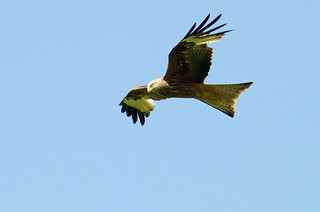
Cuckoos continued to call but they didn't show as well as my last visit. Red kiteReed and sedge warblers still called and darted on my right as I reached the turn for the first screen. Snipe drummed overhead and common tern worked the reeds to the right.

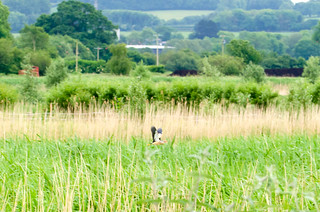
Reached the first screen and was glad I hadn't bothered with a fleece as it was now getting quite warm. Watched up to four marsh harriers quartering the reeds, joined by both buzzard and red kite overhead. Stayed a good while but not afforded any views of hen harrier or bittern. A pleasant relaxing time though.

On the way back a woman who had been at the first screen for much of my time there was stopped and peering through her bins. A snipe resting in the scrub, unfortunately out of a clear photo shot or through her scope.

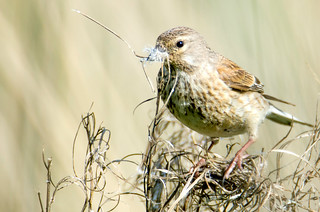
Through the kissing gate I turned right to have a look at the first pool on Big Otmoor. LinnetRedshank flew overhead, perhaps flushed by red kite overhead. Nothing much at the pool, perhaps where the redshank had been. A cuckoo called from a nearby tree but as I approached it flew off down the track.

Further views of turtle dove as I made the turn and noticed the guys still guarding the fence and pen - the seeds appeared to have been replenished. A single curlew flew overhead, towards Big Otmoor and common crane could be seen on Greenaways.

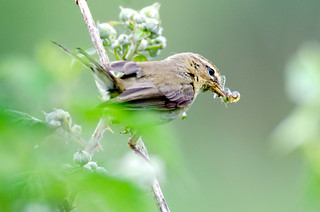
Almost back to the car when a whitethroat showed to my left carrying lunch. WhitethroatPopped off a few photos - perhaps I will get an ID on the caterpillar from those in the know.

Sightings today (49) included: black-headed gull, blackbird, blackcap, blue tit, buzzard, canada goose, carrion crow, chaffinch, chiffchaff, common tern, coot, crane, cuckoo, curlew, dunnock, gadwall, goldfinch, great crested grebe, great spotted woodpecker, great tit, grey heron, greylag goose, hobby, house martin, kestrel, lapwing, lesser black-backed gull, linnet, little egret, magpie, mallard, marsh harrier, mute swan, pochard, red kite, red-legged partridge, redshank, reed bunting, reed warbler, sedge warbler, shoveler, skylark, snipe, swift, tufted duck, turtle dove, whitethroat and woodpigeon.