Showing posts with label little tern. Show all posts

Tuesday, 11 August 2026

RSPB Snettisham :: 01 August 2026

Having been unable to travel up to Yorkshire with Kev @kev07713 and Karen, and consequently missing both buff-breasted and white-rumped sandpipers, it was rather fortuitous that a white-rumped sandpiper appeared at RSPB Snettisham in time for our regular Saturday birding trip.

We set off at 4.30am, hoping to arrive ahead of the high tide and catch the bird as it was pushed closer towards the shore. After arriving, we began the reasonably long walk from the RSPB car park down to the shore. Within minutes, we heard the unmistakable call of a turtle dove.

We quickly located it, only for two birds to fly over before one settled in a tree some distance away. We stopped to enjoy the views, and as I moved on, Kev dropped back to the car to collect his glasses, just in case he needed to phonescope anything, as focusing was so much easier with them.

Turtle dove

I reached the shore and started working through the dunlin and ringed plovers along the water’s edge, hoping to pick out the white-rumped sandpiper amongst them. As I made my way along, Kev caught me up and we continued together, pausing to watch the red knot swirling in the distance.

There were an impressive 56,000 red knot recorded here during the Wetland Bird Survey (WeBS) count at the beginning of the month, and the sheer number of birds was evident as they wheeled above the Wash. Their flight patterns and constantly changing formations were remarkably reminiscent of starling murmurations.

As the tide pushed further across the mudflats, flock after flock of red knot lifted from the water’s edge, thousands of birds twisting and turning in unison above the Wash. The flock moved almost like a single living organism, constantly changing shape as the birds responded to one another, alternately flashing dark and silver as they banked and caught the light.

The sheer scale of the spectacle was difficult to take in. Wave after wave of red knot rose from the shore, filling the sky before settling back down onto the pool behind, only to erupt into flight moments later. It was an incredible display, made all the more impressive by the vast numbers involved.

No sign of the white-rumped sandpiper though.

Red knot
Red knot

We continued working our way along the shore, picking out two peregrines, six kestrels, and a buzzard quartering the land beyond the mudflats. Along the remaining shoreline was an impressive array of curlews, godwits, shelduck, redshank, dunlin, red knot, Mediterranean gulls, and more, all feeding along the water’s edge.

Out in front of us, streams of little terns and a handful of common terns headed out across the Wash, setting off on fishing trips as the tide continued to push in. The latest verified local eBird log for RSPB Snettisham recorded a specific group of 117 little terns on the reserve - reports suggest this area of the coastline supports an average of 314 breeding pairs.

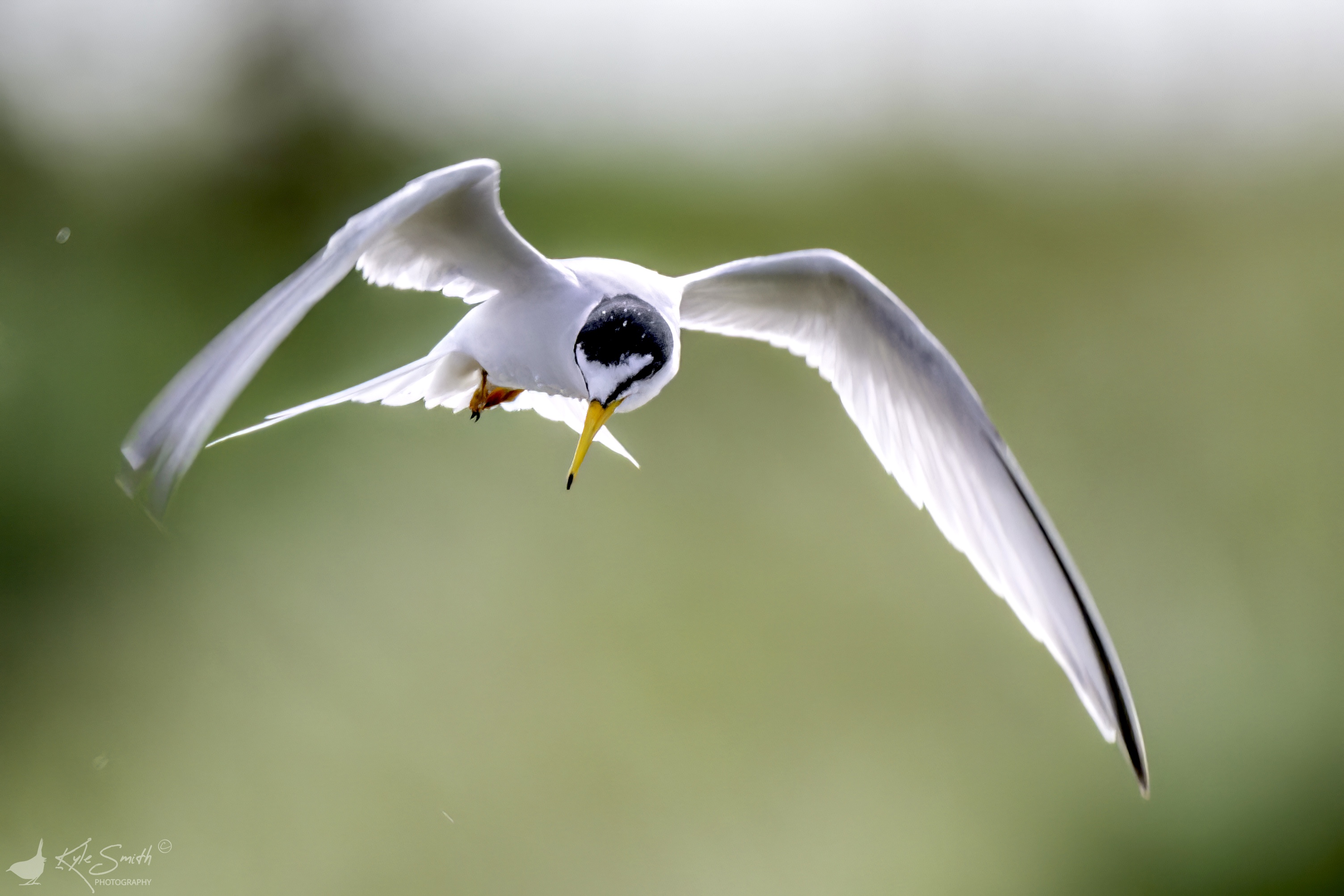
Little tern

According to the latest (unverified WEBS) count there were 56,000 red knot, 3,943 dunlin, 4,500 oystercatcher, 2,050 black-tailed godwit, 1,435 bar-tailed godwit, 1,560 shelduck, 1,270 curlew, 1,270 grey plover, 1,124 redshank, 662 sanderling, 424 ringed plover, 226 turnstone, and 40 Mediterranean gulls amongst the other species.

There are so many waders here at the moment because yit is the start of the autumn migration period, when The Wash becomes an extremely important feeding and staging area for birds returning from their Arctic breeding grounds.

A few things are happening simultaneously:

  • Red knot are arriving back from the Arctic. They make the enormous journey south from breeding areas in places such as Greenland, Canada and Russia. The Wash's extensive mudflats provide an exceptionally rich food supply for them to refuel.
  • Dunlin numbers are building too. Late summer onwards is an important period for Dunlin on UK estuaries and mudflats, with birds arriving from further north to spend the winter here.
  • The Wash is an exceptionally productive feeding area. The huge expanses of exposed mud provide worms, molluscs and other invertebrates, allowing enormous numbers of waders to feed together. The RSPB describes the area as having "world class mud" - essentially, the food supply is what drives the congregation of birds.
  • The tide concentrates them. At low tide the birds can spread across vast areas of mudflat to feed. As the tide rises, that feeding habitat disappears, forcing them towards the shore and Snettisham's roosts. The birds spread across The Wash to feed, then become concentrated at Snettisham as the tide comes in.

Looking back along the shore, we could see a group of birders gathered at the point where the path from the car park joins the coastal path. In front of them was a sizeable gathering of waders, although at that distance we couldn’t make out exactly what they were.

At this point, we checked BirdGuides and saw that a report had just been posted for the white-rumped sandpiper further back along the track, with the sighting subsequently confirmed by another birder who had seen it. Had we somehow missed it, or had the bird already moved from there, perhaps onto the pools or with the distant waders?

We headed back towards the group, only to find that they were already moving off. What they had been watching was predominantly sanderling, with a few dunlin, redshank, ringed plovers, and a couple of turnstones mixed in. The white-rumped sandpiper was still nowhere to be seen - we'd arrived 15 minutes too late for the close views described by others.

Ringed plover
Sanderling
Sanderling
Sanderling
Sanderling
Sanderling
Sanderling

After a short while, we walked back up the path to where a growing group of birders had gathered, all scanning the mudflats as the tide began to drop once more. We worked our way through the flocks, commenting that each time we made a sweep, the birds seemed to have relocated further along to the latest stretch of exposed sand.

Some of the birders began making their way back along the shore, and we followed, step by step. Every so often they would stop and scan again, only to move on once more, with us gradually catching them up.

Then, at one point, a couple of birders came hurrying back towards us. They had seen the white-rumped sandpiper, but it had flown and landed beside a channel, where it had quickly disappeared from view. We had missed it again! We scanned and scanned but could find no sign of it. Apparently, the white-rumped sandpiper had left with a group of dunlins, and a small flock was later seen flying off to the right, which probably included our elusive bird.

We moved further to the right and began scanning the area, working through the dunlin and redshanks as more birds gradually filtered through from that direction. While I continued searching from this spot, Kev carried on along the path following a couple of the remaining birders.

About ten minutes later, my phone rang. One of the birders had located the sandpiper, and I immediately set off at a brisk pace along the path and a few minutes later, I caught up with them and, at last, was within reach of our target bird.

It took barely a minute to pick it out among the birds on the mudflats, but then there it was - first in my scope, then in my bins, and finally in front of my camera lens.

The white-rumped sandpiper is a rare but regular vagrant to Britain. It breeds across Arctic Canada and winters mainly in Patagonia, but its transatlantic migration route brings small numbers to Britain and Ireland, particularly during late summer and autumn. To make things even more challenging, it is roughly dunlin-sized and can be surprisingly difficult to pick out amongst hundreds or even thousands of its smaller counterparts. The combination of long wings, a relatively long bill, prominent white supercilium, and streaking extending onto the flanks can be particularly useful when separating it from dunlin.

With the Wash attracting enormous numbers of passage waders at this time of year, perhaps it is not so surprising that the occasional Nearctic vagrant finds its way into these vast gatherings of otherwise familiar species. For a bird arriving from the other side of the Atlantic, the rich feeding grounds of the Wash must provide an ideal place to stop, refuel, and continue its journey.

White-rumped sandpiper

Walking to the next group of birders we heard that there were two little stints and it wasn't long before we located one, feeding amongst the seaweed and dunlins. The little stint is Britain's smallest regularly occurring wader, at only about two-thirds the size of a dunlin. It is seen mainly on spring and, especially, autumn passage. British birds breed in northern Scandinavia and north-west Russia and winter around southern Europe and western Africa.

The important distinction is that little stint isn't normally expected in the huge tidal flocks of dunlin at Snettisham in quite the same way. You're more likely to find one feeding around the edges of pools or amongst smaller wader gatherings. This makes finding one a matter of carefully checking the less obvious birds rather than simply scanning the main knot/dunlin spectacle.

Little stint
Little stint

On the way to the shore from the car park I'd seen a wall butterfly - a species that Kev had not knowingly encountered previously and so on the way back to the car we stopped regularly and searched. We were eventually rewarded by a couple of views, one relatively close. We struggled to get open wing photographs and the only individual that compiled was a bit worse for wear.

The wall is a beautifully marked butterfly, its orange-and-brown wings patterned with dark lines and prominent eyespots. The most striking feature is the large black eyespot with a white centre near the tip of each forewing, complemented by a series of smaller eyespots along the hindwings. When settled with its wings closed, however, it becomes much more cryptic, the mottled grey-brown underside blending remarkably well with dry grass, bare earth and stones.

The wall is a butterfly of short, open, sunny grassland, particularly where there are patches of bare ground. Typical habitats include coastal cliffs and dunes, quarries, railway embankments, grassy tracks and field margins. The caterpillars feed on various grasses. It is particularly associated with warm, sheltered places, and adults often bask on walls, rocks, bare ground and other sunny surfaces. Males can be quite conspicuous when they patrol low over the ground looking for females.

The wall has experienced a very substantial long-term decline. UKBMS data show an 82.8% decline since monitoring began in 1976. Interestingly, the national index has been more stable over the last 20 years and has increased over the last decade, although this doesn't undo the much larger historical loss.

Wall brown butterfly

With a three-hour journey home ahead of us, it was time to make tracks, but not before stopping at the café just outside the reserve for a well-earned spot of lunch.

Year list: 272.

Friday, 22 August 2025

RSPB Snettisham :: 02 August 2025

Looking at our options, Kev @kev07713 and I quickly agreed that the best plan was to head east towards the Norfolk coast and spend the day at RSPB Snettisham. The reserve had been attracting a fair bit of attention recently thanks to several interesting waders being reported, including pectoral sandpiper, white-rumped sandpiper, and curlew sandpiper. Of the three, the white-rumped was always going to be more of a gamble as sightings had tailed off for a day or two, which usually means it had either moved further along the coast or was feeding out of sight somewhere on the vast mudflats. Still, birding is often about the chase as much as the reward, and we knew that Snettisham always delivers plenty to see, whether or not the rarities put in an appearance.

RSPB Snettisham is a truly spectacular reserve sitting on the edge of The Wash, one of the UK’s most important estuaries for wintering and passage birds. Twice a day, when the tide pushes thousands of waders off the mudflats and into the lagoons, the place comes alive in a way that few reserves can match. Knot, dunlin, oystercatcher, and bar-tailed godwits gather in vast numbers, swirling in dense flocks that seem to shape-shift in unison. It’s a spectacle that has rightly earned the site its reputation as one of the country’s birding highlights, particularly during the famed autumn “whirling wader” events. Unfortunately, the tide would be under 6 meters and too low to have a really spectacular display.

Even without the rarities, the promise of seeing that sheer abundance was enough to make the trip worthwhile. Add to that the possibility of catching up with a scarce American sandpiper or two, and it felt like an opportunity too good to miss. Whether we connected with the target birds or not, we were certain of a memorable day on the marshes.

We pulled into the car park and gathered our gear, ready for the familiar but deceptively long walk out to the reserve. No matter how many times you do it, the stretch always seems further than you remember, though that extra distance often brings its own surprises. Part of me was quietly hoping we might chance upon a turtle dove along the way, as they have been known to linger in this area during summer, their soft purring call such a rare sound now in Britain. Sadly, it wasn’t to be on this occasion.

What we did get, however, was something altogether unexpected. Out of the corner of my eye, I caught the elegant white shape of a spoonbill gliding across the sky, following the river course, its long neck outstretched and unmistakable bill catching the light. Before we’d even finished remarking on the sighting, a second bird appeared, this time passing almost directly overhead, close enough for us to admire the details of its slow, deliberate wingbeats. An uplifting start to the day.

As we pressed on, the hedgerows and scrub lining the path were busy with smaller birds. Whitethroats flitted about, pausing briefly on the tops of brambles to deliver their scratchy song, while sedge warblers rattled away unseen in the reedier patches. Here and there, other “little brown jobs” (LBJs) darted from bush to bush, just quick glimpses of movement that keep you scanning and listening in case something more unusual pops up. It was a reminder that at Snettisham, even the approach to the lagoons can be rich with life if you take the time to look and listen.

Spoonbill
Spoonbill

As we reached the climb up from the edge of the river, our attention was drawn to a pair of terns quartering the river. They moved with that characteristic buoyancy, wings beating steadily as they hovered and then dived sharply into the surface in pursuit of fish. For a moment, I let myself hope that one of them might turn out to be something a little different - perhaps an Arctic tern to add to my year list.

In the end, the clean lines and bright red bills revealed them to be common terns. No disappointment, though - they remain a delight to watch and it’s hard not to admire their precision as they work the shallows. There’s something about terns that always lifts the mood: the way they seem perfectly at home skimming the water’s surface. Even if they weren’t the rarity I’d hoped for, they added another welcome note to the day list.

Common tern

Looking out towards the sea, our eyes were drawn to a large flock of waders rising and twisting against the grey sky. The whole mass moved as one, a cloud that shifted shape in an instant. At this distance, it was impossible to pick out individual species, but experience told us what we were watching: a swirling mix that would almost certainly include red knot, black-tailed godwits, and dunlin.

These aerial ballets are always spellbinding, and part of the magic lies in knowing that each bird is responding instinctively to the movement of those around it, tiny adjustments creating one vast synchronised display. We paused briefly, even though we knew we’d enjoy closer views once we made it to the sea wall. There, with luck, we’d be able to watch the flocks settle onto the mudflats or be pushed inland by the rising tide, turning distant silhouettes into a varied collection of waders.

Flock of waders

Just before we reached the turn leading onto the sea wall, another species caught our attention. A group of Egyptian geese were gathered along the bank that bordered the water, their striking chestnut eye patches and bold plumage standing out against the grey sky reflections of the water. A few more drifted lazily across the surface, paddling in unhurried circles as though entirely at ease.

Though not native, these birds have become a familiar sight in parts of Norfolk and further afield, their numbers steadily increasing over recent years. There’s something slightly exotic about them, with their upright posture and loud, honking calls, a reminder of their origins along the Nile. While they don’t stir the excitement of a rarity, they add a hint of the exotic.

Egypian goose

We paused for a moment to chat with a birder stationed off to our right - he confirmed that he’d managed to pick out the pectoral sandpiper earlier from the Rotary Hide. That was encouraging news, exactly what we wanted to hear. A pec would be a new bird for the year, and while it can be a slippery customer, just knowing it had been seen nearby gave us hope.

From the hide, we trained our scopes across the pool, scanning intently for anything out of the ordinary. At first, though, every promising shape resolved itself into yet another dunlin. One, then another, then another - plenty to sift through but none bearing the crisp breast band of our target bird. The couple sharing the hide with us reassured us that we weren’t chasing shadows; they too had seen the pec earlier, first on a distant spit and later working the edge of a nearby island. Encouraged, we continued scanning the flocks with patience and hope.

Meanwhile, movement behind us kept drawing my eyes away from the islands. A large gathering of waders congregated in a large body, made up of black-tailed godwits and red knot, two of the signature species of The Wash, and together they created an extraordinary spectacle. Likely thousands of birds compressed into a tight group - a classic defensive behaviour of waders: safety in numbers, each bird shielded by the mass, confusing potential predators.

Red knot and black-tailed-godwits

A little while later, a couple more birders drifted into the hide to join the search. One of them turned out to be a familiar face - Des, a regular presence along the east coast and someone we’ve bumped into on more than one occasion - at Frampton, Hunstanton amongst others. There’s always a certain camaraderie when birders gather like this: seeing familiar faces.

We continued to work our way steadily through the waders, scoping every dunlin, double-checking every redshank, lingering over anything that seemed slightly out of place. Then, after a spell of silence, Des spoke up. He thought he had it - the pectoral sandpiper - picked out at long range. Even with a scope, the view was distant, but it was enough to be confident.

The bird itself, when you finally lock onto one, is subtle yet distinctive. About the size of a dunlin but a touch longer and slimmer, with neatly scalloped upperparts and, most importantly, a sharp, dark pectoral band across the chest that gives the species its name. This band cuts cleanly into the white belly below, creating a contrast that makes the bird look crisply marked compared with its neighbours.

Pectoral sandpipers breed in the Arctic tundra of North America and Siberia, but every autumn a scattering of them crosses the Atlantic to turn up on our shores, a long-distance migrant blown off course - spotting one is always a thrill.

Even though the view was far from perfect, the knowledge that we had connected with this scarce visitor was satisfying. We watched hoping for a closer look, but content at least that our patience had paid off.

Pectoral sandpiper
Pectoral sandpiper
Pectoral sandpiper

A little nearer to the hide, we picked out a small group of spotted redshanks gathered quietly in the water. Most of them were dozing, bills tucked neatly into their feathers, their reflections rippling faintly on the surface. A few birds stirred now and then to preen, stretching their wings or carefully working their bills through their plumage in slow, deliberate movements.

By this stage in the year, they had mostly slipped back into their winter plumage, the dramatic black-and-white finery of summer giving way to the more subdued, silvery-grey tones that make them easy to confuse at a glance with common redshanks. Still, their slimmer build, longer legs, and the elegant sweep of their needle-fine bills gave them a certain poise, and the occasional flash of white underwing when one shifted position was enough to mark them out. While a handful winter in the UK, most are just passing through on migration.

Spotted redshank

Before long we left the hide behind and wandered over to one of the benches that offered a broad view across the mudflats, accompanied by Des. From here we could watch the incoming tide slowly swallowing the sandbanks, pushing the waders ever closer. It’s one of the joys of Snettisham - the way the landscape transforms hour by hour, and with it the behaviour of the birds.

Scanning the distant waders, I picked out my first grey plovers of the year. They were far too distant for a photograph, but their bold markings stood out clearly through the scope. Still holding onto their summer plumage, they looked magnificent - black faces and bellies framed by striking white borders, contrasting sharply with the silver-grey of their backs.

Looking back over the hide we saw a raptor being mobbed by terns - it turned out to be a kestrel, although initially we thought it might have been a hobby. We saw at least seven more across on the left side of the estuary.

Kestrel

The tide continued its steady advance, though it soon became clear that the water would never quite reach us where we were stationed. Instead, it would linger frustratingly far out, leaving the birds just beyond the range for any close views. Even so, the shifting waterline had its effect.

As the mudflats gradually disappeared, the waders were forced to move, edging along the shore and every so often the entire flock would lift, bursting into the air as one, wheeling and twisting against the light before settling again.

Even at a distance, the sight of so many birds responding instinctively to the rhythm of the tide was spectacular. The lack of close views didn’t diminish the sense of drama.

Flock of waders

We began working our way back along the track, eyes scanning the mudflats and shallow pools for any sign of a curlew sandpiper or a little stint, both of which had been reported in the area recently. At the first of the buildings along the wall, we paused, spotting a few sandwich terns with the more familiar common terns. Among the various gulls resting along the water’s edge were a few Mediterranean gulls mingling with black-headed, herring, great black-backed, and lesser black-backed gulls - plenty to keep the eyes busy.

Then, out in front of us, I caught a flash of movement: a curlew sandpiper, unmistakable with its compact frame and striking, slightly downcurved bill. Before I could get more than a brief look, it slipped quietly into a gully, disappearing from view but not before I got Des and Kev on it. A little later, our persistence was rewarded again when another birder spotted one further out along the shallows, taking advantage of the tide here having advanced a little further. It moved deliberately, probing the wet sand and shallow water with its bill, giving just enough of a view to admire the pale underparts, warmer reddish tones on the back, and the elegant, slightly hunched posture that distinguishes this small wader. Soon enough it vanished again.

From behind us came the soft, familiar purring call of a turtle dove. After a few moments of careful scanning, we finally picked it out perched atop a tall tree. It was distant, but seeing one so clearly was a reminder that these gentle birds are still managing to hold their own here, despite the challenges they face nationally.

Turtle dove
Turtle dove

Des said he was off home, and it was time for us to do the same. No sign of the white-rumped sandpiper but we had enjoyed a great day and noted at least 66 species.

Year list: 227.

Friday, 27 June 2025

Normandy Lagoon, Lymington :: 14 June 2025

The weather forecast once again predicted poor conditions, though it appeared that a portion of the south coast might escape the rain - luckily, this included Lymington and the Normandy Marsh. Kev @kev07713 and I had two main targets for the day: little terns, and the female long-tailed duck. There had also been reports of a roseate tern making occasional appearances, so we’d keep an eye out for that too. If time permitted, we planned to search for a Dartford warbler, a species I’d yet to encounter this year.

We parked further up the lane than usual, as all the regular spots near the gate were already taken. After gearing up, we walked to the edge of Normandy Lagoon and within minutes of scanning with his scope, Kev located the long-tailed duck. It was distant, initially swimming before climbing out of the water to preen briefly. Soon after, it settled down and went to sleep.

Long-tailed ducks are primarily Arctic breeders that typically winter around the northern and eastern coasts of Scotland and Northumberland. While small flocks or solitary individuals occasionally reach southern regions like Dorset, Kent, and West Sussex, they are uncommon this far south in June - around 14,000 are estimated to winter in UK waters. The female, unlike the striking male, is a more subdued brown and white, with a shorter tail and faint cheek patches

Long-tailed duck
Long-tailed duck
Long-tailed duck
Long-tailed duck

We began our walk around the lagoon and were soon watching little terns both out in the bay and across the lagoon itself. Habitat restoration efforts have clearly been made here - several islands within the lagoon have been fenced off and covered with pea-shingle to encourage nesting by little terns, as well as common and roseate terns. Along the lagoon’s edges, little terns were actively plunge-diving for small fish in a near-constant rhythm.

My initial attempts at photographing them weren’t great due to poor light direction, but after relocating to a better vantage point, I managed to capture some improved shots. With at least eight breeding pairs working the area, there were plenty of opportunities. While formal counts of breeding pairs aren’t conducted here, last year’s doubling of fledged chicks (from three to six) suggests a healthy and growing little tern population.

At one point, we watched a pair of little terns engage in a classic courtship display, spiralling high into the sky in tight circles, calling to each other all the while. Once aloft, they hovered side by side before dropping back down to one of the islands. This aerial dance is a pair-bonding ritual, often performed before or after mating, and sometimes preceding courtship feeding, where the male offers a small fish to the female.

The wind was quite strong, and it was much more comfortable walking along the narrow path below the sea wall, sheltered from the gusts.

Little tern
Little tern
Little tern
Little tern
Little tern
Little tern
Little tern
Little tern
Little tern
Little tern
Little tern
Little tern
Little tern
Little tern

Sharing the islands were numbers of common terns, many already with chicks - more than 60 pairs of common terns populated the site in 2024 and there was no indication of a reduction this year. The adult terns were bringing small fish back to the nest continuously, flying in from the Solent with fish trailing in their bills - often they would hover before landing, presumably to confirm there were no predators before landing - on other occasions the incoming bird would take off again seemingly upset that its partner wanted to take the fish - I can do it! They are busy parents and apparently one adult can deliver up to 50 fish a day to a hungry brood.

Common tern
Common tern
Common tern
Common tern
Common tern
Common tern

Out over the islands we started to spot a handful of Mediterranean gulls, landing in amongst the bleck-headed gull colony. Their call is quite distinct and Kev and I have got quite used to stopping for a look when we hear them overhead - distinctive and rather elegant call, often described as a mournful or drawn-out wail, softer and more musical than the harsher cries of the other gulls. The calls appeared to largely coincide during their arial displays and when disputes broke out when they landed. Not quite the views we had last week at WWT Slimbridge but great to see.

Since first breeding in the UK in 1968 the species has increased in number rapidly - to 2,400 pairs in 2018 (peak) before settling to around 1,200 pairs now. Once confined to the south and to eastern coasts breeding now extends into Scotland with the first breeding pairs confirmed in 2023.

On two occasions a roseate tern flew through, but I didn't manage to get a record shot of it. A pair bred here in the last two summers but as far as I know there is only one bird in the area.

Mediterranean gull
Mediterranean gull
Mediterranean gull
Mediterranean gull

Avocets disappeared from British breeding grounds by the 1840s. Remarkably they recolonised in 1947 on Suffolk's Minsmere reserve during WWII marsh flooding, sparking a dramatic recovery - a rise in breeding pair of 300% in 25 years. The wintering population has surged about 21-% since 1997, reaching about 8,700 birds. Initially concentrated on the East Anglia coast they now breed very widely. They are classified as amber-listed in the UK but are one of the few waders showing strong upward trends.

Avocets represent one of the UK's most remarkable wildlife success stories - from near extinction to now flourishing across the south coast and beyond, their expanding presence underscoring the successful habitat restoration that has taken place.

Avocet
Avocet
Avocet
Avocet
Avocet

A male stonechat seemed to be following us and perched regularly on the fence between us and the lagoon. This was not the only individual, and we had some great views of what I think was a juvenile. Since 1995, the UK breeding stonechat population has jumped by approximately 258% - a long-term surge. In particular there has been an amazing circa 700% increase in umbers over recent decades. As they stopped on posts, gorse and low shrubs they called - a sharp, staccato "chak-chak" sound, reminiscent of stones tapping.

Stonechat
Stonechat

As we began to circle back, we continued to enjoy watching the variety of birdlife, once again spotting the female long-tailed duck. She was diving frequently, then emerged from the water to preen just as before. Nearing the gate on our way back to the car, we came across reed warblers busily flitting through the reeds, their beaks crammed with food for hungry chicks. Nearby, a family of oystercatchers caught our attention.

A friend of mine who lives near the Suffolk coast had recently told me about oystercatcher chicks running around on her driveway, and seeing one here, I couldn’t resist taking a photo. The chick was covered in soft grey and white down, typical of many young waders. It was already beginning to show the species' trademark long, straight bill, though still short and muted in colour compared to the vivid orange-red of the adults.

Oystercatcher chicks are precocial, leaving the nest soon after hatching and follow their parents, and learning how to forage.

Long-tailed duck

Oystercatcher

We discussed our next move - I'd hoped to try for a Dartford warbler, but with the coastal wind picking up, it seemed unlikely we'd have much luck there. Instead, we decided to head inland to Sandy Down near Brockenhurst, where we’d seen them last year. As we pulled into the car park, we stepped out just in time to witness a Red Arrows flypast, likely on their return from the dramatic display over London for Trooping the Colour, marking King Charles’s official birthday.

Notably, this year’s Red Arrows display featured a 40% blend of sustainable aviation fuel (SAF), derived from waste cooking oil and other bio-based sources, to produce their iconic red, white, and blue smoke trails; an effort to reduce their environmental impact.

Red arrows

We set off across the heathland, spotting silver-studded blue butterflies as we went. They are strongly tied to lowland heath and limestone grasslands and are found in colonies, often small and isolated, with key strong populations located here. They have a fascinating symbiosis with ants where the caterpillars secrete a sugary substance that attracts ants, which then protect them from predictors. In return, the larvae pupate underground in the ants' nests! Adults fly mainly in June and July, staying low and close to the ground, and basking in warm, sunny patches. We spent less time photographing them than last year.

Silver-studded blue butterfly

As we approached the spot where we’d seen Dartford warblers last year, Kev paused to examine an orchid, likely a common spotted orchid. In this area, the heath variety is probably the most widespread, and while hybrids do occur here, this one looked fairly typical of the common form. The acidic heathland and boggy ground provide ideal growing conditions.

Spotted orchid

As we waited, we could see some fallow deer on the opposite hillside - their presence made easier to spot given that one was white - a striking and unusual sight. The white fallow deer are usually not albino, typically having dark eyes, not pink. Their whiteness is due to leucism, a genetic condition that reduces pigment. The deer fed in the trees, occasionally passing through partial clearings giving an opportunity to capture a few photos. Further to the left we could see roe deer sitting low in the scrub, eventually departing but stopping for its photo to be taken.

Fallow deer
Fallow deer
Roe deer
Roe deer

Our attention was drawn when we heard a soft partial call from a Dartford warbler in front of us. We located it but as I tried to take a photo, it flew back from its perch on some gorse then stopped briefly on another bush before dropping from view. Shortly after it reappeared way off to our right, against the sky - tricky light for photos. Once it dropped from there, we decided time was getting on and we started back to the car, spotting a hobby cutting across the heather.

Dartford warbler
Dartford warbler
Dartford warbler
Dartford warbler

Almost back to the car a pair of linnets dropped onto a small wet patch in the heather - although they wouldn't be the best photos I took a couple anyway.

Linnet
Linnet

We jumped in the car and made for home - another successful outing and a few year ticks.

Year list: 212.