Showing posts with label long-eared owl. Show all posts

Friday, 9 January 2026

Deeping Lakes & RSPB Nene Washes :: 06 January 2026

Kev @kev07713 and I had a chat about whether we could fit in a birding trip during the week. Kev was tied up on Monday, while I already had commitments on Wednesday and Thursday, so we settled on Tuesday. After weighing up the options, we decided on our annual pilgrimage to Deeping Lakes in search of long-eared owls. The site also regularly holds little owls and, at present, a lone snow goose that has been associating with a mixed flock of mute and whooper swans.

With freezing conditions forecast, we agreed to meet a little later than usual, at 6.30am. Whatever we did, we were likely to miss the snow goose leaving the roost as the swan flock headed out to the fields to feed. Continuing a recent pattern, we took an alternative route from Banbury to Northampton because of road closures linked to HS2 works and Google Maps having a mental breakdown; once on the diversion, the satnav sent us off the signed route and along a maze of back roads and villages, eventually depositing us at the far end of the A43 before Northampton - a very strange start to the journey.

We hoped for an update enroute that would give us a steer on where to look for the swan flock. We stopped for breakfast along the way and, sure enough, the update came through: the flock containing the snow goose had relocated to fields alongside Deeping High Bank, north of Crowland Road and east of the Deeping Lakes Reserve.

Armed with this pin drop, we navigated to the indicated fields and pulled in by the roadside to scan the swan flocks. There were two distinct groups: one mainly of mute swans and another, further along the road, dominated by whooper swans. It took only a few minutes before Kev picked out the snow goose and handed me his binoculars so I could confirm it for myself. We then drove on to a small pull-in at the sharp bend in the road leading up onto the Welland Bank, which runs alongside the River Welland.

As we set up the scope and retrieved the camera from the boot, the snow goose promptly sat down, tucked its bill under its wing, and went to sleep - typical! Fortunately, after a few minutes it stood up again and began feeding among the almost 250 largely whooper swans; it sat down a couple more times but was soon back on its feet, strolling about once more. Although the flock was fairly distant, we still enjoyed good views through the scope.

Snow goose and whooper swan

Eventually, I climbed the bank and looked out over the river, picking up various ducks and a grey heron. Over the surrounding fields a few red kites drifted, while sizeable gatherings of corvids moved about in the distance.

By now we were itching to get onto the reserve. We were soon parked up, boots on, scopes balanced on our shoulders, and setting off from the car park. A birder was already stationed on the bank of the River Welland, peering through his scope, so we climbed up to join him to see if he was watching anything in particular. On the river there were at least six goosanders, little grebes, three or four great white egrets, a few Canada geese, and a wide assortment of ducks and coot.

After a while the birder moved on, and we were fortunate to be in position when a large flock of greylag geese lifted from below the far bank and dropped onto the water. We began working through the flock carefully, checking that there were no white-fronted geese among them. Kev then picked out a single pink-footed goose, which swam away from us and out towards the middle of the river.

Pink-footed goose
Pink-footed goose

From the bank it made sense to go through the gate and make our way down to the area where the little owls are usually seen. On the way we spoke with a birder who had already been there and who described the tree in which the bird had been sitting. Before long we were setting up our scopes and scanning the indicated tree, but there was no sign of it. Before I could move on to check the surrounding trees, Kev picked up our bird in a tree further to the left, initially very obscured by twigs.

We repositioned ourselves slightly to the right and, although the view was still not completely clear, we were able to watch the bird much better - I took a few photos while Kev captured some video. A green woodpecker then flew through the area and later returned to land on the far side of one of the trees.

Little owl
Little owl

Eventually it was time to pack up and head back along the main track. Kev had already put his scope away while I finished scanning, but I had to call him back when I spotted another little owl, deep in cover in a tree even further to the left. Kev rejoined me and we watched this second bird until it retreated down into a hole, which may well be where they roost or nest.

Little owl

It was now time to push on towards the hide where the long-eared owls roost. Along the way we encountered a flock of long-tailed tits, and at the head of the group were two treecreepers - a welcome year tick. We also passed several volunteers busy with site management, trimming back trees to let in more light and keep the paths clear. One group was tending a small fire made from the thinner branches; they had the best job of all, being at least close to a source of warmth.

When we arrived, the hide was empty and one long-eared owl was immediately visible, although largely obscured by ivy on the tree. Kev and I each picked up different additional birds, and so between us we felt there were at least three owls roosting. It is always interesting how these birds choose to roost so close to the hide and appear unconcerned by people watching them from little more than twenty feet away. We paused to enjoy some coffee and tea before other birders arrived, and we pointed out the owls to them. While it was good to see the birds at all, it was a little unfortunate that they were so well concealed - though whatever makes them feel comfortable and safe is clearly what matters most.

Long-eared owl
Long-eared owl

We later stopped along the track to scan the trees and bushes on the opposite bank, where we have seen long-eared owls perched before, but there was no sign this time. We eventually returned to the car and decided to head on to RSPB Nene Washes (aka Eldernell), hoping to add a few more species to both the day and year lists.

Arriving at Eldernell we climbed up onto the bank and saw a birder scanning the bushes, the same guy we'd talked to at Deeping. It was lucky we had bumped into him as he had a thermal monocular and had located three long-eared owls, one of which was in reasonably clear view (for a long-eared owl), with great scope views.

As soon as we were on two of the owls, the chap with the infrared monocular moved on to see what else he could find. It wasn’t long before we started to pack up to followed him but spotted something land in the trees beside us, calling - a kingfisher. Kev had heard the call and was onto it in a flash, just as a second bird called from our right. The long-eared owl reacted to the kingfisher landing so close and woke - the moment captured brilliantly in one of Kev's videos (here). They continued calling as we searched for them, and then one suddenly popped into view in the tree right in front of us - how we hadn’t seen it sooner was a mystery. The two birds then flew back along the hedge line, one of them remaining pleasingly exposed.

Long-eared owl
Long-eared owl
Long-eared owl
Long-eared owl

Looking out across the fields, we could see marsh harriers quartering the reeds on the horizon or passing through. Several kestrels were hunting, and a pale-phase buzzard was perched on a series of posts.

The chap with the infrared monocular later returned and began showing another couple of birders where they could get views of the long-eared owls. I was slightly suspicious that the most difficult owl to see might actually be a short-eared owl, and once I had the scope on it the differences in facial structure and eye colour became apparent. It was buried deep in cover and extremely difficult to photograph. We chatted with the other birders, and it soon became clear that the much-photographed tawny owl was not around this year and was no longer giving views from its usual tree hole. There was also no sign of the barn owls, although a new box has appeared on land where we have previously watched one hunting.

It wasn’t going to be a four- or five-owl day; but three is more than enough, and there’s no need to be greedy.

Short-eared owl

As the light began to fade, we made our way back past the car park towards the area where egrets are known to roost. Although we had seen plenty of great white egrets this year, I hadn’t yet come across a little egret. Before we got too far, Kev spotted a sparrowhawk crossing a field and disappearing into some trees - I was too far behind to see it. A little egret flew past, followed shortly by a great white dropping in among a flock of sheep with three grey herons, and then another sparrowhawk zipped through. In the distance, we also picked up two more marsh harriers.

Little egret

As we reached the car, two fighter jets roared in the sky, instantly drawing our attention - F-35 Lightning II's; it doesn’t just sound loud, it dominates the soundscape, combining raw power, depth, and weight in a way that is intimidating and unforgettable. The F-35 is a fifth-generation stealth multirole fighter built by Lockheed Martin, combining low observability (although we could see it 😂), and supersonic performance. Apparently one of the most capable combat aircraft in service today.

Most of the UK’s fleet consists of the F-35B variant, designed for short take-off and vertical landing (STOVL) operations. This allows the aircraft to operate from the Royal Navy’s aircraft carriers, HMS Queen Elizabeth and HMS Prince of Wales, as well as from shorter or less-prepared airstrips ashore.

The UK currently operates around 37 F-35B jets, based at RAF Marham, near King’s Lynn in Norfolk. The aircraft has a maximum speed of Mach 1.6 (around 1,200 mph) and is powered by a Pratt & Whitney F135 engine producing approximately 19,500 lb of dry thrust, rising to around 40,000 lb with afterburner and lift fan engaged.

F-35 Lightning II
F-35 Lightning II
F-35 Lightning II
F-35 Lightning II
F-35 Lightning II
F-35 Lightning II

Knowing the journey home would take at least two and a half hours, we packed up our gear and set off, content after a full and rewarding day in the field.

Year list 96.

Friday, 31 January 2025

Eldernell, Eyebrook Reservoir & Draycote Water :: 18 January 2025

Kev had chosen to return to Cornwall after previously missing the booted eagle, but I had commitments on Saturday night and Sunday, making a late return on Saturday impossible. Instead, I decided to bird on my own and make a full day of it, visiting several sites to add a few species to my year list. As usual, I planned to start at the furthest location and gradually work my way home, ensuring a shorter final leg at the end of the day. My itinerary included Eldernell for owls -specifically tawny and long-eared - Eyebrook Reservoir for smew - and Draycote Water for the ferruginous duck.

After a quick breakfast stop, I arrived at Eldernell to find the cold accompanied by a lingering mist, far from ideal conditions for photography. I hoped the owls would cooperate and stay within close range. Unfortunately, I seemed to have missed the barn owl, as there was no sign of one on the wing, and I couldn’t spot any short- or long-eared owls in their usual roosting hedge. Rather than making another pass, I headed straight for the tree where a tawny owl often "suns" itself, offering excellent views as it roosts before its evening hunt.

Tawny owl

scanned the water as flocks of whooper swans lifted off and flew overhead, making up for my recent miss at Slimbridge. They passed in groups of three to twelve, heading east. A flock of pink-footed geese also moved through before a raven appeared, landing in the distance to join another on the footpath along the raised bank. Among the ducks and wildfowl, nothing particularly noteworthy stood out.

Whooper swan
Whooper swan
Raven

I decided to walk back and check the hedge again for any owls. Along the way, I encountered a group of young lads accompanied by a couple of adults. They hadn’t seen any short- or long-eared owls, and I confirmed that I hadn’t either. They opted to head toward the tawny owl, while I continued working my way toward the car park and back, ultimately coming up empty-handed. Out on the marsh, a pair of common cranes flew through, though they remained at a distance.

Common crane

I headed back once more, carefully scanning the hedge, taking my time to search through the branches and foliage. Before long, the lads returned and joined the effort - one of them had a thermal scope, so I decided to stay close as he picked out a few small tit species in the hedge. We formed the advanced guard, with the rest of the group following behind.

After about ten minutes, the young lad suddenly stopped, raised his binoculars, then his scope, and gestured to his friend. I paused and joined them just in time to hear him say that this was the first significant find he’d made with his scope. He pointed out where to look, and sure enough, there it was ... a long-eared owl. I had begun to wonder if I might need to make a detour to Deeping Lakes, but with this find, I could stick to my original plan.

Long-eared owl

Out in front of the car park, I spotted my first marsh harrier of the year, gliding over the pools and occasionally stalling, though it never made a move on any unsuspecting prey. Raptors were scarce, with only a lone kestrel perched in a tree. As I left the lads behind, I caught sight of half a dozen cranes touching down on the distant far bank, too far for photos and only really visible through the scope.

Marsh harrier
Marsh harrier
Marsh harrier

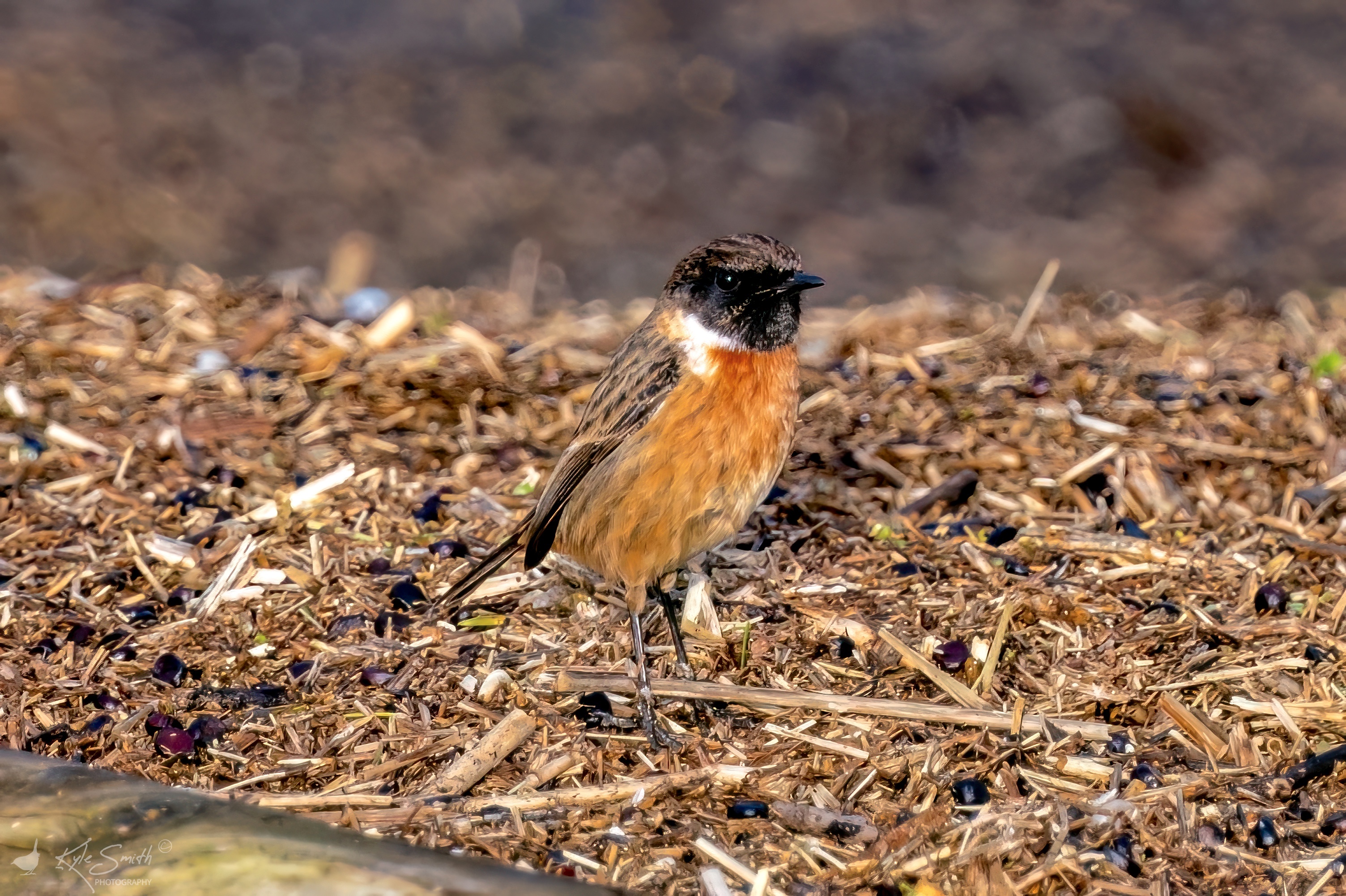
As I approached the car park, I came across a pair of stonechats, though only the female lingered long enough for a photo. They always seem to show well in this area. With other sites still to visit, I needed to keep moving, so I jumped into the car and set off for Eyebrook Reservoir.

Stonechat

arrival, I parked opposite the viewing area and scanned the water. Realistically, any smew were likely in the next bay, out of sight from this spot. As usual, a handful of red-legged partridges roamed the area, with one perched on a fallen tree, seemingly standing guard. As another approached, there was a noticeable hint of aggression from the bird holding the vantage point.

Red-legged partridge

After spotting groups of pintails among the wigeon and teal, I moved back out and walked along the roadside to a gap in the hedge, which offered a clear view of the bay. Before long, I spotted a drake smew diving near the point, gradually working its way closer. Within minutes, another drake and a redhead suddenly appeared alongside it. I had no idea where they had been hiding, as I hadn't seen them among the other ducks; it's not as if a drake smew is particularly inconspicuous! Moments later, the entire group was spooked by an unseen threat and took to the air, with the smew following suit, heading left and disappearing down the reservoir. Some of the teal and wigeon circled back and settled again, but the smew remained out of sight.

Smew
Smew
Smew
Smew
Smew

I walked further down the road and eventually saw the three smew at distance before they disappeared again. There were now numbers of goldeneye and they were also a year tick, a few of the males displaying - the mating display is a fascinating and elaborate courtship ritual performed by drake goldeneyes to attract females, typically in late winter and early spring. The drake dramatically throws his head backward until it nearly touches his back, then snaps it forward while giving a nasal, high-pitched call.

Goldeneye

I returned to the spot where I had watched the smew, only to find they hadn’t yet returned. Scanning the bay, I noticed some movement and quickly realized it was an otter - my second consecutive visit with a sighting. This time, however, there was no diving, just a swift, purposeful cruise across the bay before it disappeared from view.

Otter

I logged my sightings and returned to the car, setting off for Draycote Water. On arrival, I found the car park still quite full and after paying for a couple of hours of parking, I stopped to chat with a fellow birder who was packing up his gear into the boot of his car. He mentioned that he had checked round to the hide at Toft Bay but hadn’t seen the ferruginous duck; it was therefore likely somewhere beyond the sailing club. That saved me some time, and before long, I was joining another birder who was scanning the water with his scope. As we worked through the tufted ducks and coots, I picked up another year tick, a small group of goosanders.

Goosander
Goosander

In the far distance near the valve tower, we managed to spot the long-staying red-throated diver. As we shifted our focus back to the ducks closer to the bank, we finally located the ferruginous duck, diving only occasionally. To get a better view, we moved further along the bank. The light was fading, but there was still enough to capture a few photos.

Ferruginous duck
Ferruginous duck
Ferruginous duck
Ferruginous duck
Ferruginous duck
Ferruginous duck

As I made my way back to the car, I came across John Judge and Theo de Clermont setting up for the gull roost and decided to join them. A glaucous gull had been seen in recent days, and it was a great opportunity to learn. They picked out a distant yellow-legged gull, and we spotted the red-throated diver now working along the edge of a group of large gulls; mostly lesser black-backed, great black-backed, and a few herring gulls. Common gulls were plentiful, with black-headed gulls making up the majority.

I kept watching, but eventually, my parking limit ran out, and I had to head back to the car. Later, I found out that the glaucous gull had dropped in just 15 minutes after I left; though it must have been quite dark by then, it still would have been great to see.

Year list: 105.

Wednesday, 31 January 2024

Nene Washes, Deeping Lakes & Gloucestershire :: 27/28 January 2024

The RSPB Nene Washes reserve is renowned for being a significant breeding ground for black-tailed godwits. However, during the winter season, it becomes a hub for various other bird species. Every year, Kev @kev07713 and I embark on a visit to spot short-eared, long-eared, and tawny owls, along with common cranes, lapwings, and numerous winter ducks.

Kev and I drew up in the car park located at the end of Eldernell Lane, and from there have a perfect vantage point to observe the flooded grasslands that stretched into the distance; our primary focus though would be on the owls.

Setting out along the elevated track, we scanned the hedge for any indication of short-eared or long-eared owls. These two species seldom choose the same roosting area - according to past experiences, the short-eared owls tend to be in the hedge nearest to the car park, while the long-eared owls are usually found farther along, typically just before the hedge branches off from the main track.

A pair of birders were lingering in the vicinity where we anticipated spotting the short-eared owls roosting, and as hoped, one was present but partially hidden by branches and twigs. One of the birders said there were two owls, prompting both Kev and I to begin searching for the second bird. Scanning around we found the second bird was initially concealed behind the first, and not immediately noticeable. We viewed through Kev's scope, and I snapped some photos in the hope of extracting clear images where the twigs and branches wouldn't pose a significant obstacle - I was partly successful.

Short-eared owl

Short-eared owls are known for their distinctive facial discs and striking golden eyes, typically gracing the British Isles during the winter months as they hover and hunt over open moorlands, marshes, and coastal habitats. Some are resident all year round, but numbers are boosted by visitors from continental Europe.

The number of short-eared owls visiting the UK each year can vary based on factors such as weather conditions, prey availability, and overall population dynamics. This year seems to be a good one for shortie numbers. Short-eared owls stand out for their daytime hunting habits, although they also pursue prey at night. Their peak activity occurs during dawn and dusk hours, when they gracefully glide low over the ground in their quest for food.

A few more people passed, and we helped them locate the birds and view through Kev's scope - he's a good egg. We proceeded along the track, vigilant for any additional signs until we arrived at the cluster of brambles where the long-eared owls seem to prefer roosting. And indeed, we spotted one - it was nestled deep within the foliage but still visible. After observing for a few minutes, I shifted my position along the track, attempting to see anything else within the bush from this different perspective. As I'd hoped, a second bird was visible, affording a clearer view from this elevated position - the sun was directly behind making photography difficult.

Long-eared owl

These enigmatic and secretive owls, recognised for their unique elongated "ear" tufts and cryptic plumage, are inclined toward dense woodlands, coniferous forests, and marshy locales. These owls are uncommon, and there are reports of a decline in their numbers. They can be found as year-round residents but are rarely observed or heard outside the breeding season. Their primary hunting activity takes place at night, as they fly close to the ground, capturing predominantly small mammals; additionally, they may also target small birds, amphibians, and insects.

After enjoying the views, we decided to descend to the woods, a location where a tawny owl is frequently spotted basking in the sun. Fellow birders confirmed the owl's presence, and we were eager not to miss the opportunity in case it retreated into its tree and disappeared from sight.

True to expectations, the owl was perched with its eyes either closed or slightly ajar – although I've seen photos featuring two birds in the hole, we 'only' observed one. Two birders with sizable camera lenses were patiently waiting for some activity, but they had yet to capture any noteworthy photos after around 45 minutes - the bird had been almost motionless.

The tawny owl is widespread in Britain and is recognisable by its distinctive hooting calls; the tawny owl is a medium-sized owl with a rounded face and reddish-brown plumage, providing effective camouflage in wooded habitats. They are predominantly nocturnal and are commonly found in a variety of environments, including woodlands, parks, and gardens. They are skilled hunters, preying on small mammals, birds, and insects. Tawny owls are known for their adaptability, often nesting in tree hollows but also utilising nest boxes or even the abandoned nests of other birds. Our bird blended in with the tree beautifully.

Tawny owl
Tawny owl

Having obtained good views, Kev ascended the slope and scanned the area to our left - over the flood - while I wrapped up. By the time I reached Kev he had located a couple of whooper swans on the far water's edge. Lots of wildfowl were on the water or on the edge: moorhen, coot, gadwall, mallard, teal, wigeon and more. Later, a small group of whooper swans flew by.

Whooper swan

We observed buzzards, a kestrel, and numerous marsh harriers, but unfortunately, no hen harriers were on show – perhaps they would emerge later in the day. Opting to revisit the owls, a fellow birder joined us as he had initially walked past the owls without spotting any. Although the sun had shifted, producing improved conditions for photos, the foliage remained a significant obstruction to capturing the long-eared owls. Walking on a mixed flock of small birds worked along the water's edge, and I picked out a couple of chiffchaffs. So many more now overwinter in the UK.

Long-eared owl
Long-eared owl
Chiffchaff

We paused at the location of the short-eared owls and glanced back along the track. There we noticed a photographer standing by the fence line, aiming their camera at the long-eared owls. It was apparent that they wished they could get closer for a better shot 😖 – a somewhat disappointing situation. After reaching the car and taking a coffee break, we observed someone else engaging in similar behaviour in front of the shorties.

I'd never explored the reserve along the track to the east and so we headed off hoping for views of other species of raptor or wildfowl. A handful of stonechats entertained perching on the scrub or dropping to feed on the ground.

Stonechat
Stonechat

Kev picked out numbers of pintails on the flood and as I watched them, I saw a common crane creeping through the reeds behind - soon we were able to pick out four. Above and at distant a flock of birds passed, flashing white as they turned and weaved. I snapped a photo and confirmed they were black-tailed godwits and not golden plover as first thought.

Black-tailed godwit

We chatted with a couple of birders and soon after we'd left them I noticed the cranes coming over some trees, landing in the water and walking into the reeds. Kev heard some cranes call to our left and the three more joined the original four as they all took to the wing and flew off to our right - another year tick.

Common crane
Common crane
Common crane
Common crane

On our previous visits, we continued onto LWT Deeping Lakes in pursuit of long-eared and little owls, and with recent reports also mentioning a glossy ibis in the area we repeated the exercise. With a sandwich lunch from a corner shop picked up enroute, we ate as an Egyptian goose glided by. Once finished, we ventured onto the reserve, pausing to scan the water from a screen to where the glossy ibis had been recently observed - no immediate sign. A lone pink-footed goose stood on an island. A few passing birders inquired about the ibis although didn't linger but just minutes after their departure, the ibis made an appearance along the island's edge, feeding constantly as it traversed the front.

Glossy ibis

The glossy ibis is a wading bird that has been expanding its range, and sightings in the UK have increased significantly over the years. Conservation efforts and habitat protection might play a role in creating environments that are conducive to glossy ibis populations but changes in climate and temperature may also be influencing migration patterns and distribution.

We stopped at the gully we'd seen long-eared owl previously but didn't spot one. From the next hide we did see one after a birder pointed it out - he really had to as it was almost completely obscured - apparently this was a favoured roost. We got talking to a local and he joined us to where little owls resides - one of the trees has fallen and so we searched up and down the row hoping to catch sight - nothing. I did add a green woodpecker to my year list though. After quite a time we had to admit defeat and returned to the car for the journey home, seeing a great white egret as we did so, another green woodpecker, and seven Egyptian geese.

Charlotte and I had friends round on Saturday night and I didn't rush to get up on Sunday morning - just in time thought to watch the men's final at the Australian Open tennis. At lunchtime Charlotte left to play in a tennis match in Mapledurham while our girls announced they were going to the cinema to see "Mean Girls" - I declined their invitation to join them. Instead, I travelled over county lines into Gloucestershire to try and catch some better views of short-eared owls hunting. A barn owl would make it a four owl species weekend.

On arrival I found there were a lot of people already there - very popular birds, having been absent last year. I joined a group with large lenses and scopes - the birds had not yet been seen. I talked with Alan McCuskie @AlanMcCluskie as we waited. A birder found a shortie sitting in the grass and alerted us to its position - I took a photo - the bird made some hunting flights but at extreme distance. A chap with a major lens arrived and set up, and about ten minutes later called a barn owl behind us and further along the road. I took a few photos but didn't venture far from my position, while others strayed along the lane to get better views and photos.

Barn owl
Barn owl

Staying where I was turned out to be a great decision as one and then two shorties showed at reasonably close quarters. Three of us enjoyed the best views that would be provided today - I was happy with the views and resulting photos.

Short-eared owl
Short-eared owl
Short-eared owl
Short-eared owl
Short-eared owl
Short-eared owl
Short-eared owl
Short-eared owl
Short-eared owl
Short-eared owl
Short-eared owl

Final views were of one of the short-eared owls having a bit of a ding-dong with a kestrel. I've seen several images recently showing conflict between these species, mostly when a kestrel tries to steal food from the owl. Unfortunately, the action was very distant.

Short-eared owl and kestrel

It would be a return journey of about 45-50 minutes, and as the light was now falling, I made for home.

Year list: 128.