Thursday, 15 February 2024

Lisvane / Llanishen Reservoirs & Slimbridge :: 10 February 2024

We initially intended to go to WWT Slimbridge but decided to make a detour to Lisvane and Llanishen Reservoirs in Glamorgan first. Our friends Adrian and Bryan had recently been and seen a red-necked grebe and ring-necked ducks there, so we wanted to check it out - the ring-necked ducks were a pair. Kev's @kev07713 sister Karen @hobbylovinglife and her partner Dean @worlebirder planned to visit early doors and so we met them for breakfast in Newport before continuing to Cardiff.

Lisvane and Llanishen Reservoirs comprise two designated Sites of Special Scientific Interest (SSSI), recognised for their significant ecological importance. Lisvane Reservoir SSSI specifically highlights its role as a habitat for overwintering wildfowl. The site boasts an impressive Visitor Centre equipped with a café, complimentary WiFi, an activities hub, and rentable rooms. Other amenities include a boathouse, bird hide, education centre, nature trails, biking facilities, and extensive parking - parking fees apply. We arrived to find only a couple of cars already there and made our way to the water's edge. We scanned through the ducks, and it didn't take more than a couple of minutes until we were on the ring-necked ducks.

Ring-necked ducks are a species of diving duck not native to the United Kingdom and are primarily found in North America, where they breed in freshwater marshes and ponds across Canada and the northern United States. Males have a striking appearance with a glossy black head, neck, and chest, a white vertical stripe on the side in front of a grey/white flank, and a distinctive chestnut-coloured ring around their neck, although this ring is often difficult to see in the field. Males have a resemblance to tufted ducks and sometimes take time to separate at distance. Their diet primarily consists of aquatic plants, seeds, and small invertebrates and as proficient divers, they are capable of diving to considerable depths in search of food.

We watched the pair diving but all too soon the male began to swim away and eventually took flight, disappearing towards the far end of the reservoir. The female slowly drifted further away, prompting us to decide to begin our search for the red-necked grebe. Before we left, we were treated to the sight of a couple of grey herons landing on the bank.

Ring-necked duck
Ring-necked duck
Ring-necked duck
Ring-necked duck
Ring-necked duck
Ring-necked duck
Ring-necked duck
Ring-necked duck
Grey heron

We dropped down onto the lower path running between the two bodies of water and looked back to see at least 21 little grebes, a common sandpiper, and a grey wagtail. We saw grebes out in the water behind (Llanishen) and eventually we resolved that they were all great-crested and not our target bird. We were standing near the hide/screen when a birder strolled across to tell us that the red-necked grebe was showing just round the corner in the bay.

Red-necked grebes are native to the UK and are primarily found in Scotland, especially in the northern and western areas, although they are also spotted in England and Wales. These birds prefer freshwater habitats such as lochs, reservoirs, and larger ponds during the breeding season, while they may also occur in coastal waters during migration and winter. They are medium-sized diving birds with striking plumage and have a long neck, a slender body, and a pointed black bill. During the breeding season, their plumage features a distinctive rusty-red neck, which contrasts with the dark upperparts and white underparts but outside the breeding season, their plumage becomes duller, with the red on the neck fading. This is what we expected today in February.

We rounded the corner and easily picked out the re-necked grebe, preening on the water and at middle distance - at least it wasn't feeding in the middle. Scope views were very good.

Red-necked grebe
Red-necked grebe
Red-necked grebe
Red-necked grebe

We scanned the gulls but didn't find anything - behind in the trees a jay called as it was harassed by a handful of magpies. A nuthatch called and flew out of the trees and away. We eventually made our way back to the car and had more views of the ring-necked ducks; the male had motored from the end of the reservoir back to the female and both were easily viewable between dives. Karen got ahead of us and when I caught her up, a grey wagtail dropped onto the slope down to the water; amazingly this was the first I'd seen in 2024.

Grey wagtail

We stopped and chatted and while Karen and Dean decided to go to the Visitor Centre for a coffee, Kev and I decided to return to the car and head to Slimbridge so that I could see the Bewick's swans before they leave in the spring. It would take us just over an hour and we'd arrive early lunchtime.

Bewick's Swans are migratory birds that visit the UK during the winter months, typically arriving from their breeding grounds in Arctic Russia. They undertake one of the longest migrations of any swan species, traveling thousands of miles from their breeding grounds in Siberia to their wintering sites in Europe. They follow a well-established migration route, flying over Scandinavia and into western Europe before reaching the UK. They are smaller than the more familiar mute swans, with a distinctive appearance characterized by a small, triangular yellow patch at the base of the bill. Bewick's swans are often observed in family groups or small flocks during their winter stay in the UK and here at Slimbridge there are reportedly up to about 150.

It didn't take long before we found them from Peng Observatory and Rushy Hide.

Bewick's swan
Bewick's swan

In general, Bewick's Swans begin their northward migration in March or April. Some swans may depart earlier, while others may linger in the UK until later in the spring. Adult birds often depart earlier than younger birds or families with cygnets. Additionally, weather patterns and environmental conditions can influence the timing of migration, with favourable winds and weather conditions facilitating faster migration.

Happy to have seen the birds, we moved on towards Willow Hide and where water rails have been showing well this winter. We stopped at various vantage points and as we scanned the reeds Kev called a Cetti's warbler working low to the water but in the reeds rather than on the front. I managed to follow it along from left to right and to catch it as it paused briefly. Although I’ve heard Cetti's multiple times this year, including on New Year's Day, this was the first I could get a look at.

Cetti's warbler

The heavy rain has flooded much of the area where they have been seen and so after a short wait with no sign, we moved on to the Robbie Garnett Hide where we stumbled upon a single spotted redshank, in winter plumage. During the summer season, its appearance undergoes striking changes acquiring a distinctive breeding plumage; striking black coloration that extends from the bird's head down its neck, breast, and upperparts. This black plumage contrasts sharply with the white underparts, creating a striking visual impression. The black coloration is glossy and may appear iridescent in certain lighting conditions. We will look forward to seeing these later in the year.

Spotted redshank

Onwards to the Estuary Tower and up onto the second level, looking out across the Dumbles and Tack Piece. From here we could see many of the geese: barnacle, Canada, greylag but also Ross's, bar-headed, snow and lesser white-fronted. The lesser white-fronted goose of unknown origin was with Canada geese on the Tack Piece while the snow goose, of unknown origin, and the long-staying Ross’s goose were on the Dumbles.

There was a single distant crane but not much else we hadn't already seen - there were a few ruff (year tick) a bit closer so I snapped a couple of them - a wigeon took flight in the direction I was pointing and I snapped that too.

Bar-headed goose
Bar-headed goose
Lesser white-fronted goose
Ross's goose
Ruff and wigeon
Wigeon

There was no sign of the usual peregrine and after a while we decided to make our way to the Zeiss Hide and see if we could locate any white-fronted geese. We arrived to find there were only a few greylag geese in the area and no white-fronts - Kev continued to search and I returned to the front of the hide as I could hear water rail calling. To my left I saw a water rail dart through a gap in the reeds and I got myself ready in case I could catch it out in the open - as luck would have it, I then heard two calls and both burst from the reeds into the open, one chased down the area of cut reeds and back out of view. One had stopped long enough for me to fire off a few photos and thankfully was stationary long enough to allow something in focus.

Water rail

We continued down to Kingfisher Hide with a couple coming the other way reporting that three kingfishers had been showing. We arrived and watched with a couple beside us manging to pick up a kingfisher in a bush out front - from our angle it wasn't visible. We waited, hoping that they might perch on a post, branch, reed, or indeed visit the nest holes in the bank where they have been seen excavating in recent days. Instead, two kingfishers dropped out of the bush and away up the water channel. No photo opportunity here. We opted to visit Hogarth and Discovery Hides passing some trees where a handful of siskin and lesser redpoll were feeding.

Siskin
Lesser redpoll

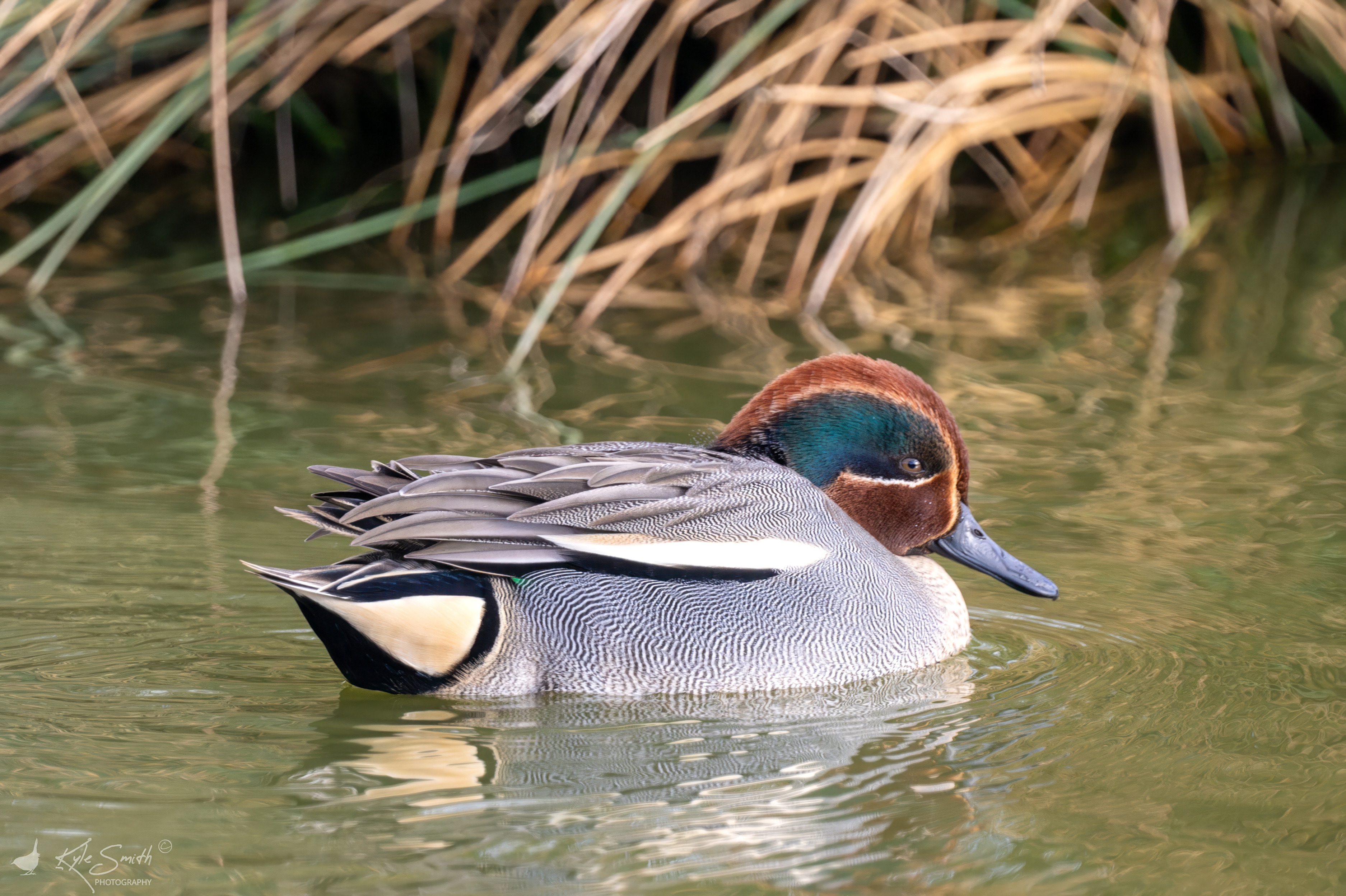
From the hides we could see a range of teal looking rather splendid, and my first avocets of the year. Looking as if they would like to settle and nest were a pair of oystercatchers. One came reasonably close, and I just couldn't resist.

Teal
Teal
Teal
Avocet
Oystercatcher
Oystercatcher

Kev recently visited Farmoor Reservoir and took some photos of cormorants which were rather stunning - he posted these photos here on X - formerly known as Twitter ... As he said, cormorants are not his favourite birds, but could not deny they looked pretty stunning – the sinensis subspecies. This subspecies typically exhibits subtle variations in size and plumage compared to others. In general, it has a glossy black plumage with some greenish or bronzy sheen, especially on the back and wings during the breeding season. Out on an island were a number of cormorants with some exhibiting some breeding plumage or also being part of the sinensis subspecies - regardless, it looked rather beautiful. I had to take a photo.

Cormorant

We stopped for a coffee in the Visitor Centre before making the journey home, now under 1&fract12; hours away.

Year list: 145.

Tuesday, 6 February 2024

Acres Down :: 03 February 2024

We decided on a return trip to Acres Down, aiming to tick a few species we had missed on our previous visit. Reports of lesser spotted woodpecker had been sporadic since our last trip, and we hadn't yet tried to spot goshawk or woodlark.

On arrival, the car park was busy once again, but as we approached the favoured tree of the lesser spotted woodpecker, we noticed fewer birders compared to our previous visit. Perhaps some visitors had ventured on walks, some accompanied by their dogs.

While crossing the car park, we heard the calls of firecrests and once again managed to spot and track an individual in the holly across from us. I attempted to capture a photo, but the early morning light and the shade under the trees made it a challenge.

Firecrest

We waited for a while watching the tree and hearing occasional drumming to our right and behind but no signs of any woodpeckers passing through. I eventually saw a coal tit, having listened to them repeatedly on our last visitt and not seen them. Kev @kev07713 wandered off and watched a flock of finches and picked out a couple of bramblings which I thought I'd pick up when we went in that direction - they were gone when we looked later and I’d lost my chance.

No one had seen the woodpecker all morning and so we decided to take a chance and go for a walk and make use of our time here - it may never show. We'd heard some drumming from some distance behind and headed in that direction to look for likely locations. Unfortunately, none of them held our woodpecker although we did see marsh tits, treecreepers, a firecrest, and on the return a pair of goldcrests.

Treecreeper
Goldcrest
Goldcrest

We stopped to check if any woodpeckers had been seen but none had so we went back towards the car and out onto the heath. On our last visit we had looked from here but ventured no further but now walked round to the point and overlooking heather clad slopes. Three birders were ahead of us, and we stopped near to them, listening to woodlarks.

Before long, our first woodlark appeared high in the distance behind us. Several more and one-by-one followed suit, taking flight and soaring into the sky above. Though often distant and silhouetted against the grey sky, their song betrayed their presence. The woodlark is a diminutive ground-nesting bird renowned for its melodious and intricate song and has a surprisingly powerful song despite its size. Their calls resonate across large distances, particularly in expansive habitats like grasslands, heathlands like that we were on, or open woodlands.

Woodlark
Woodlark

At this time of year you can also observe buzzards engaging in various displays and behaviours as they prepare for the breeding season. This can involve calling, chasing off other buzzards, or even engaging in aerial conflicts. We counted more than five buzzards out front and another couple to our left - while the five were mainly soaring, the two to our left were engaging in some territorial disagreement.

Buzzard

Like buzzards, goshawks exhibit territorial behaviour, especially during the breeding season. So, in February, they are often diligently defending their territories against intruders or competing goshawks. Goshawk males seeking mates stake out territories using aerial acrobatics and vocalizations, make it an opportune time to observe them. Luckily, we managed to spot an individual beyond a distant line of trees, though its presence was discernible only through Kev's scope.

We set off across the heath to see if we could find a Dartford warbler, a birder having reported seeing one around the gorse on the heath on our last visit. We searched back and forth but came up with nothing. While searching we saw ponies and two brought the Dr Doolittle 'push-me-pull-you' to mind.

Pony

Eventually we returned towards the car and stopped as we encountered another marsh tit and views of firecrest in better light.

Marsh tit
Firecrest

Year list: 131

Wednesday, 31 January 2024

Nene Washes, Deeping Lakes & Gloucestershire :: 27/28 January 2024

The RSPB Nene Washes reserve is renowned for being a significant breeding ground for black-tailed godwits. However, during the winter season, it becomes a hub for various other bird species. Every year, Kev @kev07713 and I embark on a visit to spot short-eared, long-eared, and tawny owls, along with common cranes, lapwings, and numerous winter ducks.

Kev and I drew up in the car park located at the end of Eldernell Lane, and from there have a perfect vantage point to observe the flooded grasslands that stretched into the distance; our primary focus though would be on the owls.

Setting out along the elevated track, we scanned the hedge for any indication of short-eared or long-eared owls. These two species seldom choose the same roosting area - according to past experiences, the short-eared owls tend to be in the hedge nearest to the car park, while the long-eared owls are usually found farther along, typically just before the hedge branches off from the main track.

A pair of birders were lingering in the vicinity where we anticipated spotting the short-eared owls roosting, and as hoped, one was present but partially hidden by branches and twigs. One of the birders said there were two owls, prompting both Kev and I to begin searching for the second bird. Scanning around we found the second bird was initially concealed behind the first, and not immediately noticeable. We viewed through Kev's scope, and I snapped some photos in the hope of extracting clear images where the twigs and branches wouldn't pose a significant obstacle - I was partly successful.

Short-eared owl

Short-eared owls are known for their distinctive facial discs and striking golden eyes, typically gracing the British Isles during the winter months as they hover and hunt over open moorlands, marshes, and coastal habitats. Some are resident all year round, but numbers are boosted by visitors from continental Europe.

The number of short-eared owls visiting the UK each year can vary based on factors such as weather conditions, prey availability, and overall population dynamics. This year seems to be a good one for shortie numbers. Short-eared owls stand out for their daytime hunting habits, although they also pursue prey at night. Their peak activity occurs during dawn and dusk hours, when they gracefully glide low over the ground in their quest for food.

A few more people passed, and we helped them locate the birds and view through Kev's scope - he's a good egg. We proceeded along the track, vigilant for any additional signs until we arrived at the cluster of brambles where the long-eared owls seem to prefer roosting. And indeed, we spotted one - it was nestled deep within the foliage but still visible. After observing for a few minutes, I shifted my position along the track, attempting to see anything else within the bush from this different perspective. As I'd hoped, a second bird was visible, affording a clearer view from this elevated position - the sun was directly behind making photography difficult.

Long-eared owl

These enigmatic and secretive owls, recognised for their unique elongated "ear" tufts and cryptic plumage, are inclined toward dense woodlands, coniferous forests, and marshy locales. These owls are uncommon, and there are reports of a decline in their numbers. They can be found as year-round residents but are rarely observed or heard outside the breeding season. Their primary hunting activity takes place at night, as they fly close to the ground, capturing predominantly small mammals; additionally, they may also target small birds, amphibians, and insects.

After enjoying the views, we decided to descend to the woods, a location where a tawny owl is frequently spotted basking in the sun. Fellow birders confirmed the owl's presence, and we were eager not to miss the opportunity in case it retreated into its tree and disappeared from sight.

True to expectations, the owl was perched with its eyes either closed or slightly ajar – although I've seen photos featuring two birds in the hole, we 'only' observed one. Two birders with sizable camera lenses were patiently waiting for some activity, but they had yet to capture any noteworthy photos after around 45 minutes - the bird had been almost motionless.

The tawny owl is widespread in Britain and is recognisable by its distinctive hooting calls; the tawny owl is a medium-sized owl with a rounded face and reddish-brown plumage, providing effective camouflage in wooded habitats. They are predominantly nocturnal and are commonly found in a variety of environments, including woodlands, parks, and gardens. They are skilled hunters, preying on small mammals, birds, and insects. Tawny owls are known for their adaptability, often nesting in tree hollows but also utilising nest boxes or even the abandoned nests of other birds. Our bird blended in with the tree beautifully.

Tawny owl
Tawny owl

Having obtained good views, Kev ascended the slope and scanned the area to our left - over the flood - while I wrapped up. By the time I reached Kev he had located a couple of whooper swans on the far water's edge. Lots of wildfowl were on the water or on the edge: moorhen, coot, gadwall, mallard, teal, wigeon and more. Later, a small group of whooper swans flew by.

Whooper swan

We observed buzzards, a kestrel, and numerous marsh harriers, but unfortunately, no hen harriers were on show – perhaps they would emerge later in the day. Opting to revisit the owls, a fellow birder joined us as he had initially walked past the owls without spotting any. Although the sun had shifted, producing improved conditions for photos, the foliage remained a significant obstruction to capturing the long-eared owls. Walking on a mixed flock of small birds worked along the water's edge, and I picked out a couple of chiffchaffs. So many more now overwinter in the UK.

Long-eared owl
Long-eared owl
Chiffchaff

We paused at the location of the short-eared owls and glanced back along the track. There we noticed a photographer standing by the fence line, aiming their camera at the long-eared owls. It was apparent that they wished they could get closer for a better shot 😖 – a somewhat disappointing situation. After reaching the car and taking a coffee break, we observed someone else engaging in similar behaviour in front of the shorties.

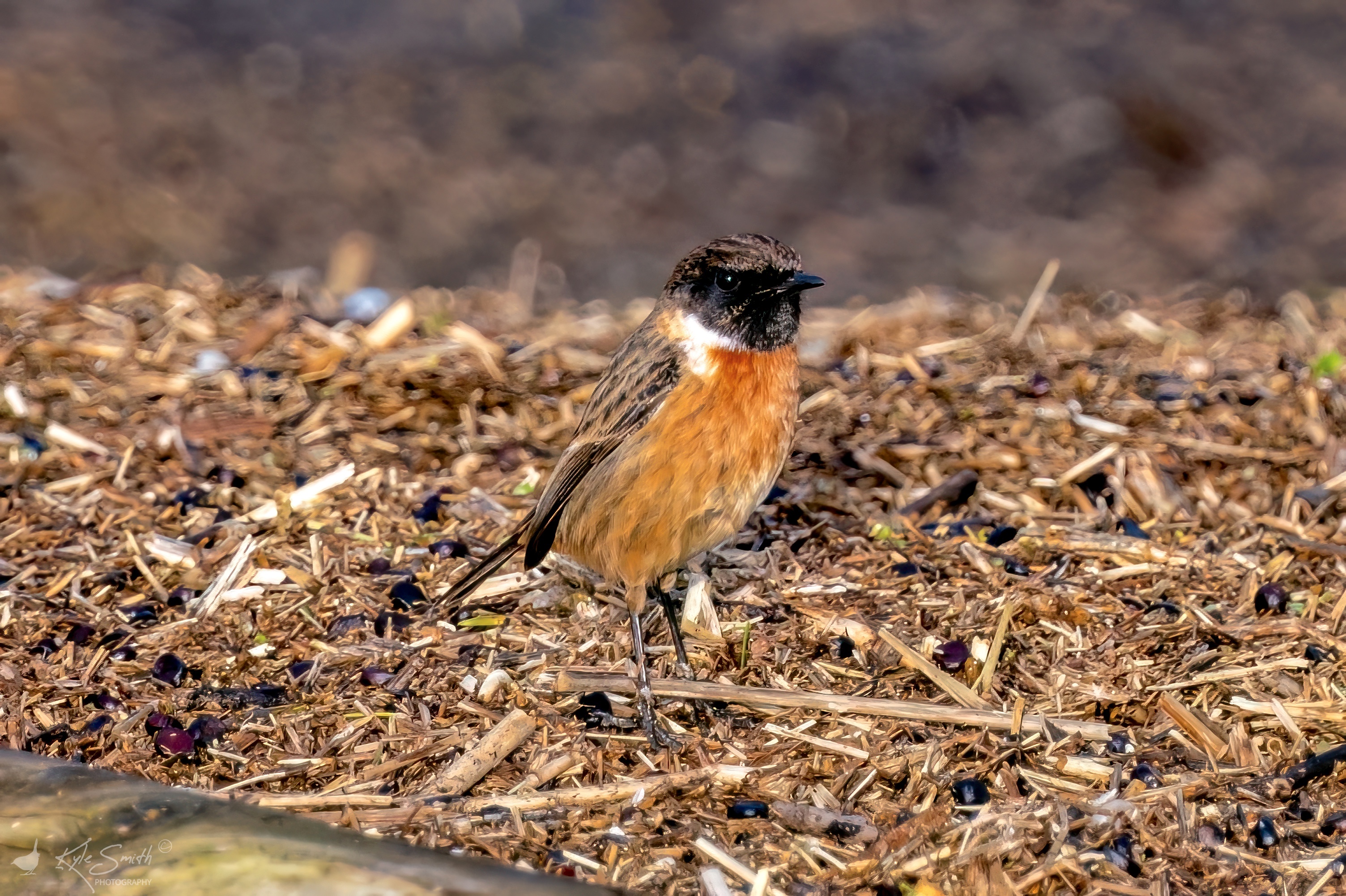
I'd never explored the reserve along the track to the east and so we headed off hoping for views of other species of raptor or wildfowl. A handful of stonechats entertained perching on the scrub or dropping to feed on the ground.

Stonechat
Stonechat

Kev picked out numbers of pintails on the flood and as I watched them, I saw a common crane creeping through the reeds behind - soon we were able to pick out four. Above and at distant a flock of birds passed, flashing white as they turned and weaved. I snapped a photo and confirmed they were black-tailed godwits and not golden plover as first thought.

Black-tailed godwit

We chatted with a couple of birders and soon after we'd left them I noticed the cranes coming over some trees, landing in the water and walking into the reeds. Kev heard some cranes call to our left and the three more joined the original four as they all took to the wing and flew off to our right - another year tick.

Common crane
Common crane
Common crane
Common crane

On our previous visits, we continued onto LWT Deeping Lakes in pursuit of long-eared and little owls, and with recent reports also mentioning a glossy ibis in the area we repeated the exercise. With a sandwich lunch from a corner shop picked up enroute, we ate as an Egyptian goose glided by. Once finished, we ventured onto the reserve, pausing to scan the water from a screen to where the glossy ibis had been recently observed - no immediate sign. A lone pink-footed goose stood on an island. A few passing birders inquired about the ibis although didn't linger but just minutes after their departure, the ibis made an appearance along the island's edge, feeding constantly as it traversed the front.

Glossy ibis

The glossy ibis is a wading bird that has been expanding its range, and sightings in the UK have increased significantly over the years. Conservation efforts and habitat protection might play a role in creating environments that are conducive to glossy ibis populations but changes in climate and temperature may also be influencing migration patterns and distribution.

We stopped at the gully we'd seen long-eared owl previously but didn't spot one. From the next hide we did see one after a birder pointed it out - he really had to as it was almost completely obscured - apparently this was a favoured roost. We got talking to a local and he joined us to where little owls resides - one of the trees has fallen and so we searched up and down the row hoping to catch sight - nothing. I did add a green woodpecker to my year list though. After quite a time we had to admit defeat and returned to the car for the journey home, seeing a great white egret as we did so, another green woodpecker, and seven Egyptian geese.

Charlotte and I had friends round on Saturday night and I didn't rush to get up on Sunday morning - just in time thought to watch the men's final at the Australian Open tennis. At lunchtime Charlotte left to play in a tennis match in Mapledurham while our girls announced they were going to the cinema to see "Mean Girls" - I declined their invitation to join them. Instead, I travelled over county lines into Gloucestershire to try and catch some better views of short-eared owls hunting. A barn owl would make it a four owl species weekend.

On arrival I found there were a lot of people already there - very popular birds, having been absent last year. I joined a group with large lenses and scopes - the birds had not yet been seen. I talked with Alan McCuskie @AlanMcCluskie as we waited. A birder found a shortie sitting in the grass and alerted us to its position - I took a photo - the bird made some hunting flights but at extreme distance. A chap with a major lens arrived and set up, and about ten minutes later called a barn owl behind us and further along the road. I took a few photos but didn't venture far from my position, while others strayed along the lane to get better views and photos.

Barn owl
Barn owl

Staying where I was turned out to be a great decision as one and then two shorties showed at reasonably close quarters. Three of us enjoyed the best views that would be provided today - I was happy with the views and resulting photos.

Short-eared owl
Short-eared owl
Short-eared owl
Short-eared owl
Short-eared owl
Short-eared owl
Short-eared owl
Short-eared owl
Short-eared owl
Short-eared owl
Short-eared owl

Final views were of one of the short-eared owls having a bit of a ding-dong with a kestrel. I've seen several images recently showing conflict between these species, mostly when a kestrel tries to steal food from the owl. Unfortunately, the action was very distant.

Short-eared owl and kestrel

It would be a return journey of about 45-50 minutes, and as the light was now falling, I made for home.

Year list: 128.